
The Birds of Fair Isle
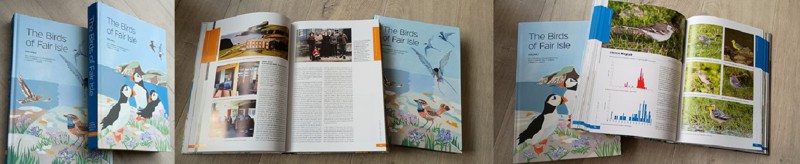
Our new, two-volume island avifauna – The Birds of Fair Isle – by Ian Andrews, Roger Riddington, Paul Harvey, Will Miles and Rebecca Nason is now available to purchase. Full details can be found here.
Some comments from social media:
"absolutely monumental"
"sumptuous, comprehensive two volumes"
"what a fantastic achievement"
"I've not even ever been to Fair Isle but couldn't not own these"
What is FIBO and where is Fair Isle

Fair Isle Bird Observatory was established in 1948 and marked its 75th anniversary in 2023. The Fair Isle Bird Observatory Trust (FIBOT) has been a registered Scottish Charity since its inception, established to operate a bird observatory dedicated to researching all aspects of Fair Isle’s natural heritage. Its aims include providing a centre for education and knowledge exchange for staff, guests, researchers, and students, engaging with the local community, and developing programmes that enable young people to contribute to the work of the observatory.
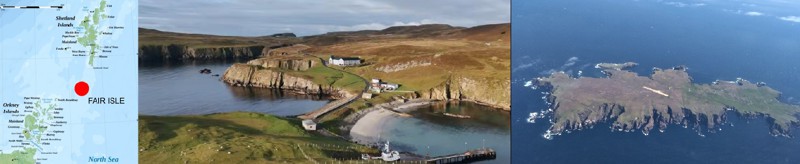
Fair Isle lies between Orkney and Shetland and is a mecca for birdwatchers but is equally renowned for its dramatic coastline of cliffs, stacks and arches, its archaeological heritage and the opportunity it offers to explore one of Scotland's most remote inhabited islands.
Our accommodation
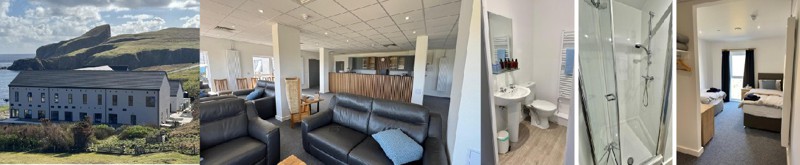
Alongside its role within the network of UK bird observatories, FIBO operates a 23-room guest house offering modern, en-suite, full-board accommodation for visitors to the island. The new observatory building, opened in May 2025, also includes a lounge, bar, visitor centre and library, and supports both ornithological and hospitality staff.
How to make a booking and how to get to Fair Isle
Advance reservation is essential to avoid disappointment and visitors are encouraged to take particular note of the booking process and transport logistics. The dates when we open for bookings for future seasons will be posted here.
Prices, discounts and special offers
Our prices include all meals, modern en-suite bedrooms and much more. We will pick you up from the plane or boat, our staff can offer you advice on how to make the most of your stay, and a dedicated Ranger Service offers excursions. There are discounts for longer stays in spring and autumn and special offers for residents of Shetland and Orkney.
Birding and the bird observatory
Fair Isle has been a mecca for birders for decades and offers exceptional birding with migrant highlights in spring and autumn and superb opportunities to watch seabirds through the breeding season. The island has a reputation for hosting rare vagrants, some of which have only been recorded in Britain on a few occasions.
Latest sightings
26th October 2026
Weather: Mostly dry with an increasing breeze. F4-7 S
A pleasant census today with the weather remaining dry and relatively calm through the morning, before picking back up again through the afternoon. A couple of new scarcities were discovered, with a Little Bunting at Pund and Olive-backed Pipit at Wirvie both new in, and many of the highlights of recent days remained in residence. At least one Coues’s Arctic Redpoll was again with Mealies at the School Brae, and Waxwing numbers increased to four.
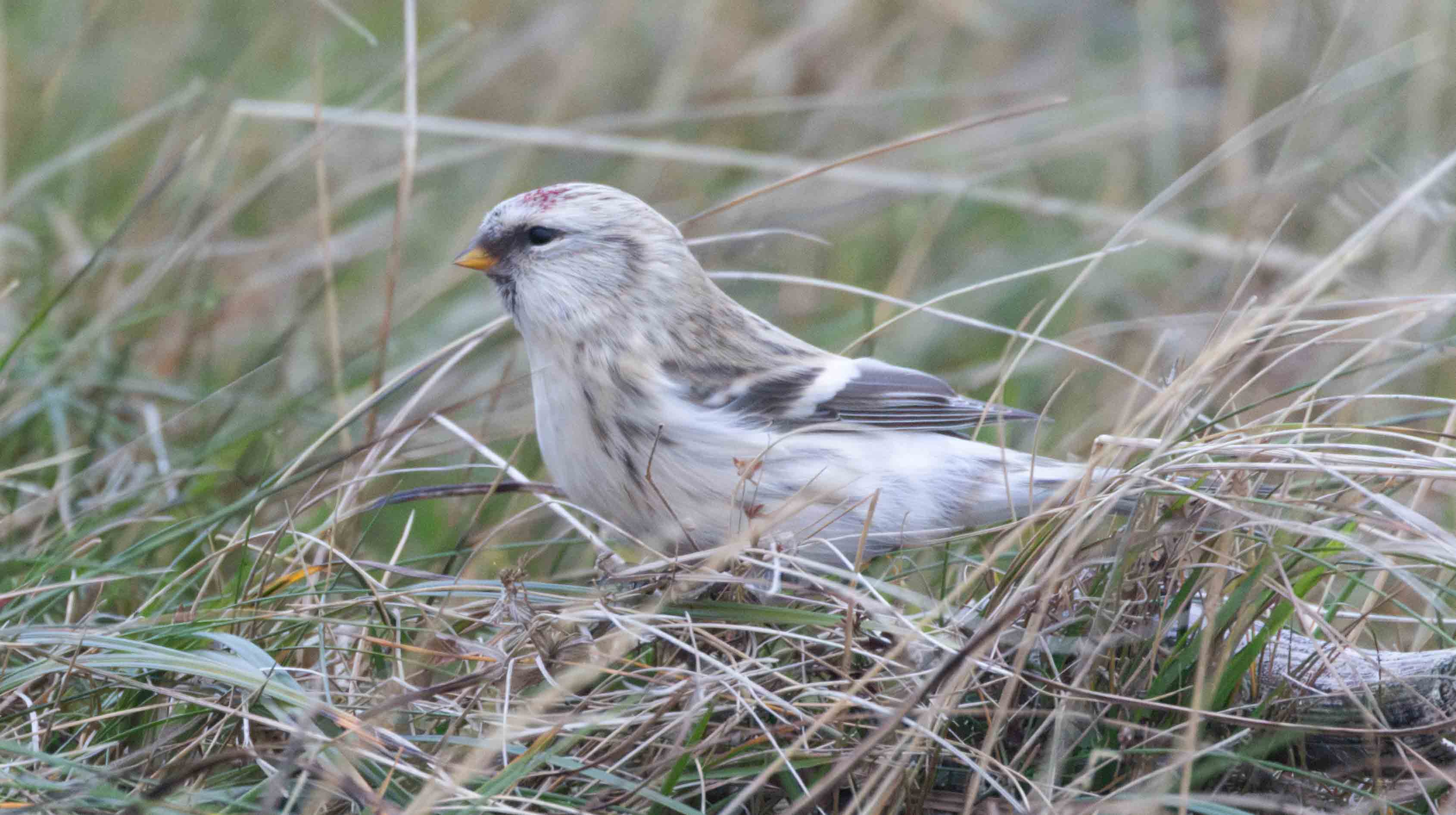
A frosty Coues’s Arctic Redpoll at School Brae (Alex Penn)
HIGHLIGHTS
COUES’S ARCTIC REDPOLL: one at School Brae, with another strong candidate on Meoness
Tundra Bean Goose: two still
Little Gull: 1cy again in Kirki Geo
Waxwing: four; three at the Obs, one at Quoy
Siberian Chiffchaff: three
Olive-backed Pipit: two; Wirvie Burn and Lower Leogh
Little Bunting: one at Pund
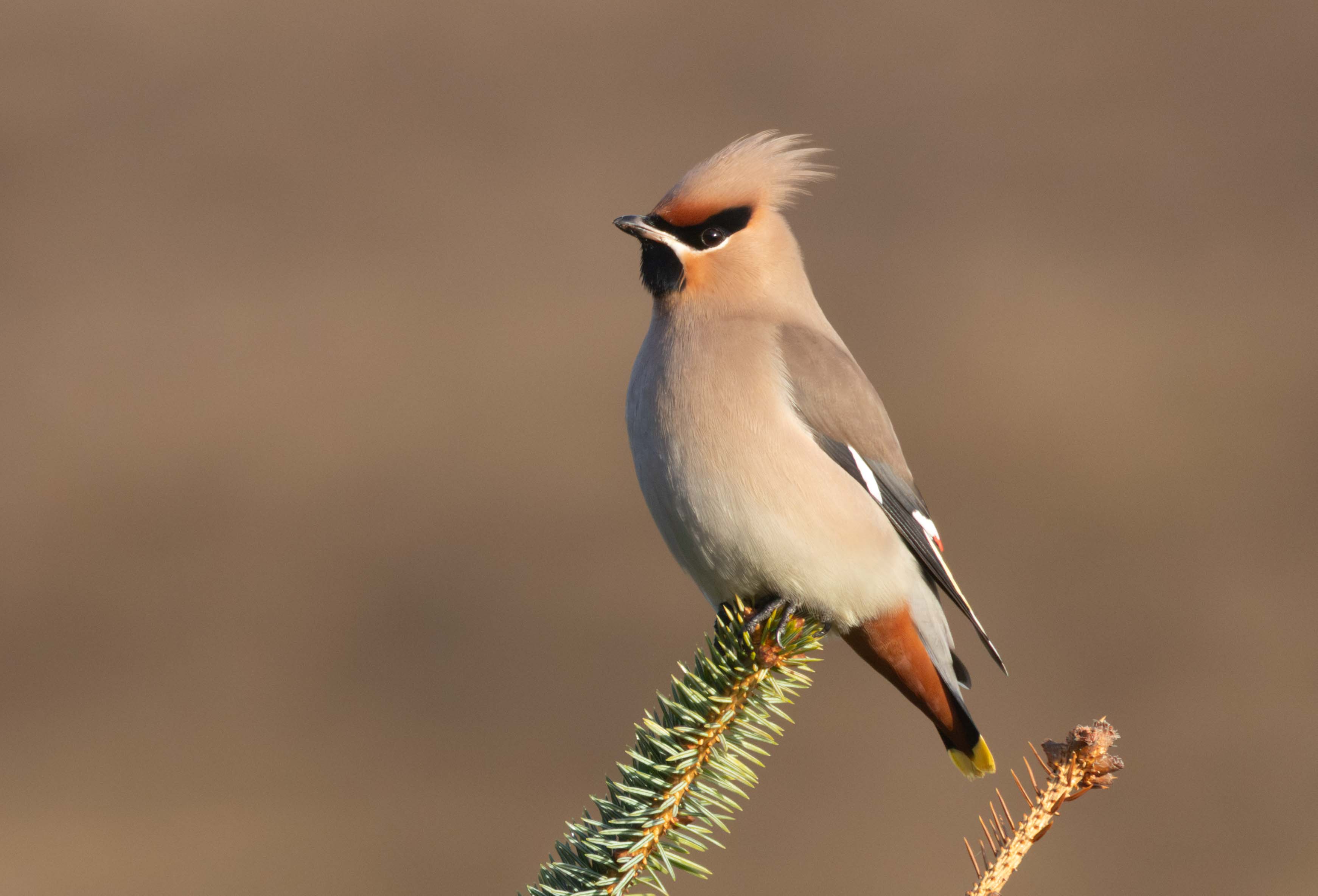
The three Waxwing at the Obs lingered only as long as the supply of apples lasted, with another in the crofts eating rose hips (Alex Penn)
Sightings of note: 58 Greylag Goose, 21 Pink-footed Goose, 11 Whooper Swan, 32 Wigeon, 5 Teal, 10 Long-tailed Duck, 1 Woodpigeon, 12 Water Rail, 4 Oystercatcher, 2 Lapwing, 8 Golden Plover, 18 Curlew, 68 Turnstone, 1 Purple Sandpiper, 17 Woodcock, 5 Jack Snipe, 31 Snipe, 15 Redshank, 1 Black-headed Gull, 16 Common Gull, 3 Grey Heron, 5 Long-eared Owl, 1 Short-eared Owl, 3 Merlin, 1 Jackdaw, 4 Carrion Crow, 33 Skylark, 4 Chiffchaff, 11 Blackcap, 2 Goldcrest, 2 Ring Ouzel, 337 Blackbird, 61 Fieldfare, 429 Redwing, 32 Song Thrush, 32 Robin, 1 Black Redstart, 1 Grey Wagtail, 1 alba Wagtail, 50 Meadow Pipit, 41 Rock Pipit, 13 Chaffinch, 7 Brambling, 10 Twite, 1 Linnet, 75 Mealy Redpoll, 4 Siskin, 2 Lapland Bunting, 23 Snow Bunting, 2 Reed Bunting
Year list: 201
______________________________________________________________________
25th October 2026
Weather: Thoroughly mixed, with an increasing breeze bringing regular lashing showers through the day, punctuated by sunny spells. F3-7 NW
Despite the savage showers that blasted through the isle today with increasing frequency, the team managed good coverage of the isle and unearthed a few new birds for their efforts. An Arctic Warbler at Vaila’s Trees was somewhat of a surprise, and a very late record, with some slight disappointment that it wasn’t a considerably rarer leaf warbler! A juvenile Little Gull was in South Harbour, Waxwings increased to three at the Obs, and numbers of Mealy Redpoll and Long-eared Owl remain high around the isle. Flocks of Greylag Goose moving in every direction included a Russian Whitefront and the two Tundra Beans, as well as a few Barnacle and Pink-footed.
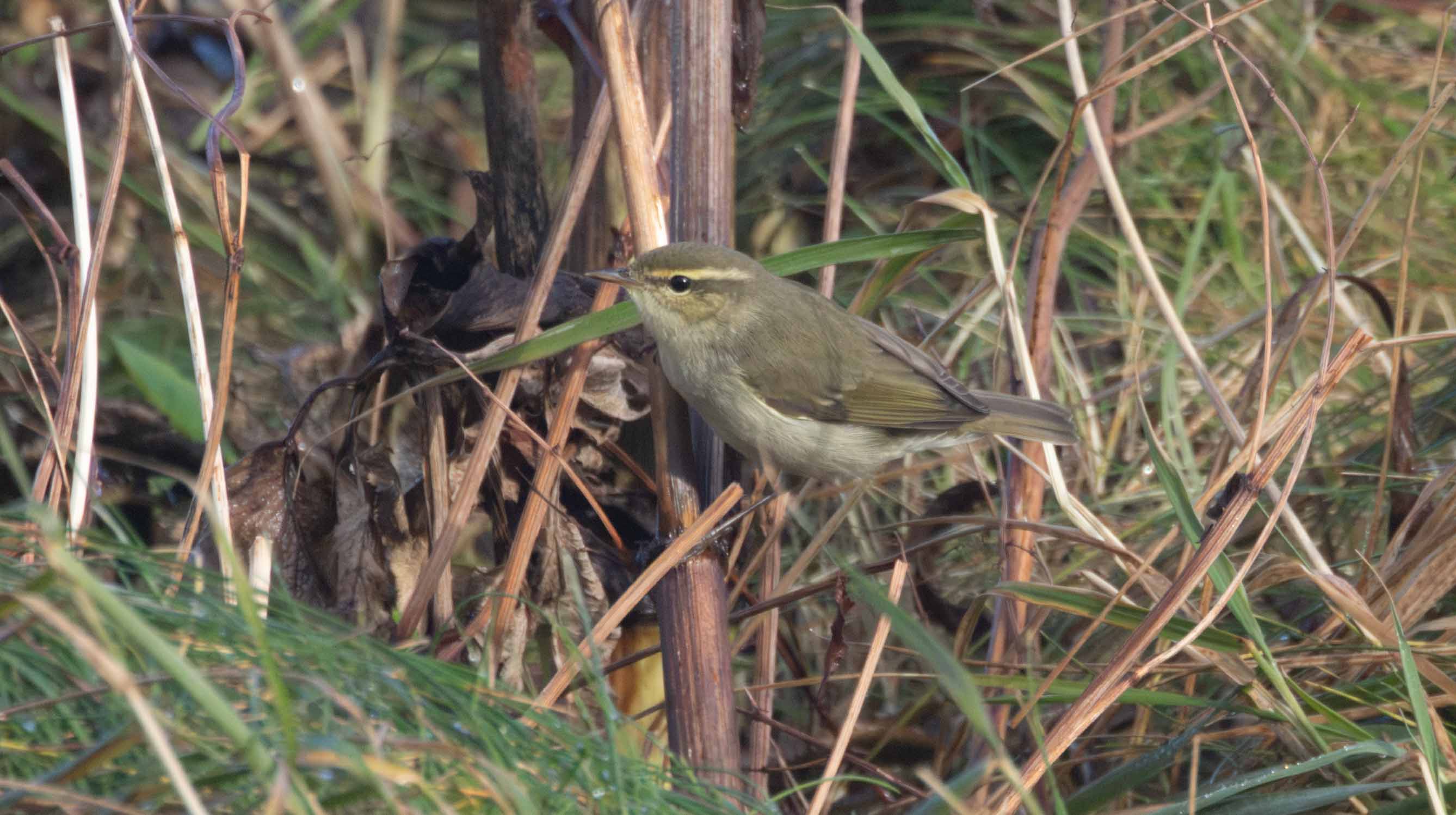
Today’s Arctic Warbler is the second-latest ever here, after one on 26th October 1994 (Alex Penn)
HIGHLIGHTS
Russian White-fronted Goose: one mobile with Greylags
Tundra Bean Goose: two still today
Little Gull: a 1cy bird in South Harbour
Great Grey Shrike: one still at Quoy
Waxwing: three at the Obs
Siberian Chiffchaff: two
Arctic Warbler: one at Vaila’s Trees
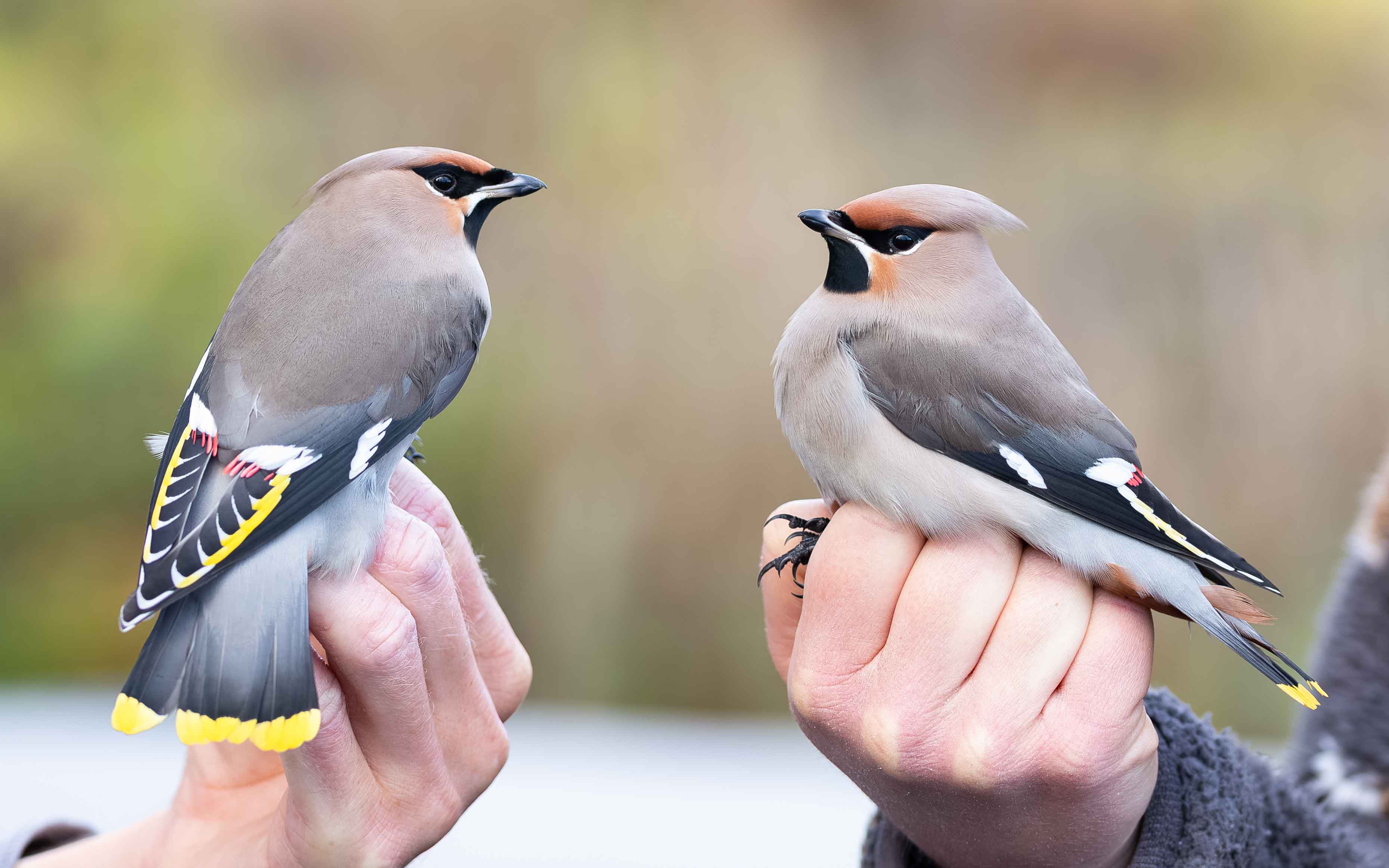
Two of the three Waxwing were ringed at the Obs (Tom Wright)
Sightings of note: 11 Barnacle Goose, 78 Greylag Goose, 11 Pink-footed Goose, 12 Whooper Swan, 37 Wigeon, 9 Teal, 5 Long-tailed Duck, 3 Woodpigeon, 7 Water Rail, 6 Oystercatcher, 20 Lapwing, 12 Golden Plover, 15 Curlew, 215 Turnstone, 2 Purple Sandpiper, 38 Woodcock, 6 Jack Snipe, 86 Snipe, 18 Redshank, 1 Kittiwake, 1 Black-headed Gull, 12 Common Gull, 2 Great Skua, 1 Guillemot, 2 Razorbill, 2 Great Northern Diver, 1 Grey Heron, 8 Long-eared Owl, 2 Merlin, 1 Peregrine, 1 Jackdaw, 4 Carrion Crow, 44 Skylark, 12 Chiffchaff, 11 Blackcap, 1 Lesser Whitethroat, 1 Goldcrest, 241 Blackbird, 62 Fieldfare, 717 Redwing, 32 Song Thrush, 39 Robin, 1 Wheatear, 2 Dunnock, 78 Meadow Pipit, 4 Chaffinch, 9 Brambling, 81 Twite, 126 Mealy Redpoll, 1 Siskin, 4 Snow Bunting, 1 Reed Bunting
Year list: 201
______________________________________________________________________
22nd to 24th October 2026
A birdier few days, with a break in the gales on 23rd allowing good coverage of the isle (after a couple of hours joining the hill caa to round up this year’s lambs). The Coues’s Arctic Redpoll reappeared down the isle, and a Great Grey Shrike and two Tundra Bean Goose arrived on 23rd. The shrike was a welcome addition to the yearlist and the first record since 2022, and wasted no time in predating a Fair Isle Mouse and multiple Blackcaps, which it stored in the Quoy garden. A healthy arrival of Long-eared Owl saw counts rise to eight birds on 24th, and at least two Olive-backed Pipit were present.
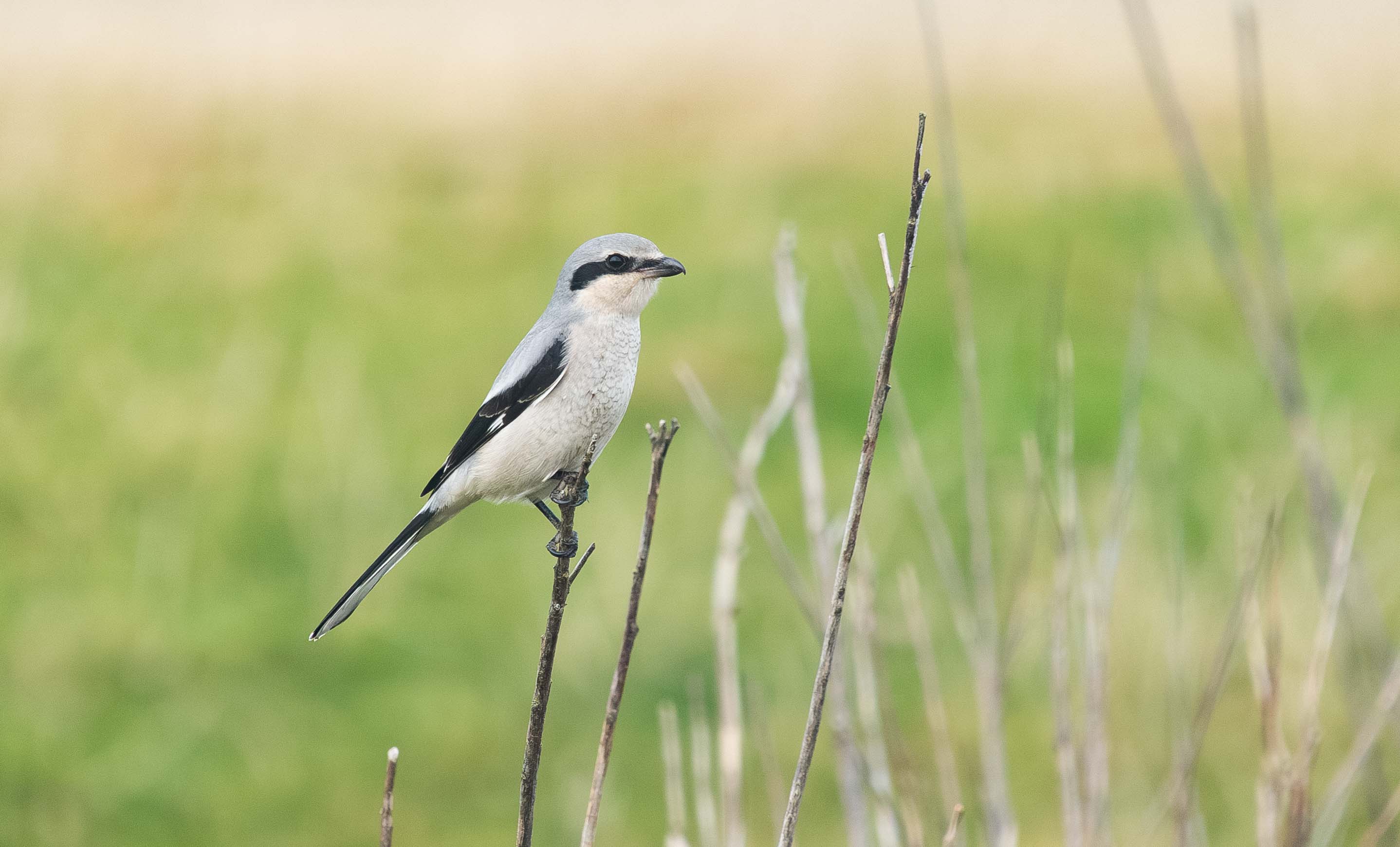
Great Grey Shrike between bouts of mouse catching (Tom Wright)
HIGHLIGHTS
COUES’S ARCTIC REDPOLL: one with Mealy Redpoll at School Brae on 23rd
Tundra Bean Goose: two on 23rd and 24th
Great Grey Shrike: one around Burkle on 23rd and 24th
Waxwing: one at the Obs on 24th
Olive-backed Pipit: two on 24th; Lower Leogh and Gully
Siberian Chiffchaff: up to six
Hawfinch: one trapped in Plantation on 24th
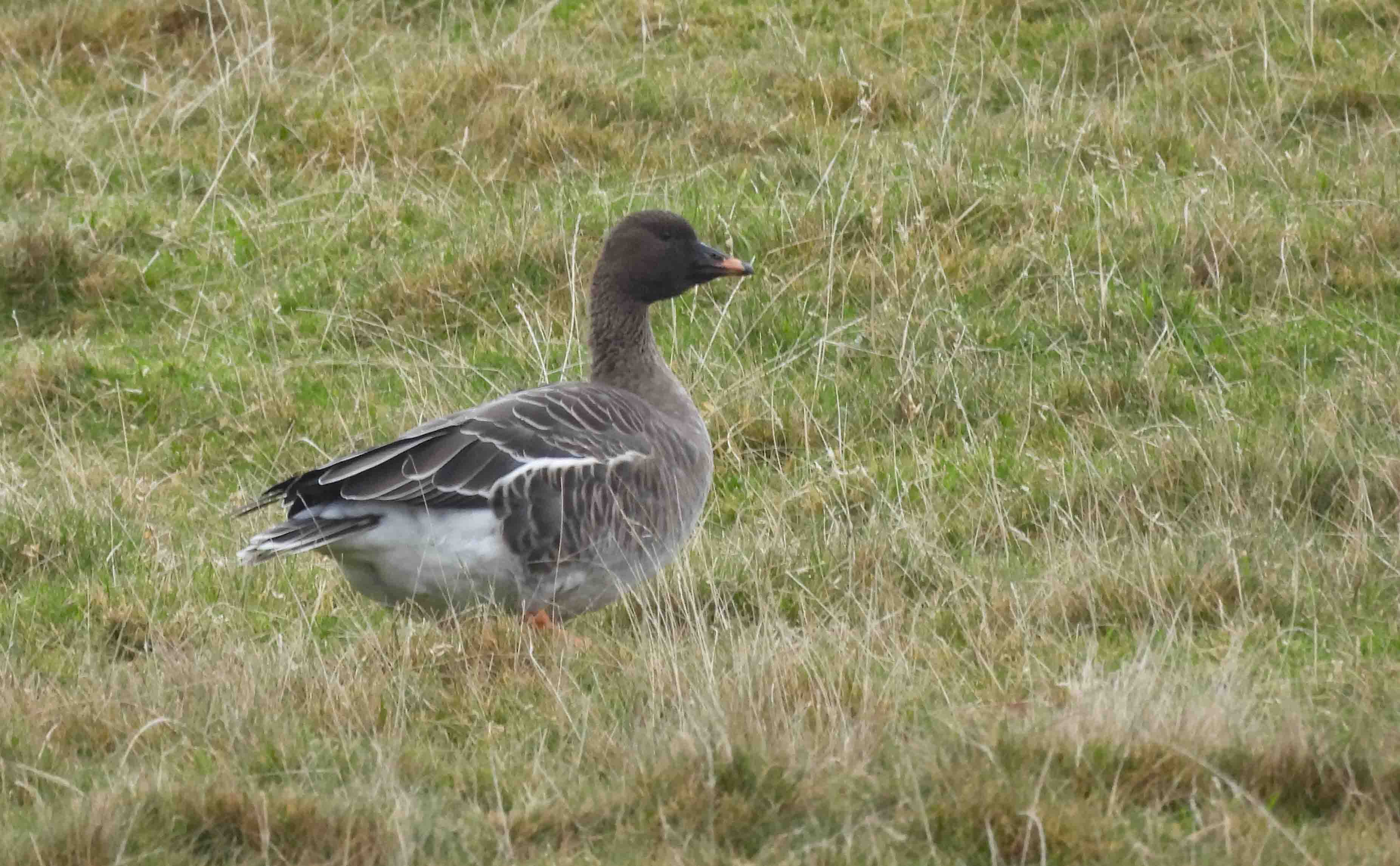
One of the two Tundra Bean Goose is ringed on its left leg, though we’re going to need some luck to read any of the ring detail! (Luke Marriner)
Sightings of note (high counts): 10 Barnacle Goose, 55 Greylag Goose, 53 Pink-footed Goose, 16 Whooper Swan, 33 Wigeon, 13 Teal, 2 Long-tailed Duck, 4 Goldeneye, 1 Red-breasted Merganser, 2 Woodpigeon, 7 Water Rail, 3 Oystercatcher, 24 Lapwing, 12 Golden Plover, 20 Curlew, 107 Turnstone, 1 Dunlin, 6 Purple Sandpiper, 67 Woodcock, 4 Jack Snipe, 43 Snipe, 17 Redshank, 3 Kittiwake, 1 Black-headed Gull, 8 Common Gull, 1 Guillemot, 2 Razorbill, 2 Great Northern Diver, 1 Blue Fulmar, 1 Cormorant, 1 Grey Heron, 8 Long-eared Owl, 1 Short-eared Owl, 2 Merlin, 1 Peregrine, 1 Jackdaw, 4 Carrion Crow, 39 Skylark, 15 Chiffchaff, 16 Blackcap, 1 Lesser Whitethroat, 3 Goldcrest, 1 Ring Ouzel, 392 Blackbird, 81 Fieldfare, 691 Redwing, 50 Song Thrush, 28 Robin, 3 Black Redstart, 2 Wheatear, 1 Dunnock, 2 Grey Wagtail, 5 alba Wagtail, 84 Meadow Pipit, 45 Rock Pipit, 7 Chaffinch, 40 Brambling, 29 Twite, 77 Mealy Redpoll, 3 Siskin, 4 Lapland Bunting, 47 Snow Bunting
Other wildlife (high counts): 3 Silver Y, 2 Rusty-dot Pearl (24th), 1 Scaeva selinitica (23rd)
Year list: 200
______________________________________________________________________
21st October 2026
Weather: Windy again, with some prolonged periods of rain. F5-7 SE
A damp day today made census tough going in the continued strong winds and rain. There was plenty out there to see however, with the north of the isle in particular busy with Woodcock and thrushes once more. An Olive-backed Pipit was pinned down at Busta Brecks after being heard over Stackhoull, and a Coues’s Arctic Redpoll was seen briefly in the wilds of Mire o’Vatnagard – hopefully this sticks around to be seen properly. A small increase in owls included at least three Long-eared, and three White-fronted Goose flew south over Setter.
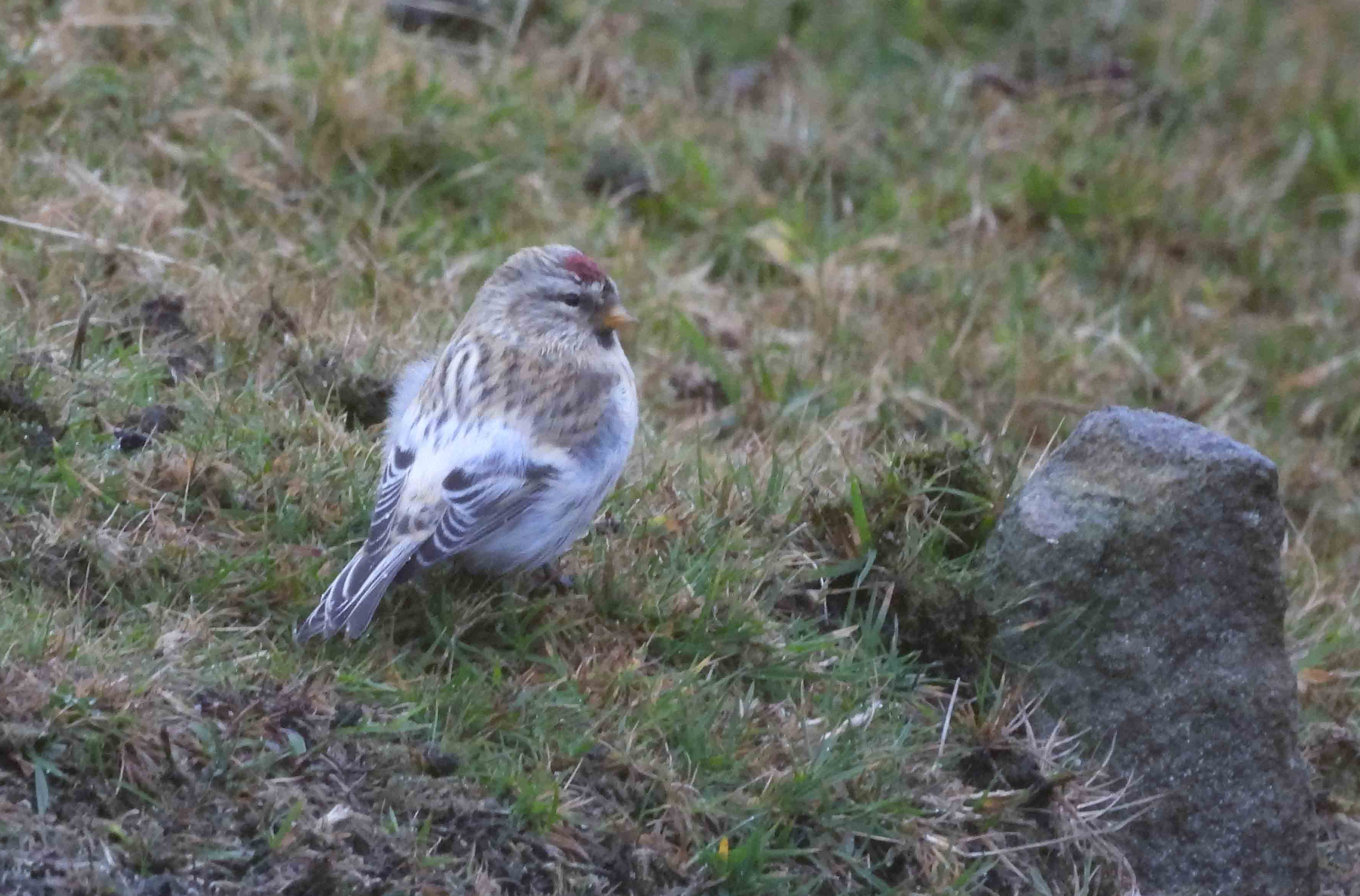
Coues’s Arctic Redpoll on the heather at Vatnagard (Luke Marriner)
HIGHLIGHTS
COUES’S ARCTIC REDPOLL: one seen just south of Mire o’Vatnagard
White-fronted Goose: three flew south over Setter
Olive-backed Pipit: one over Stackhoull was later seen at Busta Brecks
Siberian Chiffchaff: two
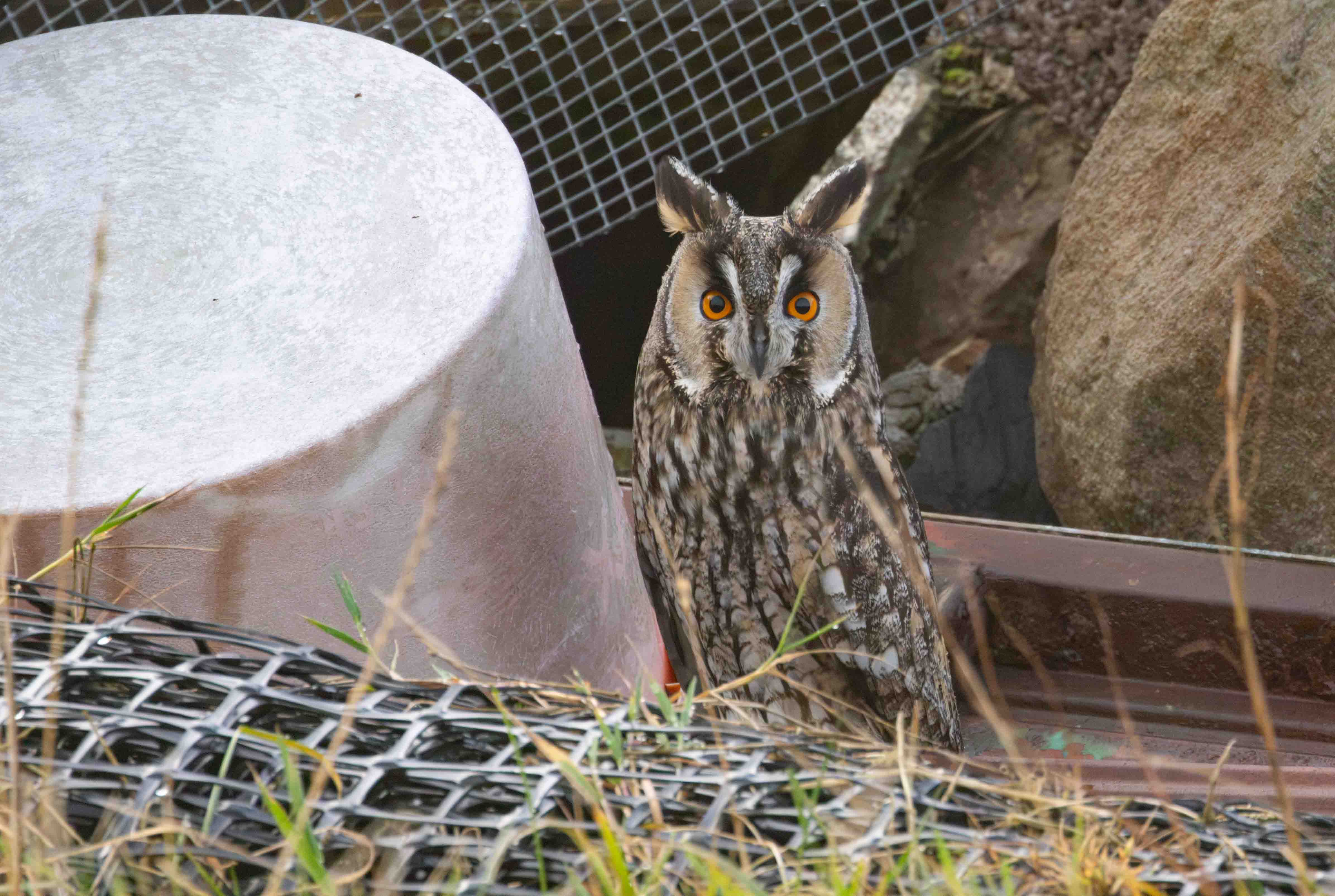
This Long-eared Owl at Setter was one of three seen (Alex Penn)
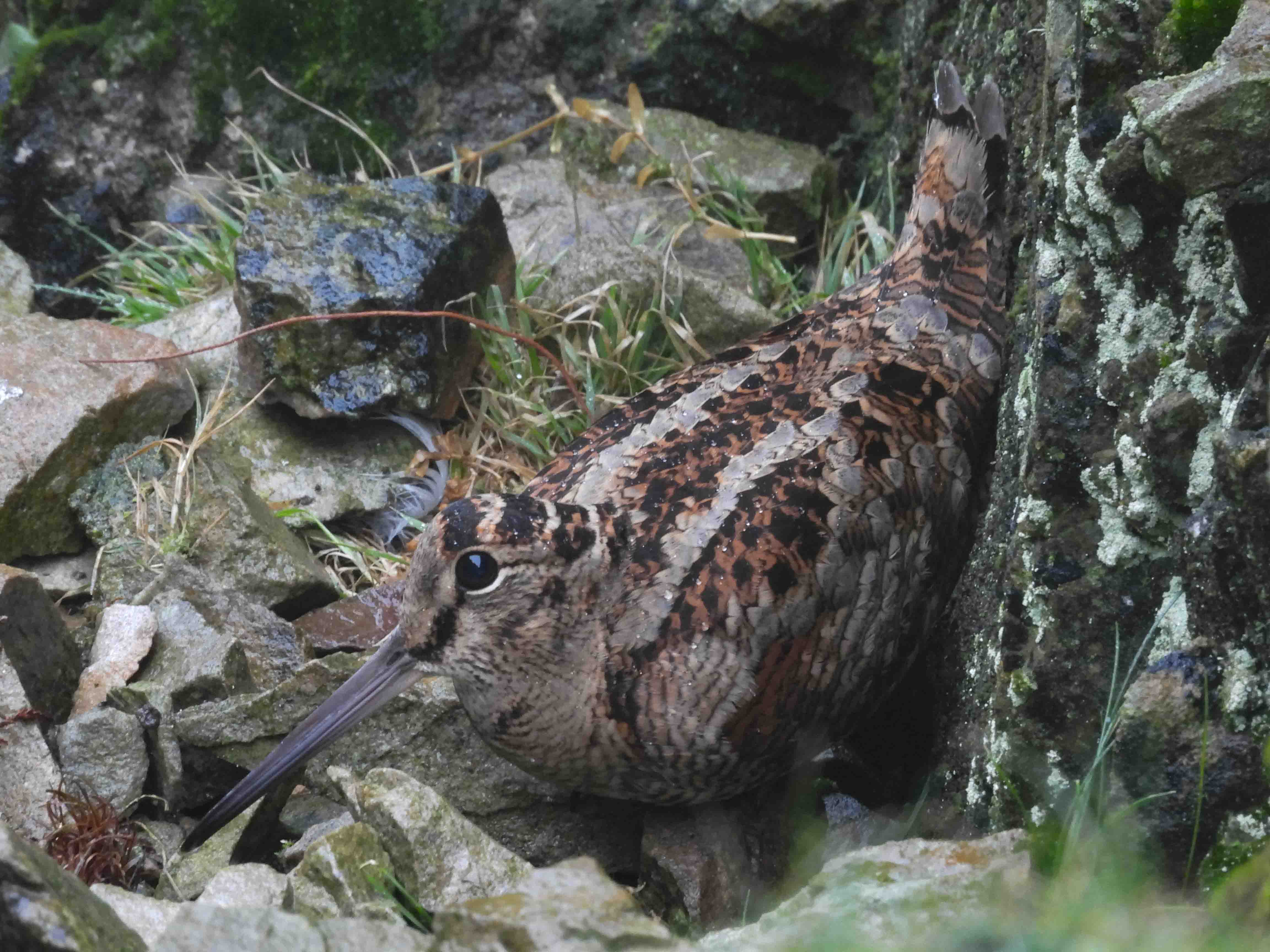
Almost 100 Woodcock were around the north today (Luke Marriner)
Sightings of note: 12 Barnacle Goose, 33 Greylag Goose, 5 Pink-footed Goose, 9 Whooper Swan, 50 Wigeon, 17 Teal, 1 Long-tailed Duck, 2 Goldeneye, 3 Woodpigeon, 5 Water Rail, 6 Oystercatcher, 20 Lapwing, 12 Golden Plover, 39 Curlew, 134 Turnstone, 1 Purple Sandpiper, 127 Woodcock, 7 Jack Snipe, 98 Snipe, 30 Redshank, 1 Kittiwake, 2 Black-headed Gull, 10 Common Gull, 4 Guillemot, 3 Razorbill, 2 Great Northern Diver, 1 Cormorant, 2 Grey Heron, 1 Sparrowhawk, 3 Long-eared Owl, 1 Short-eared Owl, 1 Merlin, 4 Carrion Crow, 64 Skylark, 8 Chiffchaff, 22 Blackcap, 1 Garden Warbler, 2 Goldcrest, 2 Ring Ouzel, 759 Blackbird, 371 Fieldfare, 3,248 Redwing, 211 Song Thrush, 21 Robin, 1 Black Redstart, 1 Dunnock, 3 alba Wagtail, 94 Meadow Pipit, 56 Rock Pipit, 6 Chaffinch, 14 Brambling, 50 Twite, 51 Mealy Redpoll, 2 Siskin, 2 Lapland Bunting, 11 Snow Bunting
Year list: 199
______________________________________________________________________
20th October 2026
Weather: Overcast and windy. F6-8 SE
Today’s strong southeasterly brought a respectable fall of Woodcock and plenty of thrushes, with almost all birds taking shelter down the west and north cliffs. Numbers of small migrants remained low, though there were small increases in Blackcap and Siberian Chiffchaff. Some dazzling after Log saw a couple of surprises found, with a Little Grebe and Moorhen sharing Sprittery Hol, the former the first record since 2022, and first ringed here for over 30 years. A focus on catching Jack Snipe has now seen the annual ringing record broken, with 40 new birds ringed.
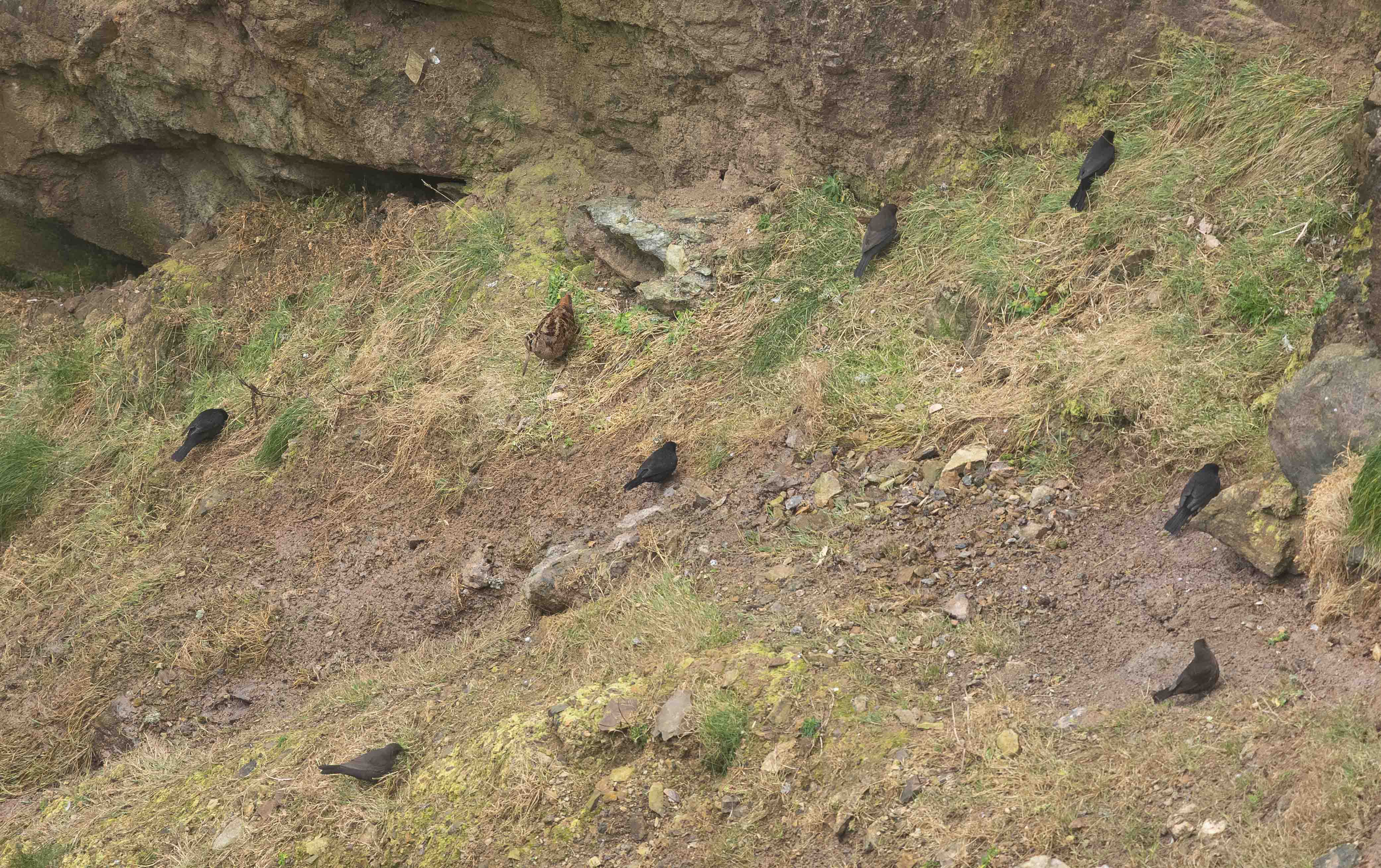
A typical scene from many of the sheltered west cliffs today (Tom Wright)
HIGHLIGHTS
Little Grebe: one trapped at Sprittery Hol (45th record, first since 2022 and 11th to be ringed)
Siberian Chiffchaff: seven
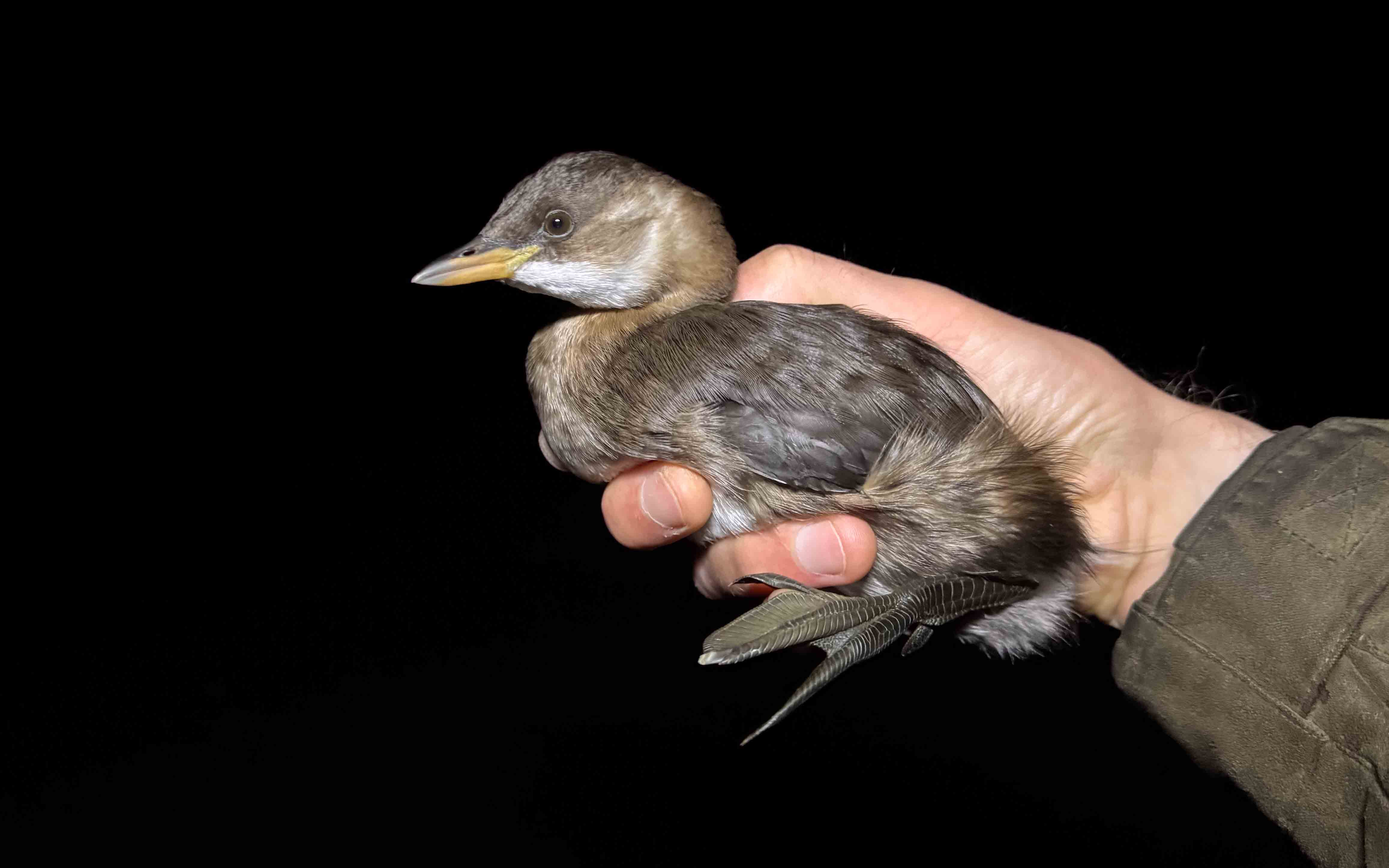
Little Grebe was a welcome surprise whilst dazzling (Alex Penn)
Sightings of note: 34 Greylag Goose, 3 Pink-footed Goose, 8 Whooper Swan, 58 Wigeon, 17 Teal, 2 Long-tailed Duck, 2 Goldeneye, 1 Red-breasted Merganser, 3 Woodpigeon, 5 Water Rail, 5 Oystercatcher, 36 Lapwing, 12 Golden Plover, 39 Curlew, 125 Turnstone, 141 Woodcock, 6 Jack Snipe, 69 Snipe, 23 Redshank, 6 Kittiwake, 1 Black-headed Gull, 7 Common Gull, 1 Grey Heron, 1 Long-eared Owl, 5 Merlin, 1 Jackdaw, 4 Carrion Crow, 52 Skylark, 3 Chiffchaff, 28 Blackcap, 1 Goldcrest, 2 Ring Ouzel, 548 Blackbird, 381 Fieldfare, 961 Redwing, 63 Song Thrush, 12 Robin, 2 Black Redstart, 1 Wheatear, 1 Grey Wagtail, 1 Pied Wagtail, 4 alba Wagtail, 105 Meadow Pipit, 52 Rock Pipit, 16 Chaffinch, 39 Brambling, 33 Twite, 21 Mealy Redpoll, 2 Siskin, 1 Lapland Bunting, 12 Snow Bunting
Year list: 199
______________________________________________________________________
19th October 2026
Weather: Mostly sunny. F5-7 S
A clear arrival of thrushes today, though they brought little else with them, with numbers of ‘smalls’ still very low and few birds of note unearthed. Sheltered sections of the north and west cliffs were busy with Redwing and Fieldfare, with smaller numbers of Blackbird and Song Thrush also in many of the geos. A slight increase in Woodcock was also evident, and reasonable numbers of Snow Bunting remain.
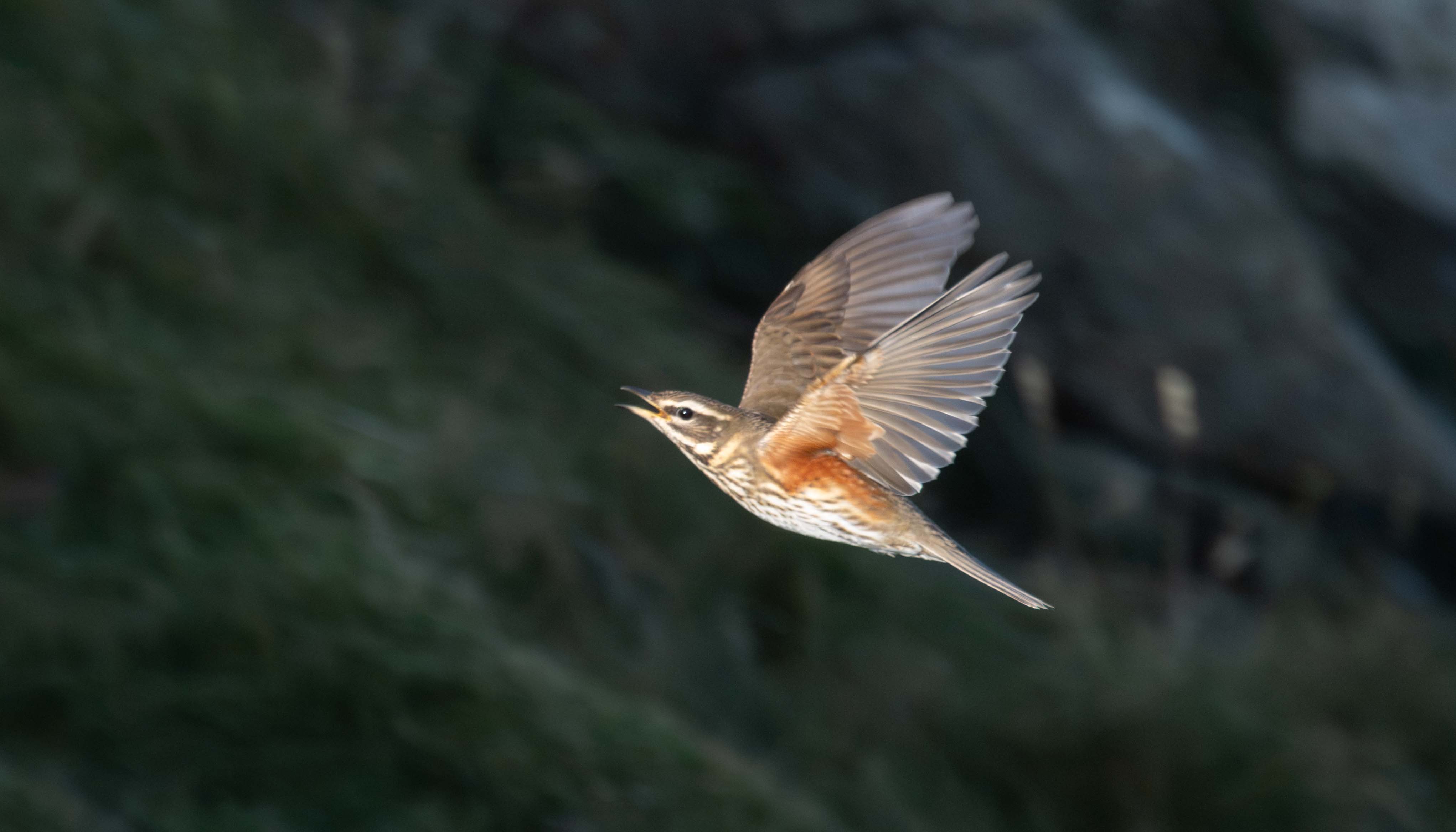
Redwing catching the sun as it emerges from Wester Lother (Alex Penn)
HIGHLIGHTS
Siberian Chiffchaff: three
Sightings of note: 67 Greylag Goose, 4 Pink-footed Goose, 7 Whooper Swan, 50 Wigeon, 12 Teal, 7 Long-tailed Duck, 2 Woodpigeon, 4 Water Rail, 7 Oystercatcher, 24 Lapwing, 13 Golden Plover, 1 Ringed Plover, 33 Curlew, 150 Turnstone, 4 Purple Sandpiper, 17 Woodcock, 7 Jack Snipe, 52 Snipe, 22 Redshank, 3 Kittiwake, 1 Black-headed Gull, 18 Common Gull, 1 Guillemot, 7 Razorbill, 2 Grey Heron, 1 Short-eared Owl, 3 Merlin, 5 Carrion Crow, 62 Skylark, 2 Willow Warbler, 3 Chiffchaff, 11 Blackcap, 124 Blackbird, 196 Fieldfare, 1,231 Redwing, 31 Song Thrush, 3 Robin, 2 Dunnock, 1 Grey Wagtail, 6 alba Wagtail, 139 Meadow Pipit, 61 Rock Pipit, 5 Chaffinch, 16 Brambling, 45 Twite, 1 Mealy Redpoll, 1 Northwestern Redpoll, 1 Lapland Bunting, 47 Snow Bunting
Other wildlife: 1 Risso’s Dolphin
Year list: 198
______________________________________________________________________
17th to 18th October 2026
A very quiet day on 17th preceded a small arrival on 18th, when the slack winds and high pressure drifted a handful of new birds to the isle. The best of these were a Bluethroat around Double Dyke and the first Waxwings of the year at the Haven and Barkland, as well as a clear increase in Chiffchaff and Lesser Whitethroat. With a freshening SE breeze and a newly-arrived mega to our north, hopes are high for the next few days…
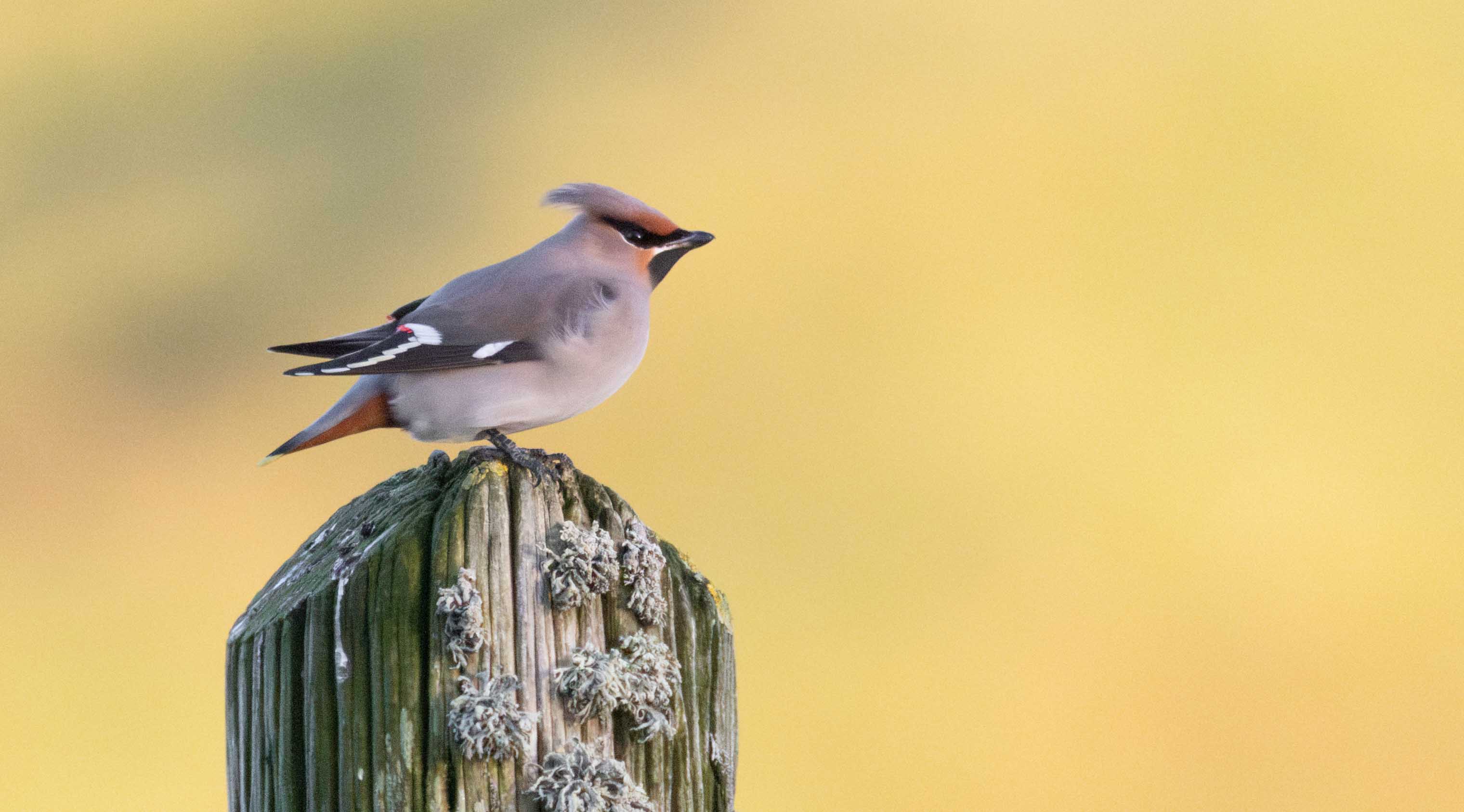
Waxwing trilling away at the Haven, on the isle’s sole telegraph pole that remains standing (Alex Penn)
HIGHLIGHTS
Glaucous Gull: 1cy at South Light on 18th
Waxwing: two on 18th
Yellow-browed Warbler: one at the Mast on 18th
Siberian Chiffchaff: one on 17th, five on 18th
Bluethroat: one at Double Dyke on 18th
Sightings of note (high counts): 9 Barnacle Goose, 129 Greylag Goose, 11 Pink-footed Goose, 22 Whooper Swan, 56 Wigeon, 10 Teal, 17 Long-tailed Duck, 1 Goosander, 3 Red-breasted Merganser, 4 Woodpigeon, 3 Water Rail, 5 Oystercatcher, 23 Lapwing, 13 Golden Plover, 3 Ringed Plover, 32 Curlew, 84 Turnstone, 1 Dunlin, 1 Purple Sandpiper, 1 Woodcock, 7 Jack Snipe, 70 Snipe, 79 Redshank, 15 Kittiwake, 7 Black-headed Gull, 17 Common Gull, 15 Guillemot, 12 Razorbill, 8 Great Northern Diver, 2 Blue Fulmar, 1 Sooty Shearwater, 3 Grey Heron, 1 Hen Harrier, 1 Kestrel, 4 Merlin, 4 Carrion Crow, 73 Skylark, 2 Willow Warbler, 10 Chiffchaff, 8 Blackcap, 7 Lesser Whitethroat, 2 blythi Lesser Whitethroat, 29 Blackbird, 1 Fieldfare, 164 Redwing, 10 Song Thrush, 5 Robin, 2 Wheatear, 3 Dunnock, 2 Grey Wagtail, 3 Pied Wagtail, 9 alba Wagtail, 162 Meadow Pipit, 89 Rock Pipit, 10 Chaffinch, 9 Brambling, 76 Twite, 1 Linnet, 1 Mealy Redpoll, 1 Northwestern Redpoll, 1 Lesser Redpoll, 1 Siskin, 1 Lapland Bunting, 43 Snow Bunting, 1 Reed Bunting
Other wildlife (high counts): 3 Buff-tailed Bumblebee, 2 Risso’s Dolphin
Year list: 198
______________________________________________________________________
13th to 16th October 2026
A rather quiet few days, dominated by westerly winds and seeing little in the way of new arrivals. Highlights included the first Long-eared Owl and Long-tailed Ducks of the autumn, various small flocks of Snow Bunting around the coastal headlands, and a Rosefinch on 16th. Some wildfowl passage on 16th saw regular flocks of Barnacle Goose, Greylag and Whooper Swan passing noisily over the isle, with the sunshine also bringing an extremely late Hummingbird Hawkmoth to the Setter rig.
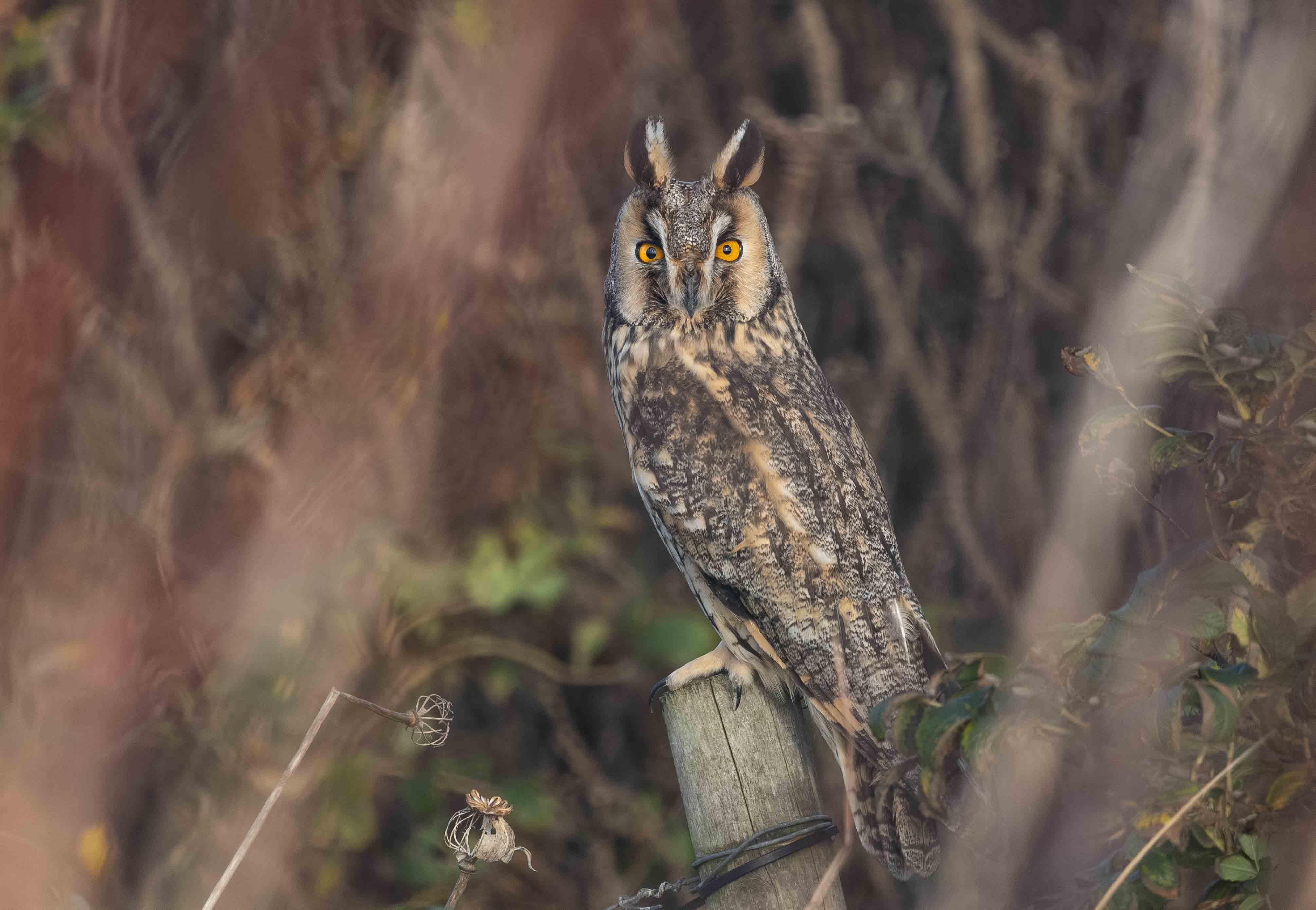
Long-eared Owl showing very well at Burkle (Tom Wright)
HIGHLIGHTS
Yellow-browed Warbler: one at the Haven still
Siberian Chiffchaff: two on 13th, one on 15th-16th
Common Rosefinch: one trapped in Gully on 16th
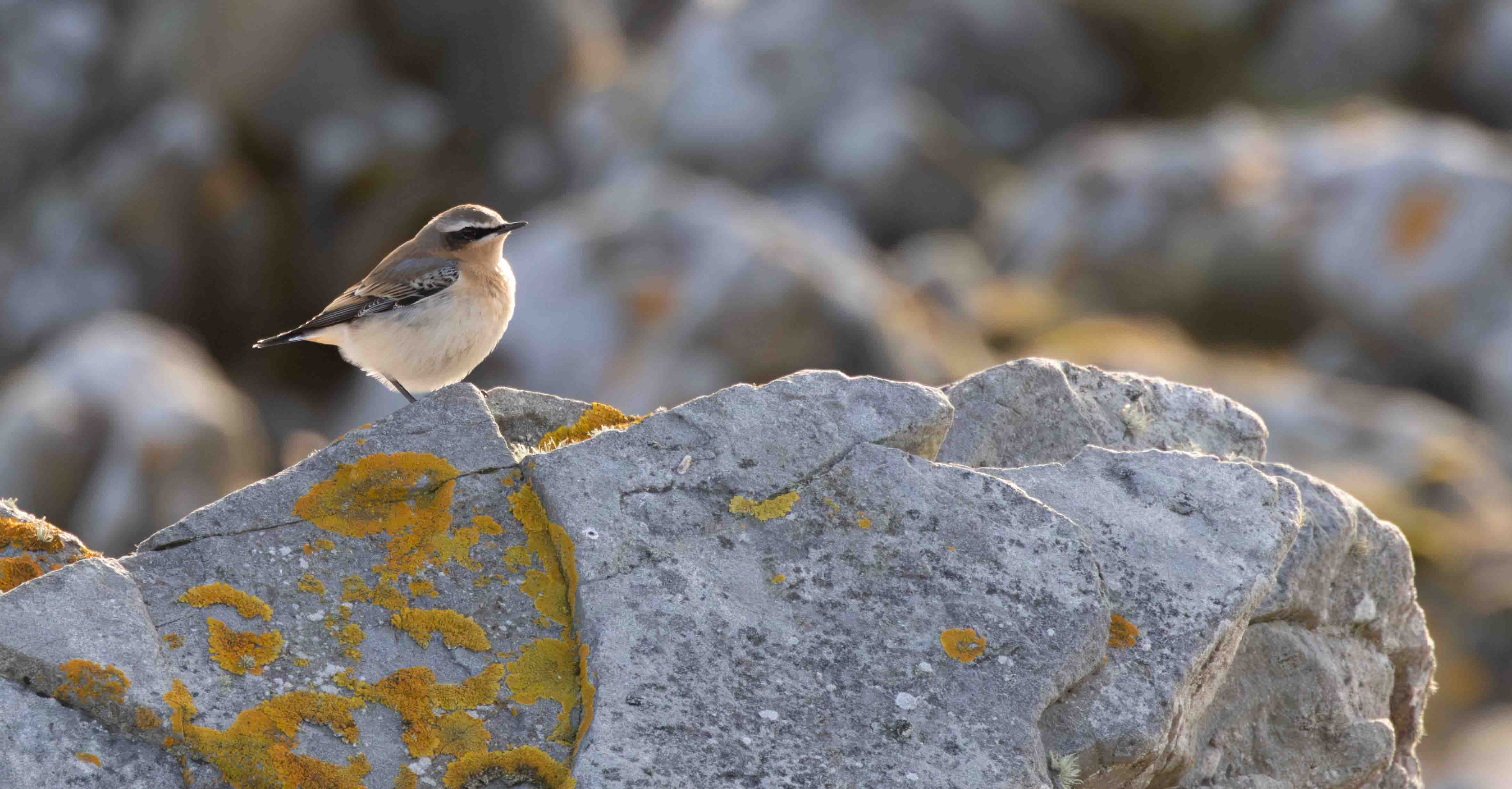
A few late Wheatear are still passing through (Alex Penn)
Sightings of note (high counts): 168 Barnacle Goose, 145 Greylag Goose, 41 Pink-footed Goose, 43 Whooper Swan, 55 Wigeon, 20 Teal, 7 Long-tailed Duck, 5 Red-breasted Merganser, 4 Woodpigeon, 2 Water Rail, 1 Slavonian Grebe, 10 Oystercatcher, 23 Lapwing, 12 Golden Plover, 9 Ringed Plover, 46 Curlew, 174 Turnstone, 3 Dunlin, 4 Purple Sandpiper, 3 Woodcock, 14 Jack Snipe, 71 Snipe, 38 Redshank, 6 Kittiwake, 1 Black-headed Gull, 24 Common Gull, 1 Arctic Tern, 2 Great Skua, 2 Guillemot, 6 Razorbill, 3 Grey Heron, 1 Sparrowhawk, 1 Long-eared Owl, 1 Kestrel, 5 Merlin, 1 Peregrine, 6 Carrion Crow, 76 Skylark, 1 Swallow, 6 Chiffchaff, 9 Blackcap, 1 Lesser Whitethroat, 1 Whitethroat, 1 Goldcrest, 1 Ring Ouzel, 47 Blackbird, 3 Fieldfare, 634 Redwing, 46 Song Thrush, 8 Robin, 1 Redstart, 2 Wheatear, 2 Dunnock, 4 Grey Wagtail, 3 Pied Wagtail, 9 alba Wagtail, 183 Meadow Pipit, 76 Rock Pipit, 7 Chaffinch, 8 Brambling, 66 Twite, 1 Northwestern Redpoll, 4 Lapland Bunting, 31 Snow Bunting, 2 Reed Bunting
Other wildlife (high counts): 1 Hummingbird Hawkmoth (16th)
Year list: 197
______________________________________________________________________
12th October 2026
Weather: Partly cloudy, with a strong breeze. F5-8 SSE
The first of a breezy few days coming up, with a freshening SSE wind today that is set to swing to a south-westerly by tomorrow morning. Small passerines were mostly wisely hunkered down out of sight, though various groups of Snow and Lapland Bunting were still evident. Scarcities were few, but yesterday’s adult Iceland Gull was seen again, today joining the throng of Herring and Great Black-backed Gull at Easter Lother. A less birdy afternoon was put to use instead on some minor Heligoland trap repairs and Jack Snipe catching.
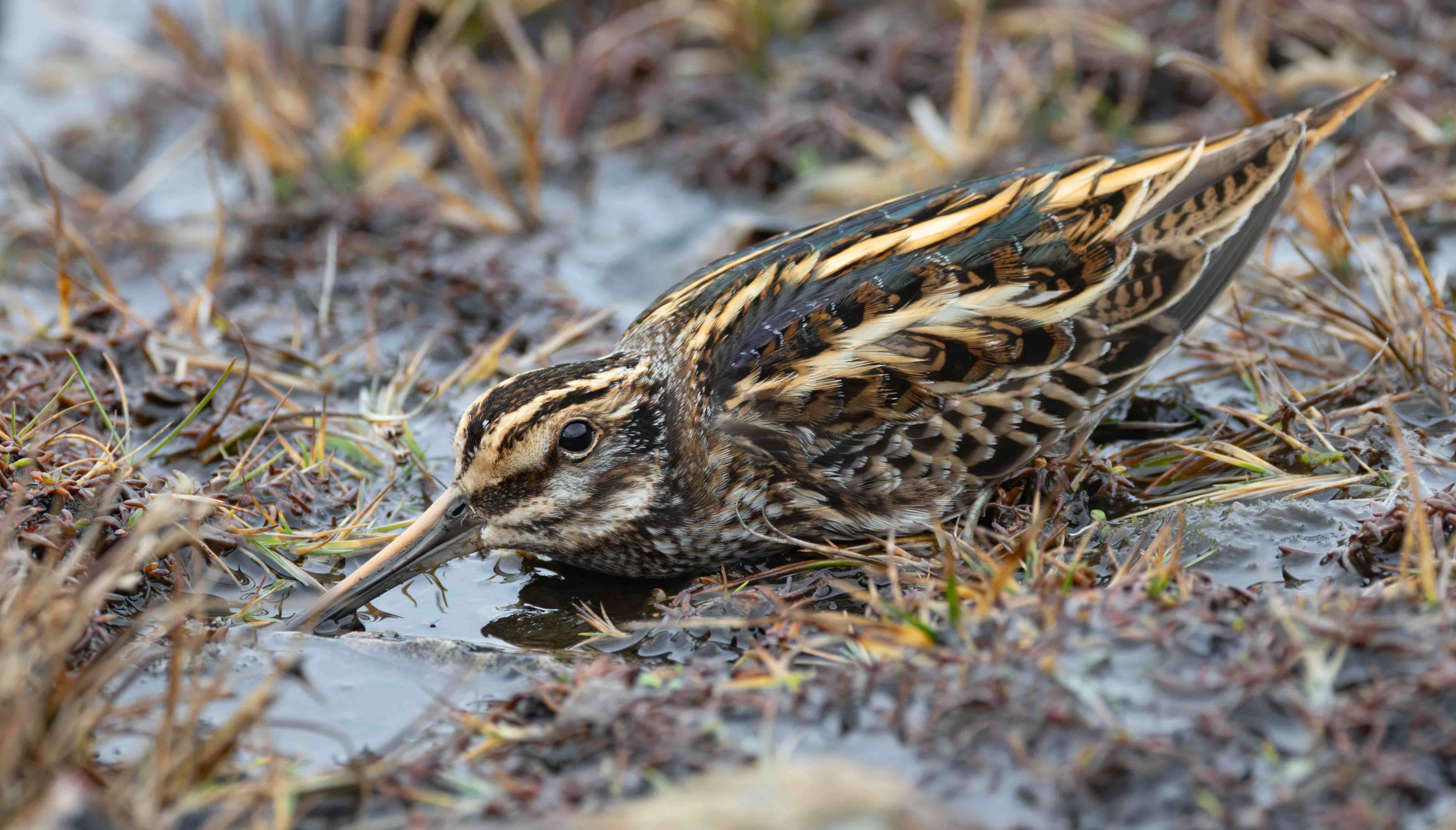
Jack Snipe can be found in many of the wetter areas currently, though spotting them before they flush from underfoot can be tricky (Alex Penn)
HIGHLIGHTS
Iceland Gull: adult again with gulls at Easter Lother
Yellow-browed Warbler: one at the Obs
Siberian Chiffchaff: two
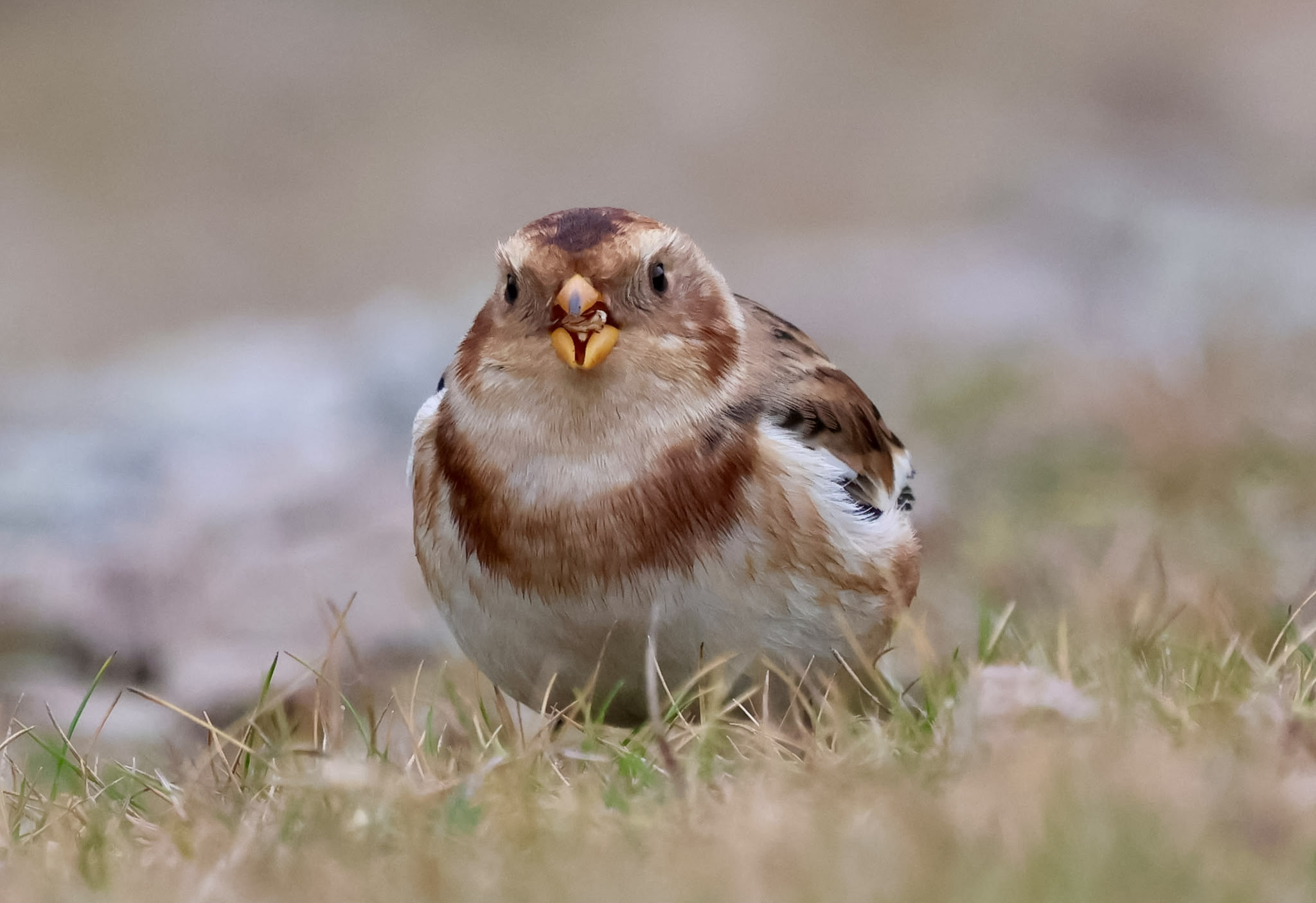
Small flurries of Snow Bunting were scattered across many of the exposed areas of the isle today (Ben Sheldon)
Sightings of note: 12 Barnacle Goose, 35 Greylag Goose, 9 Pink-footed Goose, 5 Whooper Swan, 40 Wigeon, 5 Teal, 1 Woodpigeon, 2 Water Rail, 3 Oystercatcher, 21 Lapwing, 12 Golden Plover, 7 Ringed Plover, 23 Curlew, 102 Turnstone, 1 Dunlin, 6 Purple Sandpiper, 1 Woodcock, 16 Jack Snipe, 70 Snipe, 10 Redshank, 6 Kittiwake, 1 Black-headed Gull, 31 Common Gull, 9 Guillemot, 4 Razorbill, 2 Red-throated Diver, 5 Blue Fulmar, 3 Grey Heron, 3 Merlin, 4 Carrion Crow, 86 Skylark, 1 Swallow, 3 Chiffchaff, 9 Blackcap, 3 Lesser Whitethroat, 64 Blackbird, 12 Fieldfare, 809 Redwing, 27 Song Thrush, 14 Robin, 5 Wheatear, 2 Dunnock, 1 Grey Wagtail, 15 alba Wagtail, 170 Meadow Pipit, 81 Rock Pipit, 3 Chaffinch, 20 Brambling, 51 Twite, 2 Mealy Redpoll, 4 Lapland Bunting, 18 Snow Bunting
Other wildlife: 1 Risso’s Dolphin
Year list: 197
______________________________________________________________________
10th to 11th October 2026
A calm and sunny couple of days, with the occasional heavy showers doing nothing to dampen the enjoyment of birding in such pleasant conditions in early October. New birds remained relatively few, though a Dusky Warbler was trapped in Plantation on the morning of 11th, with an adult Iceland Gull and new Rosefinch on the same day.
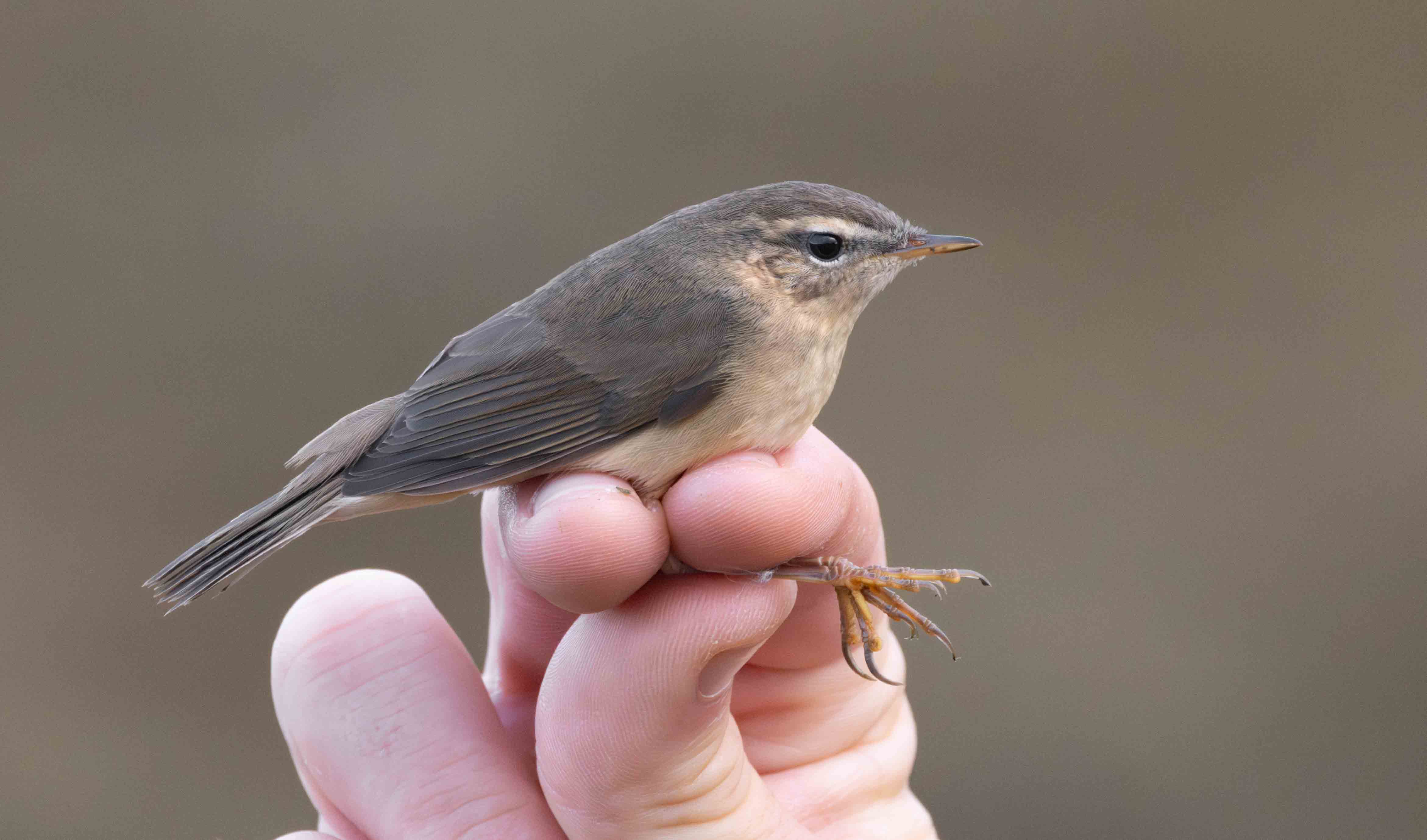
The tenth Dusky Warbler to be ringed on the isle (Alex Penn)
HIGHLIGHTS
Iceland Gull: adult in South Harbour on 11th
Yellow-browed Warbler: one on 10th, two on 11th
Dusky Warbler: one trapped in Plantation on 11th (24th isle record)
Siberian Chiffchaff: three on 11th
Olive-backed Pipit: one still throughout
Common Rosefinch: one on 11th
Sightings of note (high counts): 12 Barnacle Goose, 43 Greylag Goose, 12 Pink-footed Goose, 10 Whooper Swan, 43 Wigeon, 15 Teal, 1 Goldeneye, 1 Woodpigeon, 5 Water Rail, 11 Oystercatcher, 23 Lapwing, 18 Golden Plover, 12 Ringed Plover, 35 Curlew, 135 Turnstone, 3 Dunlin, 12 Purple Sandpiper, 1 Woodcock, 13 Jack Snipe, 76 Snipe, 37 Redshank, 10 Kittiwake, 3 Black-headed Gull, 18 Common Gull, 2 Great Skua, 5 Guillemot, 4 Razorbill, 2 Sooty Shearwater, 3 Grey Heron, 1 Kestrel, 3 Merlin, 1 Peregrine, 1 Rook, 4 Carrion Crow, 104 Skylark, 3 Swallow, 8 Chiffchaff, 13 Blackcap, 3 Lesser Whitethroat, 4 Ring Ouzel, 79 Blackbird, 15 Fieldfare, 1,943 Redwing, 25 Song Thrush, 15 Robin, 3 Pied Flycatcher, 1 Redstart, 8 Wheatear, 5 Dunnock, 2 Grey Wagtail, 5 Pied Wagtail, 17 alba Wagtail, 229 Meadow Pipit, 1 Tree Pipit, 90 Rock Pipit, 18 Chaffinch, 25 Brambling, 77 Twite, 4 Linnet, 3 Mealy Redpoll, 2 Northwestern Redpoll, 2 Siskin, 7 Lapland Bunting, 9 Snow Bunting, 2 Reed Bunting
Other wildlife (high counts): 1 Shetland Bee, 6 Risso’s Dolphin
Year list: 197
______________________________________________________________________
8th to 9th October 2026
A much better couple of days of birding in the isle. The 8th brought a handful of quality new arrivals but little in the way of common migrants, whilst the 9th was all about quantity, with a mass arrival of Redwing carpeting the isle. Headline birds on 8th were a fine Rustic Bunting frequenting the same patch of the Walli Burn as the dapper male earlier this spring, and an Arctic Warbler found at the Chapel Plantation – a rather late record for this species which we worried we’d missed this year. The calm conditions made for good cetacean viewing too, with an aggregation of Minke Whale and White-beaked Dolphin watched off the east coast of the isle in the late afternoon. A brief push of southeasterlies overnight on 8th which met a strong westerly system in the early hours created the perfect conditions to ground a large number of thrushes on 9th, with the team greeted by swirling flocks of Redwing ‘tseeping’ everywhere across the isle upon heading out in the morning. The sheer spectacle of a mass arrival of thrushes is always awe-inspiring, with restless flocks of birds forming moving carpets across all the sheltered areas of the isle. A scattering of Ring Ouzel and a the first Mistle Thrush of the autumn made for a six-species day of thrushes, with a Hawfinch at Barkland being a typical accessory to the Redwing movement.
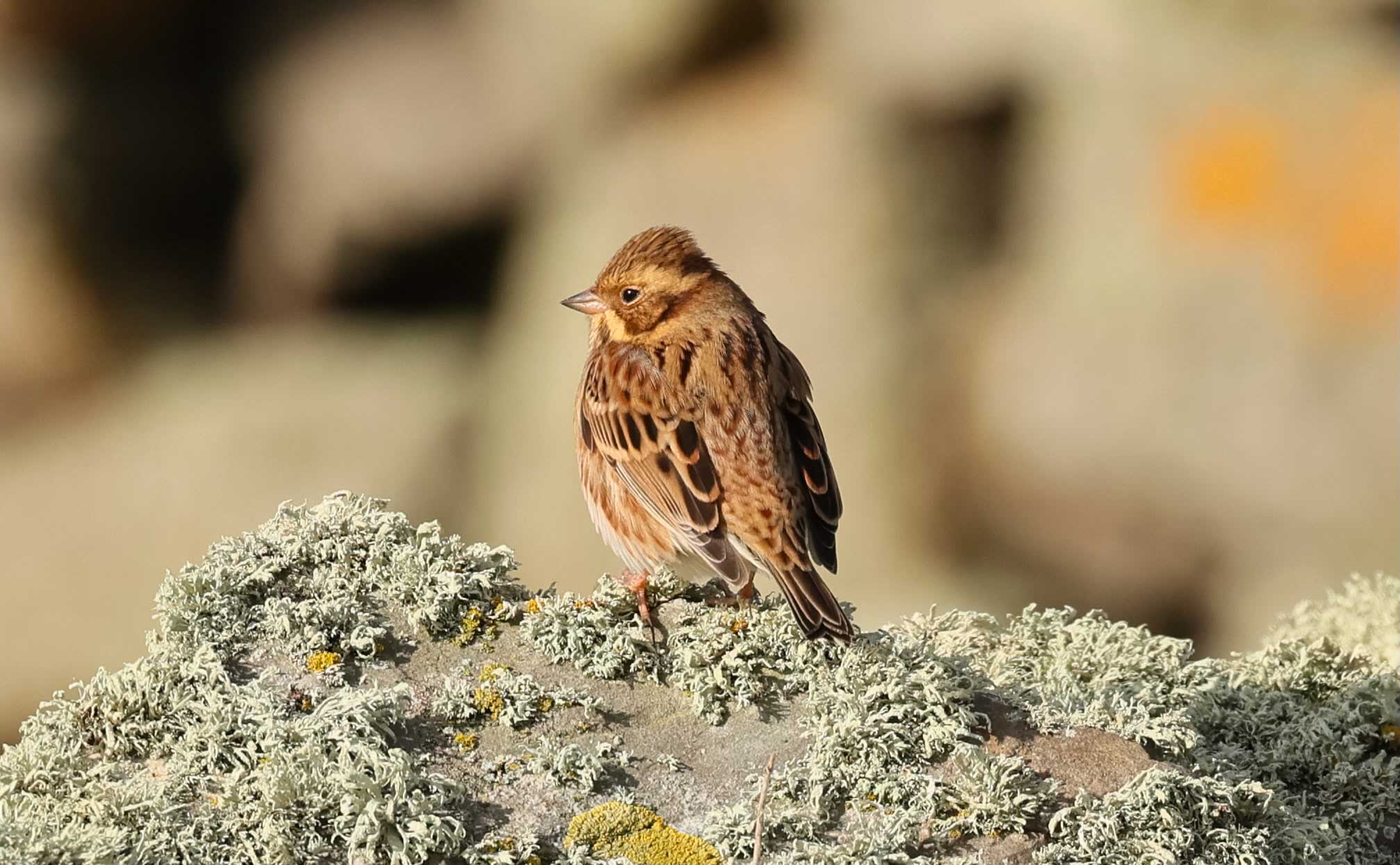
Though not as confiding as the spring male earlier this year, this Rustic Bunting afforded good views to some (Steve Arlow)
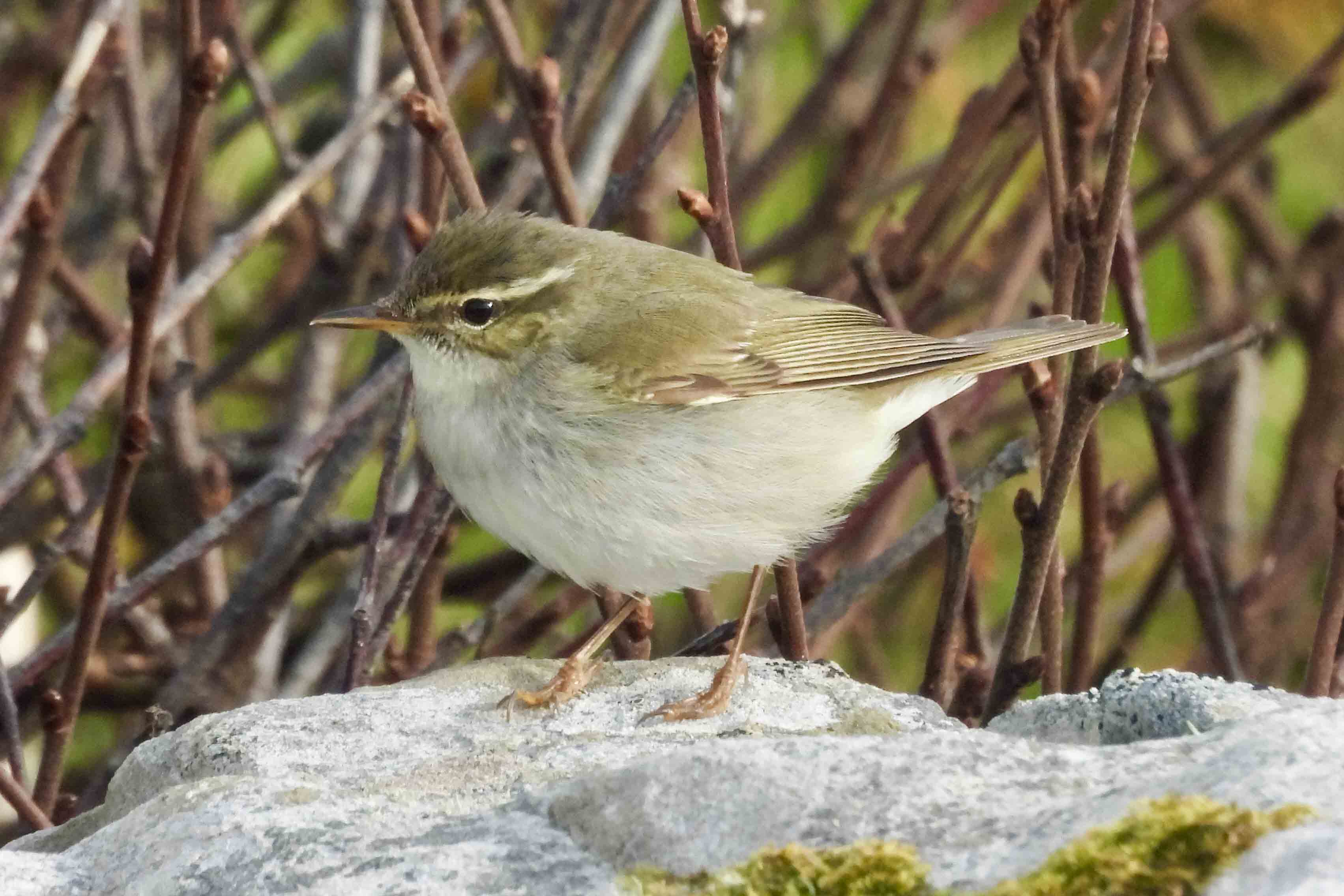
Better late than never – this Arctic Warbler is just the seventh record in October (Luke Marriner)
HIGHLIGHTS
RUSTIC BUNTING: one at the Walli Burn on 8th
Short-toed Lark: still at North Light to 8th
Yellow-browed Warbler:six on 8th, three on 9th
Siberian Chiffchaff:one on both dates
Arctic Warbler:one at the Chapel Plantation on 8th, still present on 9th
Barred Warbler: one at Steensi on 8th, then Koolin on 9th
Olive-backed Pipit: one still around Stoneybrek
Hawfinch: one at Barkland on 9th
Common Rosefinch: one on 8th
Little Bunting: one on 8th
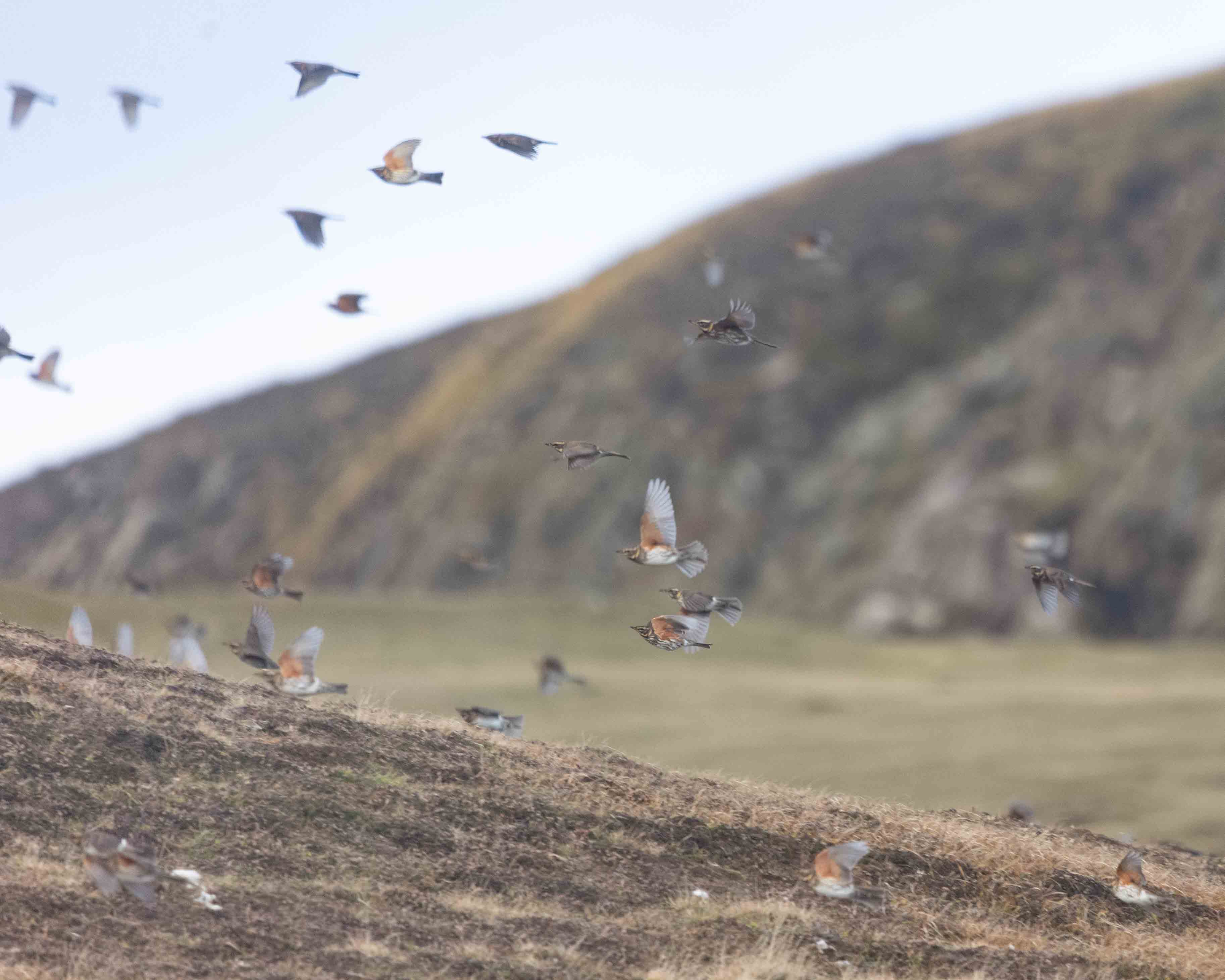
Almost 12,000 Redwing covered the isle on 9th, bringing smaller numbers of other thrushes along for the ride (Tom Wright)
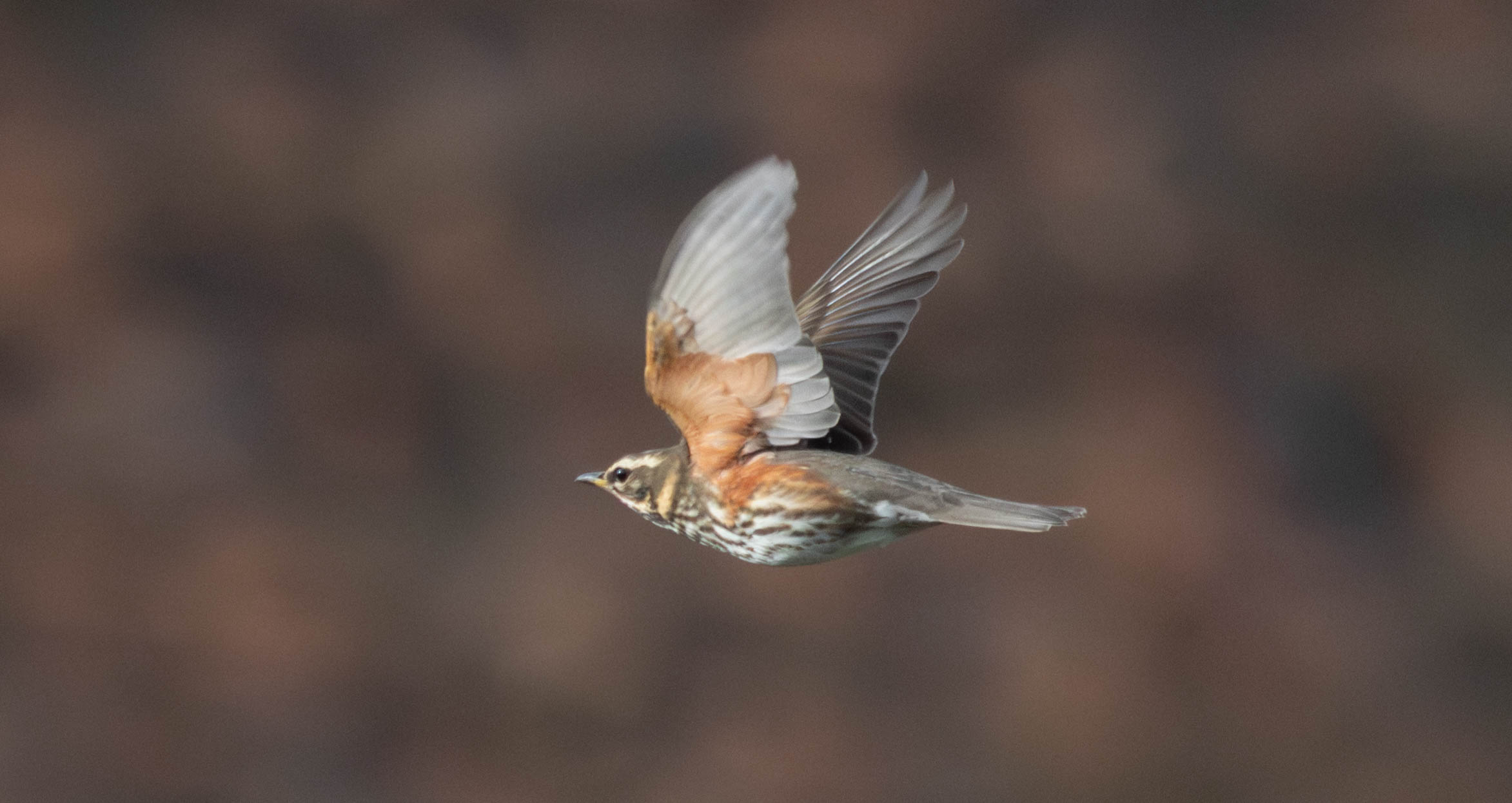
Mass arrivals of these beautiful thrushes are a highlight of any Fair Isle autumn (Alex Penn)
Sightings of note (high counts): 22 Barnacle Goose, 73 Greylag Goose, 36 Pink-footed Goose, 13 Whooper Swan, 16 Wigeon, 8 Teal, 1 Common Scoter, 1 Woodpigeon, 1 Water Rail, 10 Oystercatcher, 24 Lapwing, 24 Golden Plover, 10 Ringed Plover, 35 Curlew, 1 Black-tailed Godwit, 103 Turnstone, 1 Dunlin, 2 Purple Sandpiper, 8 Jack Snipe, 96 Snipe, 35 Redshank, 3 Kittiwake, 4 Black-headed Gull, 28 Common Gull, 1 Lesser Black-backed Gull, 1 Great Skua, 6 Guillemot, 3 Razorbill, 2 Grey Heron, 1 Sparrowhawk, 2 Kestrel, 4 Merlin, 6 Carrion Crow, 103 Skylark, 5 Swallow, 1 House Martin, 2 Willow Warbler, 7 Chiffchaff, 12 Blackcap, 3 Lesser Whitethroat, 16 Ring Ouzel, 127 Blackbird, 43 Fieldfare, 11,907 Redwing, 296 Song Thrush, 1 Mistle Thrush, 1 Spotted Flycatcher, 29 Robin, 3 Pied Flycatcher, 1 Black Redstart, 1 Redstart, 6 Wheatear, 2 Dunnock, 4 Grey Wagtail, 3 Pied Wagtail, 17 alba Wagtail, 286 Meadow Pipit, 92 Rock Pipit, 15 Chaffinch, 31 Brambling, 141 Twite, 4 Linnet, 1 Mealy Redpoll, 1 Northwestern Redpoll, 2 Goldfinch, 4 Siskin, 2 Lapland Bunting, 4 Snow Bunting, 4 Reed Bunting
Other wildlife (high counts): 1 Silver Y, 4 Buff-tailed Bumblebee, 10 Minke Whale, 40 White-beaked Dolphin
Year list: 196
______________________________________________________________________
6th to 7th October 2026
Another couple of days of little change, despite the winds dropping to a calm, warm and sunny day on 7th. Smaller numbers of Whooper Swan and regular skeins of geese continued to move through, and the same few scarcities remained in residence around the isle amongst dropping numbers of passerine migrants. The calmer sea conditions revealed a good aggregation of Minke Whale around the isle on 7th, as well as a pod of White-beaked Dolphin off Dronger. This gathering of Minke has become a pattern in recent years at this point in the year, with animals congregating to feed mostly off the east side of the isle.
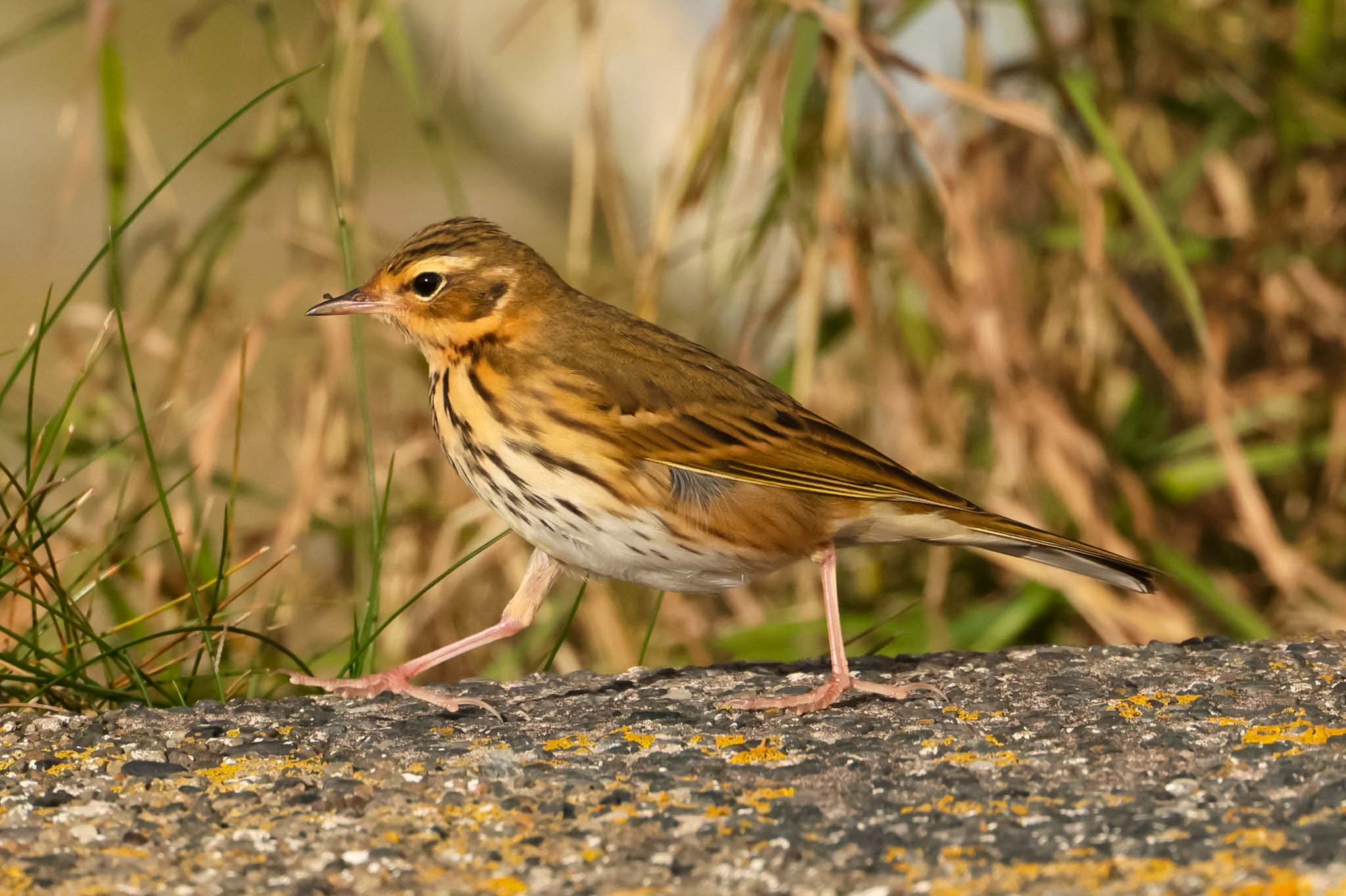
Now on its sixth day, the Olive-backed Pipit has gradually become more showy during its stay around Stoneybrek (Steve Arlow)
HIGHLIGHTS
Short-toed Lark: still at North Light throughout
Yellow-browed Warbler:five on 6th, six on 7th
Olive-backed Pipit: one still around Stoneybrek
Common Rosefinch: one on 7th
Little Bunting: two on 6th, one on 7th
Sightings of note (high counts): 210 Barnacle Goose, 52 Greylag Goose, 151 Pink-footed Goose, 45 Whooper Swan, 43 Wigeon, 13 Teal, 1 Red-breasted Merganser, 2 Woodpigeon, 2 Water Rail, 9 Oystercatcher, 24 Lapwing, 32 Golden Plover, 19 Ringed Plover, 1 Whimbrel, 36 Curlew, 1 Bar-tailed Godwit, 1 Black-tailed Godwit, 133 Turnstone, 1 Ruff, 6 Dunlin, 4 Purple Sandpiper, 1 Woodcock, 7 Jack Snipe, 77 Snipe, 37 Redshank, 34 Black-headed Gull, 16 Common Gull, 8 Great Skua, 12 Guillemot, 14 Razorbill, 2 Red-throated Diver, 3 Grey Heron, 4 Sparrowhawk, 1 Hen Harrier, 2 Kestrel, 3 Merlin, 2 Peregrine, 3 Carrion Crow, 123 Skylark, 2 Swallow, 3 Willow Warbler, 7 Chiffchaff, 1 Sedge Warbler, 9 Blackcap, 3 Lesser Whitethroat, 4 Blackbird, 21 Redwing, 53 Song Thrush, 1 Spotted Flycatcher, 23 Robin, 1 Black Redstart, 1 Redstart, 14 Wheatear, 4 Dunnock, 5 Grey Wagtail, 3 Pied Wagtail, 26 alba Wagtail, 267 Meadow Pipit, 96 Rock Pipit, 8 Chaffinch, 18 Brambling, 143 Twite, 3 Linnet, 6 Mealy Redpoll, 3 Northwestern Redpoll, 2 Goldfinch, 2 Siskin, 6 Lapland Bunting, 6 Snow Bunting, 7 Reed Bunting
Other wildlife (high counts): 1 Shetland Bee, 3 Buff-tailed Bumblebee, 14 Minke Whale, 1 Risso’s Dolphin, 15 White-beaked Dolphin
Year list: 195
______________________________________________________________________
4th to 5th October 2026
A breezy couple of days, with the 5th in particular bringing strong, gusting southwesterlies to the isle. The conditions grounded good numbers of Whooper Swan and Barnacle Goose, with groups of birds stopping to take a break across the south of the isle before resuming their journeys southwards. There was otherwise little change to report, with few passerines attempting to brave the stormy conditions.
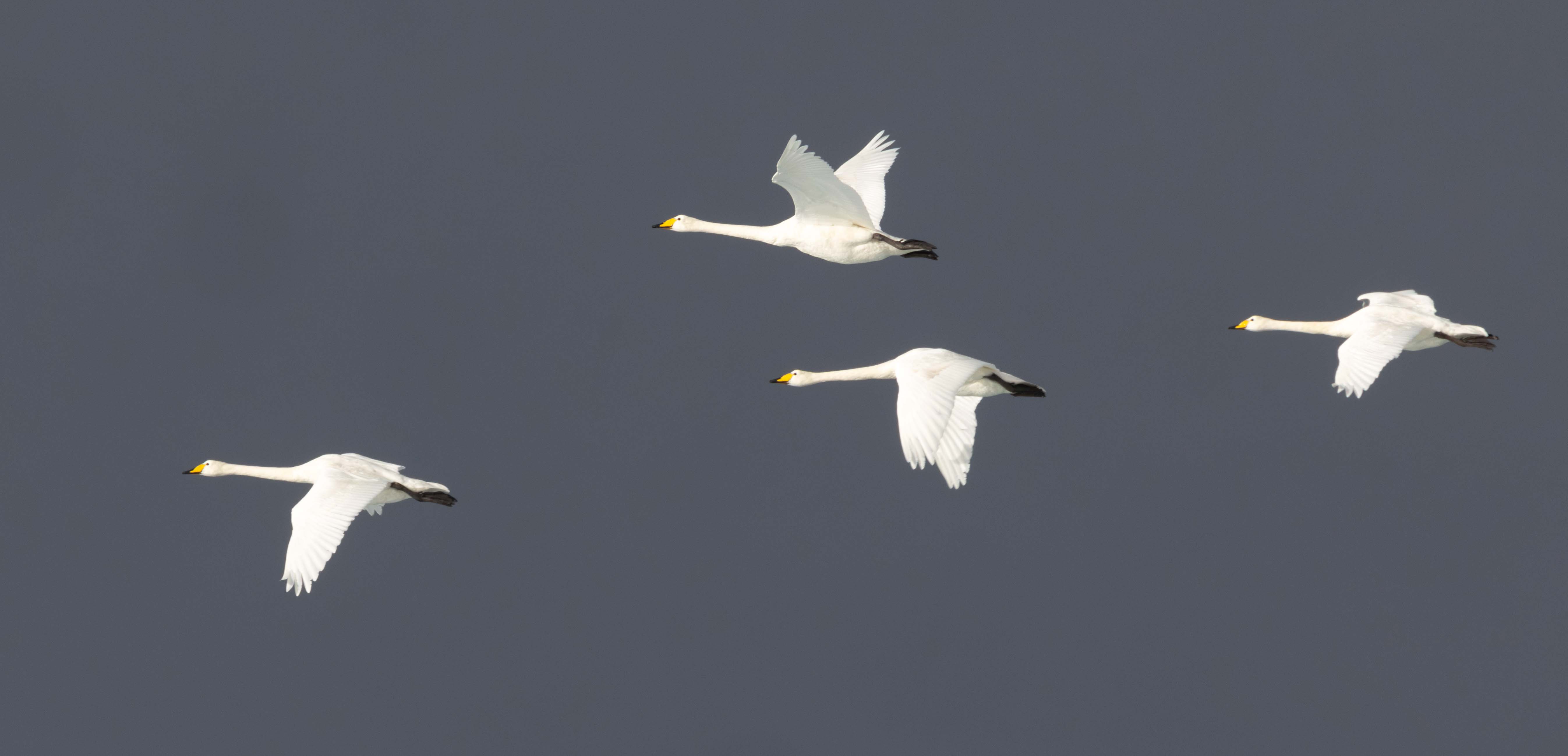
Whooper Swan numbers built through the 5th, with birds taking several attempts to then move on into the strong headwinds (Alex Penn)
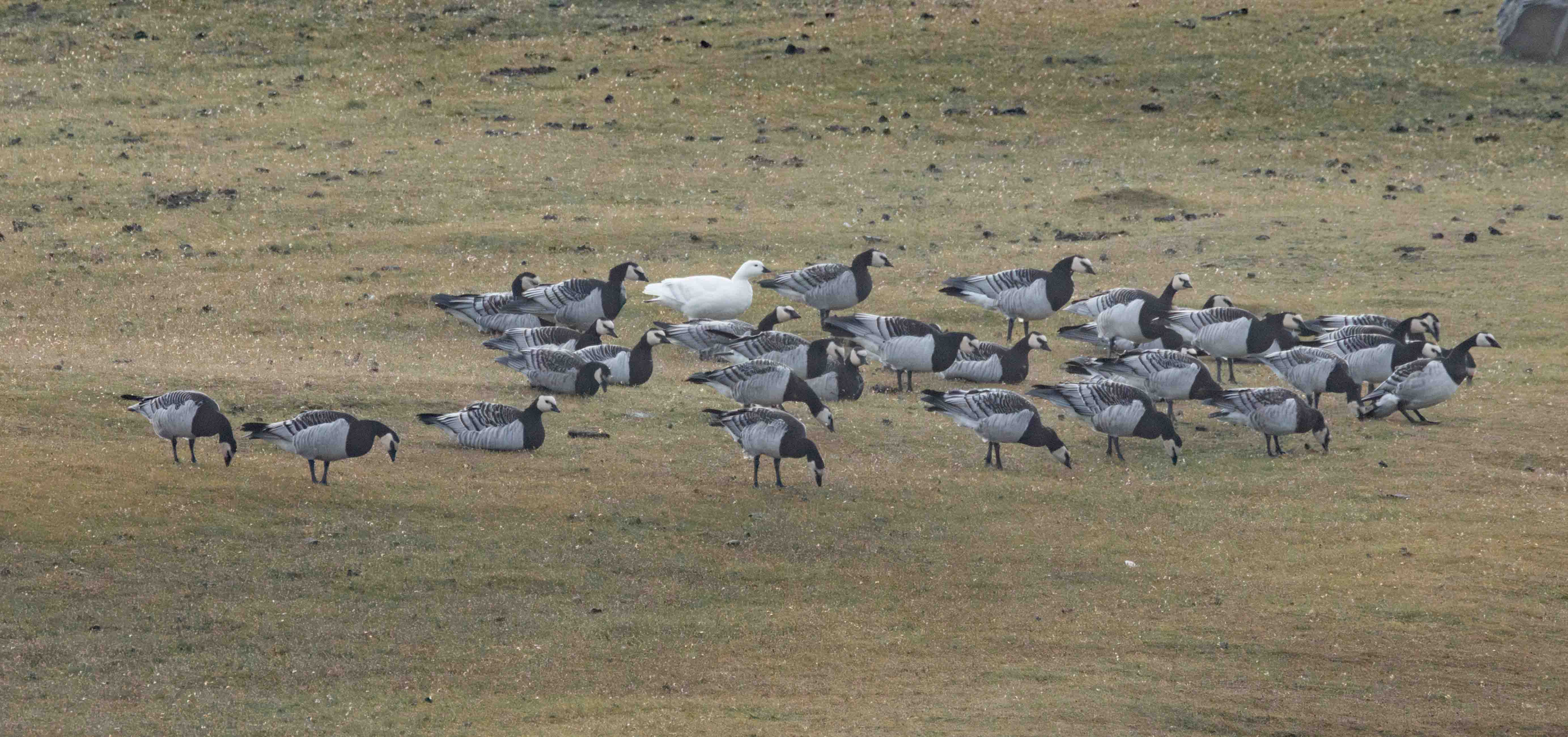
This all-white Barnacle Goose had the pulse racing when it appeared amongst the heavy goose passage – the isle will have to wait a little longer for its first wild Snow Goose! (Alex Penn)
HIGHLIGHTS
Short-toed Lark: still at North Light
Yellow-browed Warbler: two on both days
Red-breasted Flycatcher: still at Obs on 4th
Olive-backed Pipit: one still around Stoneybrek
Little Bunting: two on 4th, one on 5th
Sightings of note (high counts): 167 Barnacle Goose, 86 Greylag Goose, 131 Pink-footed Goose, 90 Whooper Swan, 15 Wigeon, 1 Pintail, 17 Teal, 2 Red-breasted Merganser, 3 Woodpigeon, 3 Water Rail, 7 Oystercatcher, 20 Lapwing, 36 Golden Plover, 1 Grey Plover, 10 Ringed Plover, 19 Curlew, 1 Black-tailed Godwit, 95 Turnstone, 1 Ruff, 1 Sanderling, 6 Dunlin, 3 Purple Sandpiper, 5 Jack Snipe, 1 Common Sandpiper, 18 Redshank, 19 Kittiwake, 26 Black-headed Gull, 36 Common Gull, 1 Lesser Black-backed Gull, 11 Great Skua, 1 Arctic Skua, 11 Guillemot, 34 Razorbill, 2 Sooty Shearwater, 3 Grey Heron, 2 Sparrowhawk, 1 Hen Harrier, 2 Short-eared Owl, 2 Kestrel, 2 Merlin, 2 Carrion Crow, 4 Swallow, 3 Willow Warbler, 5 Chiffchaff, 1 Grasshopper Warbler, 13 Blackcap, 1 Lesser Whitethroat, 2 Blackbird, 17 Redwing, 13 Song Thrush, 5 Robin, 1 Black Redstart, 1 Redstart, 4 Wheatear, 1 Dunnock, 1 Grey Wagtail, 10 Chaffinch, 5 Brambling, 4 Linnet, 4 Mealy Redpoll, 2 Goldfinch, 12 Siskin, 2 Lapland Bunting, 2 Snow Bunting, 7 Reed Bunting
Year list: 195
______________________________________________________________________
3rd October 2026
Weather: Partly sunny, with showers through the afternoon. F5-6 SW
Another good day’s birding, and though new arrivals were relatively sparse there was some quality to be found, with a Red-throated Pipit seen at Suka Mire and a Red-breasted Flycatcher appearing at Plantation. A probable Buff-bellied Pipit flushed from Byerwalls sadly did not reappear later in the day, though the Olive-backed Pipit was a little more obliging around Stoneybrek, where it skulked in the long grass of ditches and gardens. The first Barnacle Goose of the autumn joined the Pinks and Greylags, and several groups of Whooper Swan moved through.
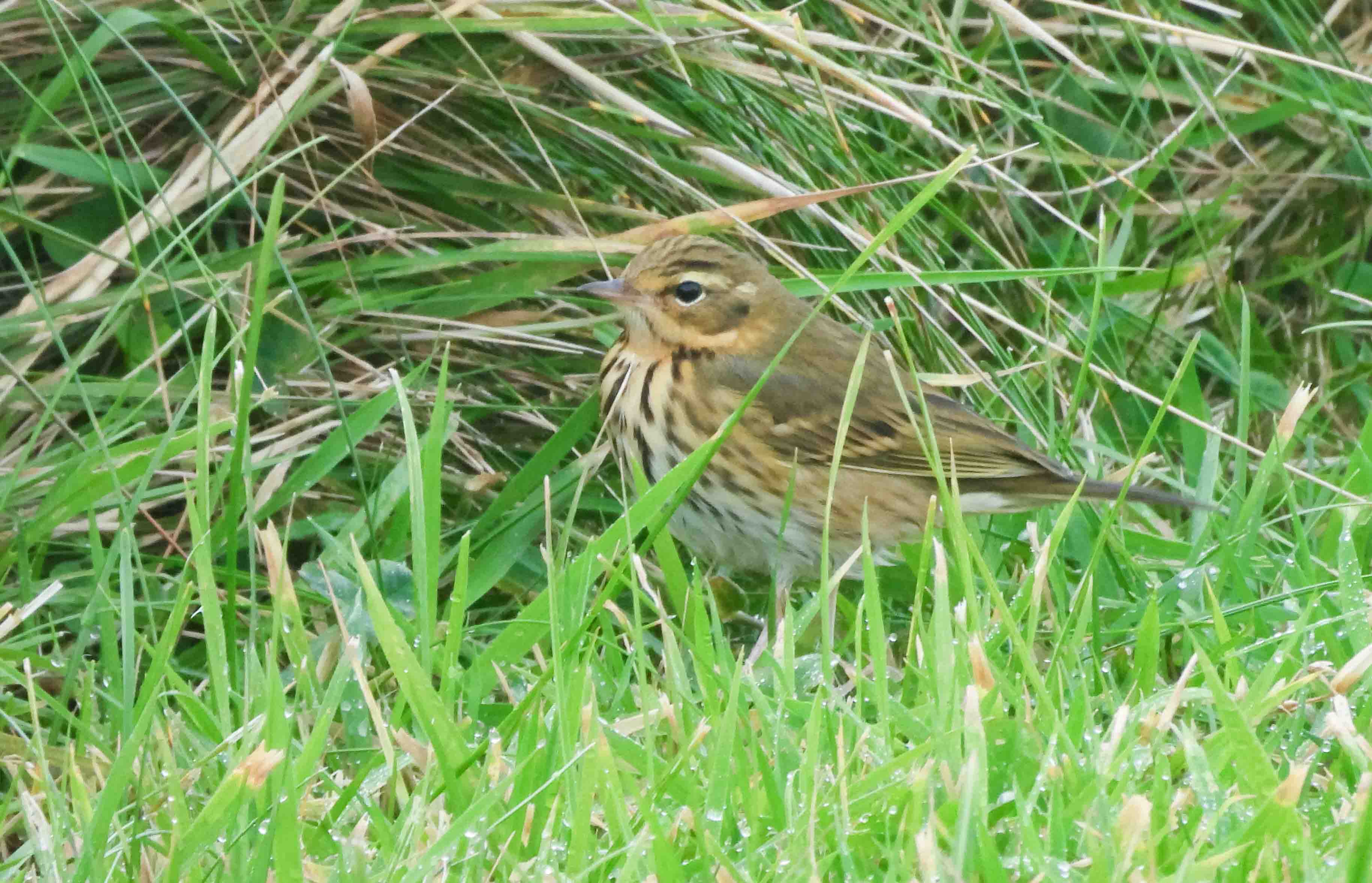
Though elusive for much of the day, good views of the Olive-backed Pipit were eventually had (Luke Marriner)
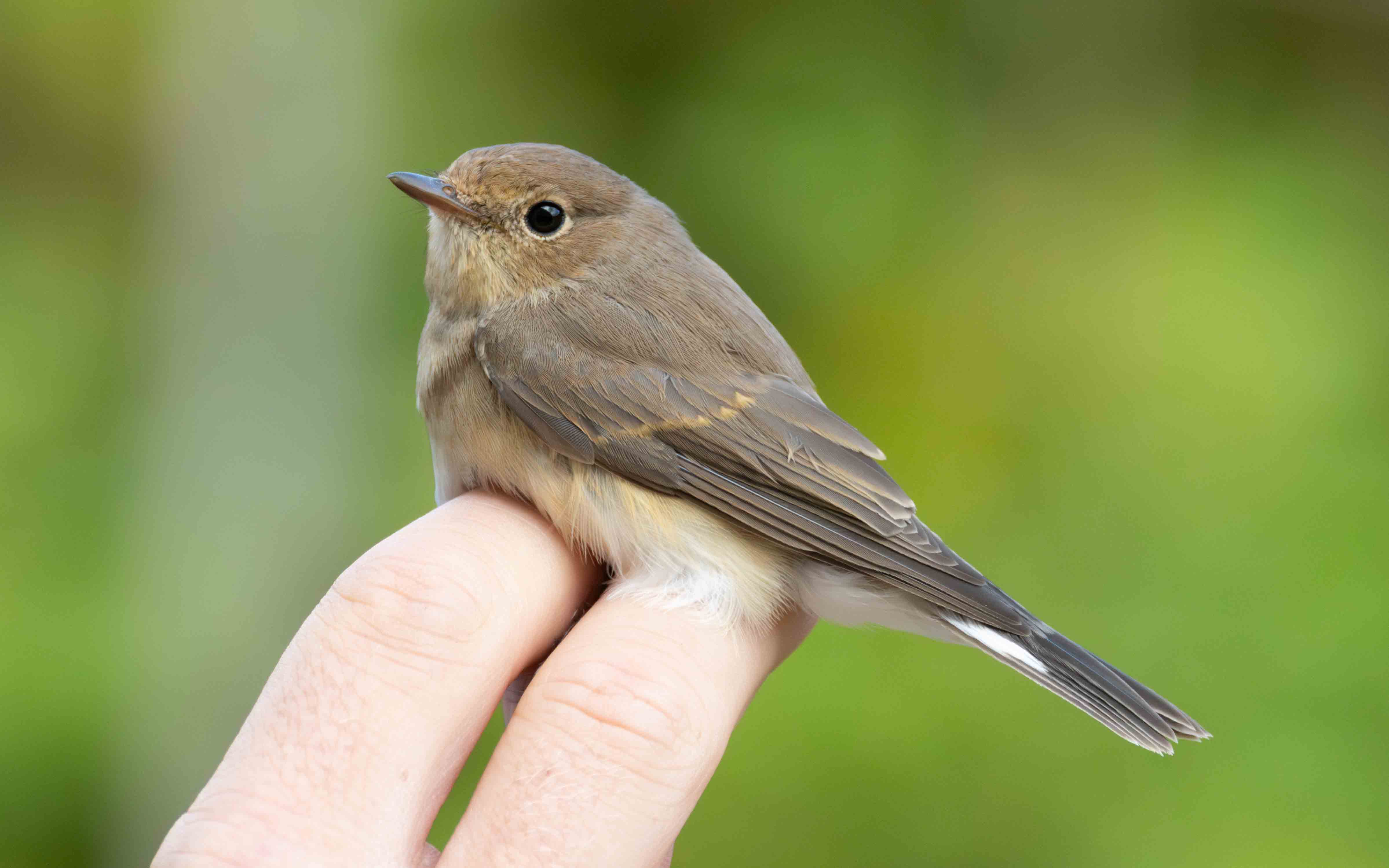
Red-breasted Flycatcher is always a pleasure to see in the hand (Alex Penn)
HIGHLIGHTS
RED-THROATED PIPIT: a 1cy in Suka Mire in the afternoon
Short-toed Lark: still at North Light
Yellow-browed Warbler: four
Red-breasted Flycatcher: one at Plantation was later trapped
Olive-backed Pipit: one around Stoneybrek
Little Bunting: three; two at North Shirva, one in the Ringing Hut marsh
Sightings of note: 1 Barnacle Goose, 36 Greylag Goose, 61 Pink-footed Goose, 18 Whooper Swan, 53 Wigeon, 3 Teal, 5 Woodpigeon, 2 Water Rail, 11 Oystercatcher, 27 Lapwing, 20 Golden Plover, 1 Grey Plover, 9 Ringed Plover, 38 Curlew, 82 Turnstone, 1 Sanderling, 14 Dunlin, 1 Woodcock, 3 Jack Snipe, 83 Snipe, 35 Redshank, 2 Black-headed Gull, 33 Common Gull, 1 Lesser Black-backed Gull, 9 Great Skua, 13 Guillemot, 49 Razorbill, 1 Storm Petrel, 5 Grey Heron, 2 Sparrowhawk, 1 Hen Harrier, 1 Short-eared Owl, 4 Kestrel, 3 Merlin, 1 Carrion Crow, 89 Skylark, 6 Swallow, 4 Willow Warbler, 9 Chiffchaff, 1 Grasshopper Warbler, 9 Blackcap, 2 Lesser Whitethroat, 10 Blackbird, 99 Redwing, 118 Song Thrush, 43 Robin, 1 Redstart, 8 Wheatear, 3 Dunnock, 6 Grey Wagtail, 21 alba Wagtail, 268 Meadow Pipit, 1 Tree Pipit, 70 Rock Pipit, 11 Chaffinch, 19 Brambling, 143 Twite, 4 Linnet, 2 Northwestern Redpoll, 3 Goldfinch, 6 Siskin, 6 Lapland Bunting, 2 Snow Bunting, 6 Reed Bunting
Other wildlife: 3 Buff-tailed Bumblebee
Year list: 195
______________________________________________________________________
2nd October 2026
Weather: Mostly sunny. F5-6 S
Another pleasingly birdy day, though numbers of birds were generally lower than yesterday, with most of yesterday’s finches in particular having apparently moved through quickly. Today’s stiffer southerly breeze kept the northwest cliffs busy, with migrants seeking shelter in the lee of all the north-facing geos. Scarcities were represented by three Little Bunting, an Olive-backed Pipit around Charlie’s Trees and a Richard’s Pipit which flew north at Dronger. Amongst the common migrants present, a flock of seven Whooper Swan and the first Woodcock of the autumn added a more wintry flavour to sightings.
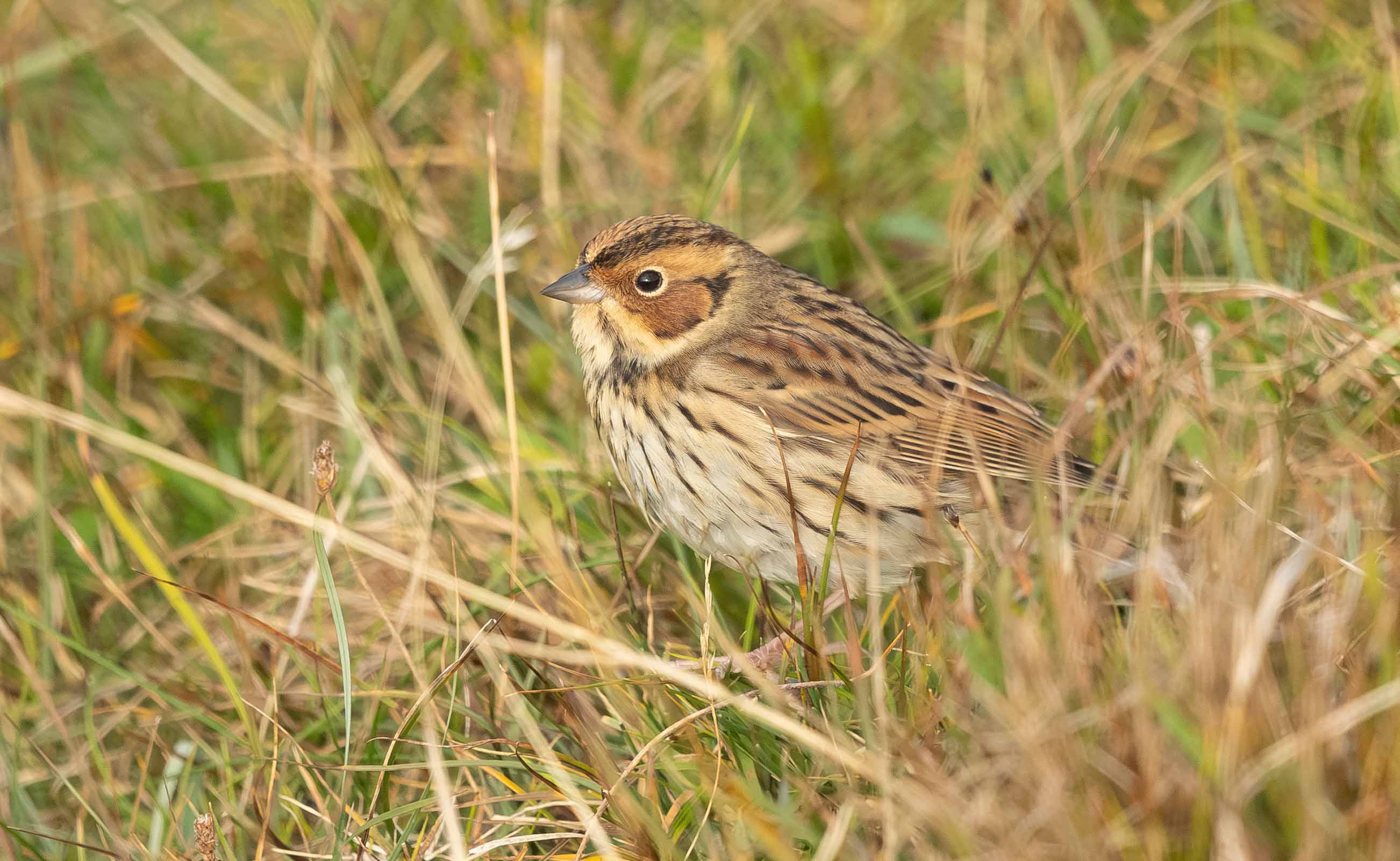
A showy Little Bunting at the Ringing Hut marsh (Tom Wright)
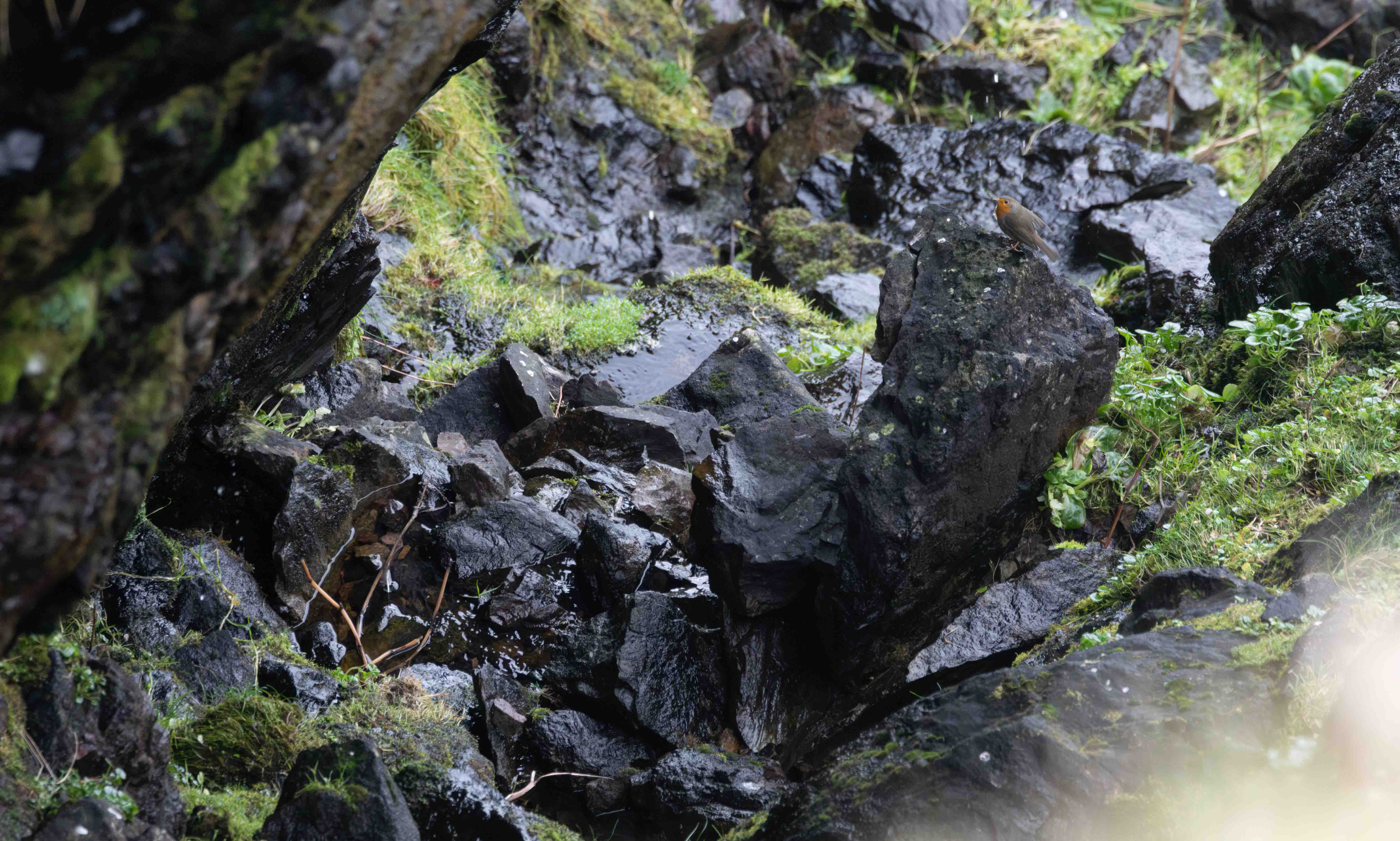
Most geos continue to host at least one Robin, doing their best impression of something rarer in the gloomy depths of the geo! (Alex Penn)
HIGHLIGHTS
Short-toed Lark: one still at North Light
Yellow-browed Warbler: ten
Siberian Chiffchaff: one at North Shirva
Richard’s Pipit: one flew north at Dronger
Olive-backed Pipit: one at Charlie’s Trees
Common Rosefinch: one at Chalet
Little Bunting: three; Ringing Hut marsh, North Shirva and Walli Burn
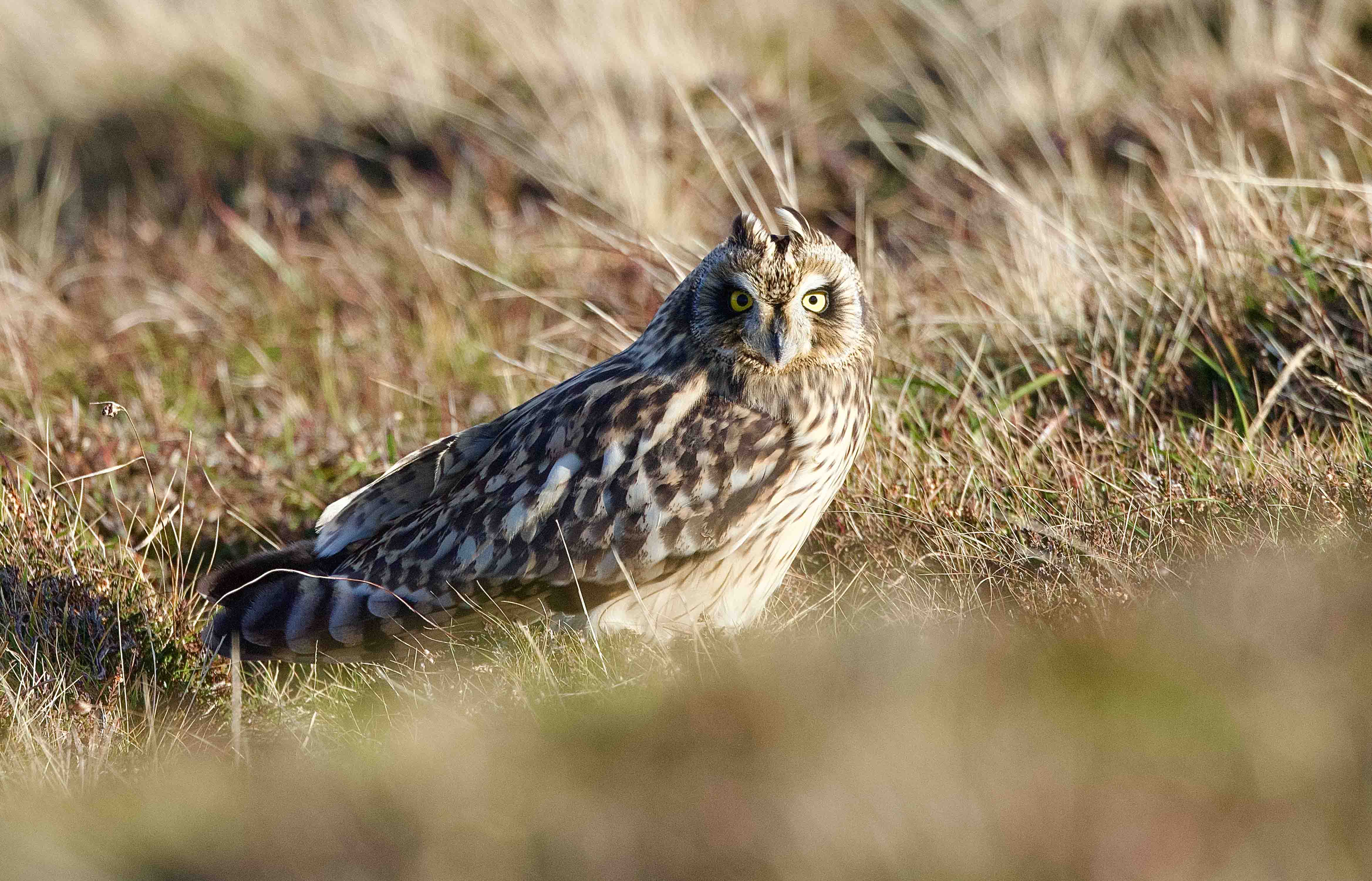
Short-eared Owl in the afternoon sun at Dronger (Ian Cowgill)
Sightings of note: 31 Greylag Goose, 63 Pink-footed Goose, 7 Whooper Swan, 28 Wigeon, 1 Pintail, 15 Teal, 2 Woodpigeon, 3 Water Rail, 5 Oystercatcher, 12 Lapwing, 32 Golden Plover, 1 Grey Plover, 20 Ringed Plover, 54 Curlew, 1 Bar-tailed Godwit, 1 Black-tailed Godwit, 117 Turnstone, 1 Knot, 1 Ruff, 1 Sanderling, 18 Dunlin, 12 Purple Sandpiper, 2 Woodcock, 5 Jack Snipe, 70 Snipe, 1 Common Sandpiper, 1 Green Sandpiper, 26 Redshank, 6 Kittiwake, 1 Black-headed Gull, 62 Common Gull, 7 Great Skua, 6 Guillemot, 105 Razorbill, 1 Manx Shearwater, 6 Grey Heron, 3 Sparrowhawk, 1 Hen Harrier, 3 Short-eared Owl, 3 Kestrel, 3 Merlin, 1 Peregrine, 3 Carrion Crow, 98 Skylark, 14 Swallow, 5 Willow Warbler, 12 Chiffchaff, 1 Grasshopper Warbler, 20 Blackcap, 1 Garden Warbler, 2 Lesser Whitethroat, 8 Blackbird, 1 Fieldfare, 99 Redwing, 153 Song Thrush, 54 Robin, 1 Pied Flycatcher, 1 Black Redstart, 3 Redstart, 1 Whinchat, 13 Wheatear, 5 Dunnock, 5 Grey Wagtail, 1 Pied Wagtail, 25 alba Wagtail, 252 Meadow Pipit, 1 Tree Pipit, 100 Rock Pipit, 21 Chaffinch, 16 Brambling, 58 Twite, 5 Linnet, 5 Mealy Redpoll, 2 Northwestern Redpoll, 2 Goldfinch, 18 Siskin, 5 Lapland Bunting, 1 Snow Bunting, 6 Reed Bunting
Other wildlife: 2 Painted Lady, 2 Buff-tailed Bumblebee, 1 Minke Whale
Year list: 195
______________________________________________________________________
1st October 2026
Weather: Mostly sunny. F3-4 SSW
Yesterday’s storm blew through overnight to leave a beautiful warm, calm and sunny day today with which to discover what the southeasterly gales had brought us. Though our efforts couldn’t quite match the south mainland of Shetland today, it was nonetheless a very pleasant day’s birding, topped off with highlights of a Lanceolated Warbler charging around the North Light compound (our first since 2024) and a Radde’s Warbler along Hill Dyke (in Fair Isle terms, much the rarer species!). As well as these standouts, there were good numbers of common migrants to be found, with birds apparently moving up the cliffs and exploring the isle through the day, and the north cliffs in particular alive with birds. Thrush numbers remained similar to yesterday, though there was a clear arrival of finches today, with good totals logged of Chaffinch and Brambling, bringing the first Hawfinch of the autumn with them.
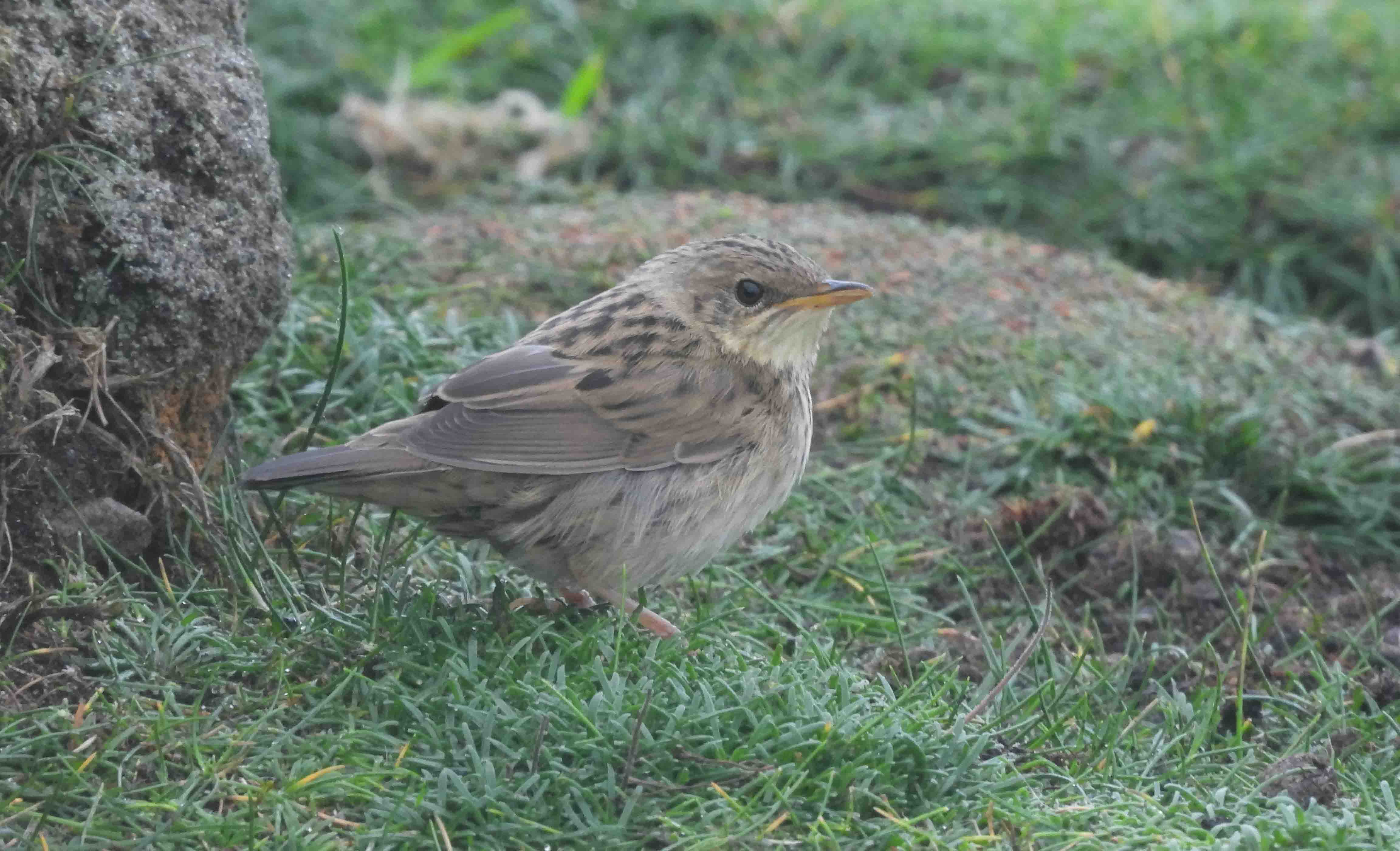
After spending some time running up and down the North Light walls, the Lancie soon headed to the nearby clifftops and out of sight (Luke Marriner)
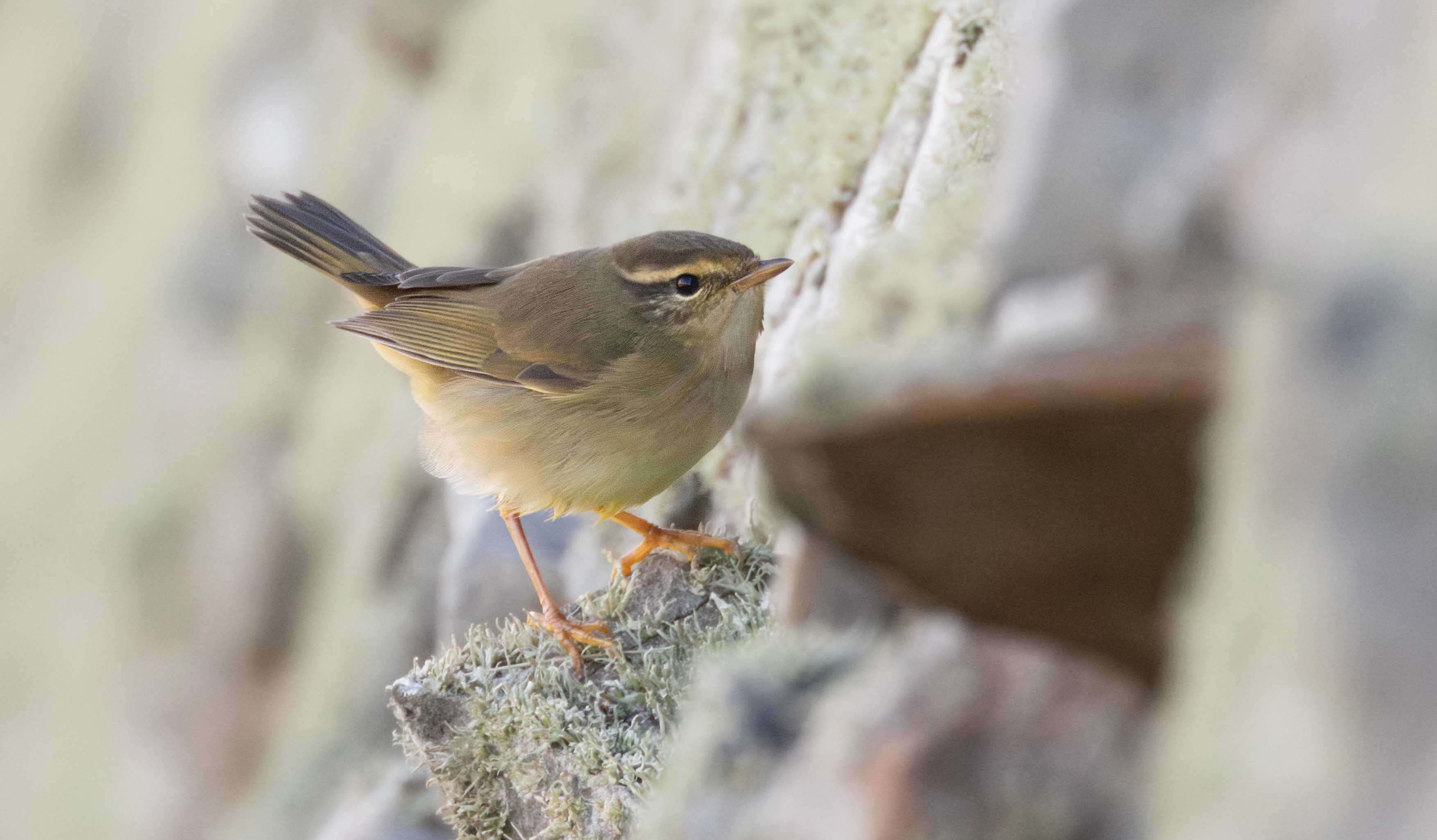
In contrast, the Radde’s Warbler showed very well for several hours along various walls in the Setter area (Alex Penn)
HIGHLIGHTS
LANCEOLATED WARBLER: one in the North Light compound then relocated to the cliffs, where it was not seen again (104th isle record)
Short-toed Lark: one still at North Light
Yellow-browed Warbler: 25, mostly along the cliffs of the north
Radde’s Warbler: one at Hill Dyke was mobile along the stone walls, then trapped in Plantation (12th isle record, first since 2023)
Siberian Chiffchaff: one at Wester Lother
Barred Warbler: two; at Chapel Plantation and Kirn o’Skroo
Hawfinch: one at Wester Lother
Little Bunting: one still at North Shirva
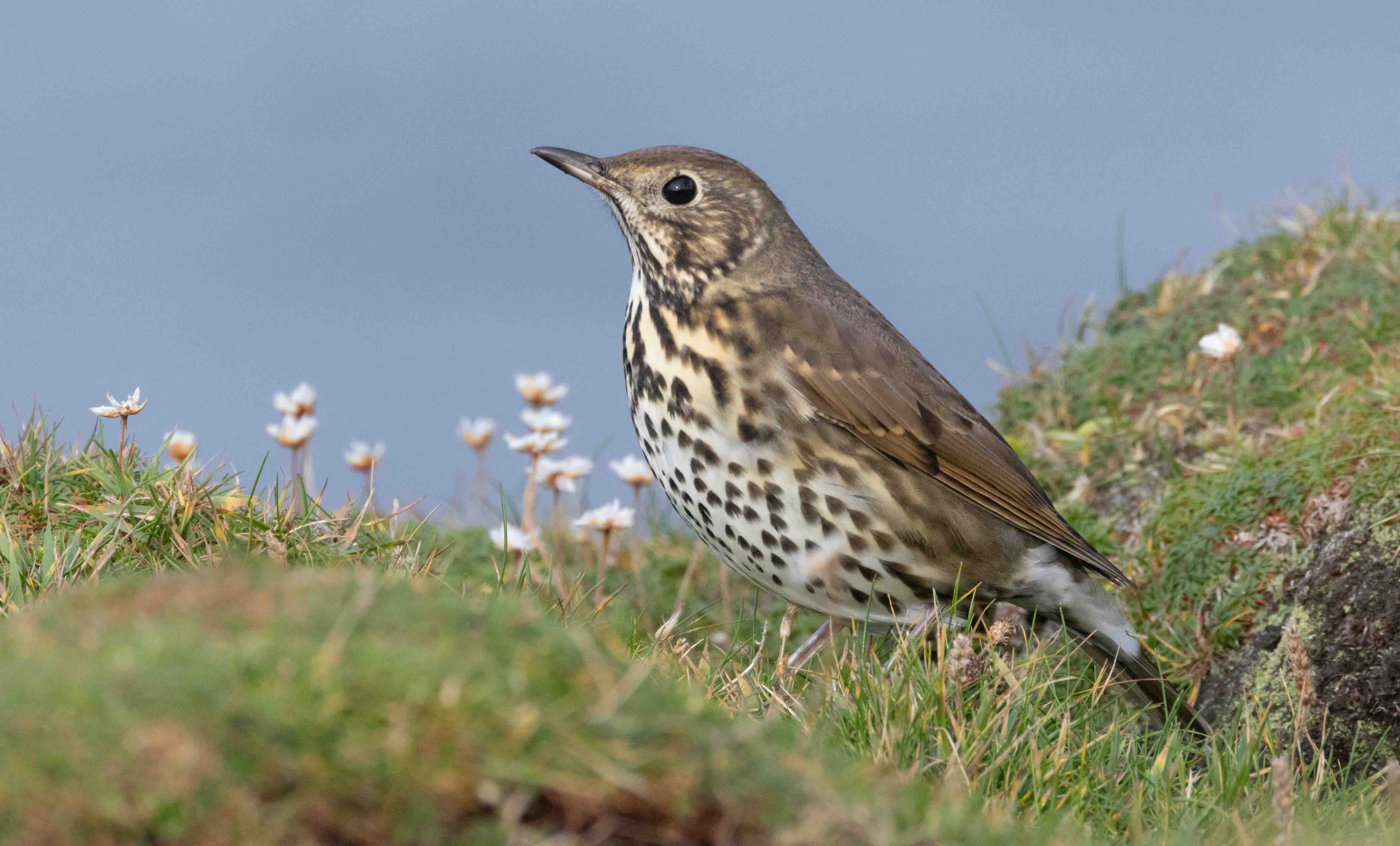
Almost 200 Song Thrushes were present on the isle today, mostly in small groups on sheltered cliffs (Alex Penn)
Sightings of note: 9 Greylag Goose, 128 Pink-footed Goose, 40 Wigeon, 9 Teal, 11 Oystercatcher, 14 Lapwing, 52 Golden Plover, 1 Grey Plover, 19 Ringed Plover, 36 Curlew, 67 Turnstone, 3 Knot, 1 Ruff, 25 Dunlin, 2 Purple Sandpiper, 10 Jack Snipe, 100 Snipe, 40 Redshank, 4 Black-headed Gull, 27 Common Gull, 1 Lesser Black-backed Gull, 13 Great Skua, 14 Guillemot, 3 Sooty Shearwater, 8 Grey Heron, 4 Sparrowhawk, 1 Hen Harrier, 2 Kestrel, 2 Merlin, 1 Peregrine, 5 Carrion Crow, 147 Skylark, 8 Swallow, 12 Willow Warbler, 18 Chiffchaff, 19 Blackcap, 2 Garden Warbler, 3 Lesser Whitethroat, 2 Ring Ouzel, 4 Blackbird, 147 Redwing, 187 Song Thrush, 1 Spotted Flycatcher, 54 Robin, 1 Pied Flycatcher, 1 Black Redstart, 5 Redstart, 1 Whinchat, 1 Stonechat, 18 Wheatear, 13 Dunnock, 3 Grey Wagtail, 3 Pied Wagtail, 19 alba Wagtail, 342 Meadow Pipit, 2 Tree Pipit, 96 Rock Pipit, 67 Chaffinch, 98 Brambling, 141 Twite, 6 Linnet, 4 Mealy Redpoll, 2 Northwestern Redpoll, 1 Goldfinch, 15 Siskin, 9 Lapland Bunting, 1 Snow Bunting, 5 Reed Bunting
Other wildlife: 1 Red Admiral, 1 Painted Lady, 3 Silver Y, 2 Shetland Bee, 3 Minke Whale
Year list: 195
______________________________________________________________________
30th September 2026
Weather: Overcast and windy, with bouts of rain. F7-9 SE
A much more difficult day to be out birding today, though good shifts were still put in by all given the origin of the winds battering the isle. There were clear increases in Redwing, Song Thrush and Robin amongst a healthy mixture of other common migrants found seeking shelter down the west cliffs, for those brave enough to venture there. Two Little Bunting were to be found in the SW crofts, a Hen Harrier and at least two Short-eared Owl were newly-arrived, and the first Siberian Chiffchaffs of the year were at Wester Lother and North Shirva.
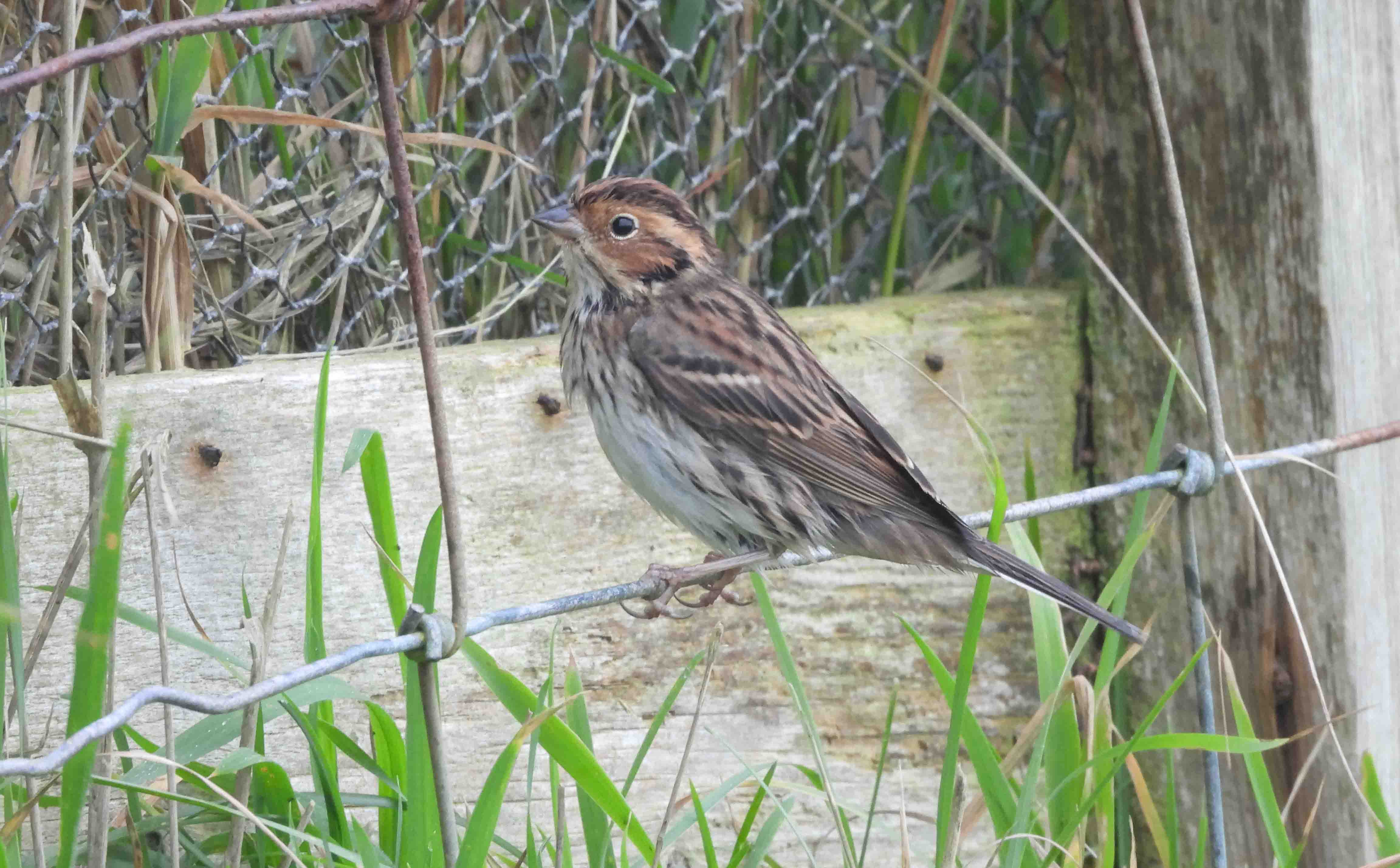
A slightly bedraggled Little Bunting at the Meadow Burn (Luke Marriner)
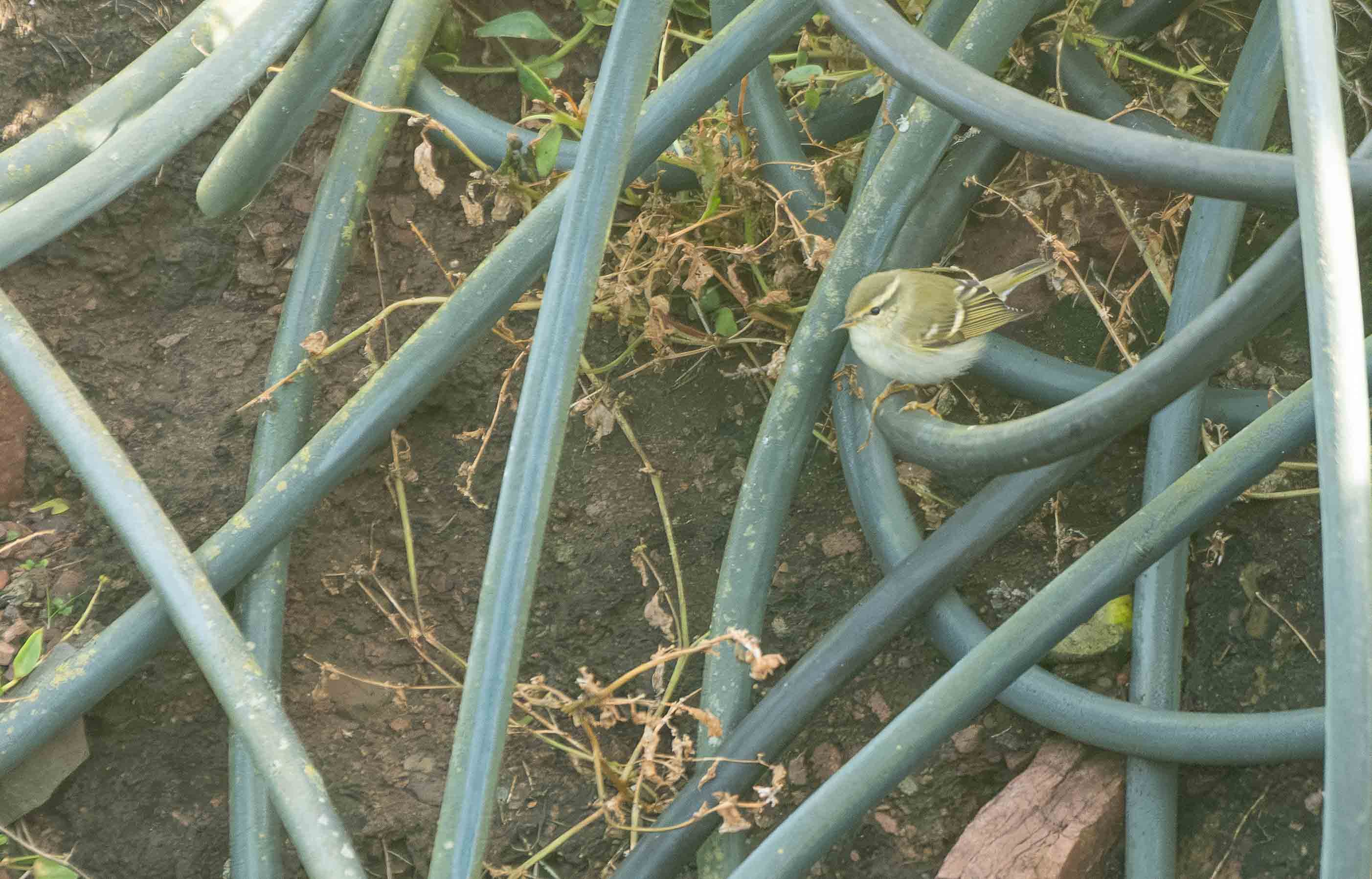
Any shelter will do when you’re a 6g ball of feathers in a force 9 gale, with this Yellow-browed Warbler making use of a handy coil of piping (Jonathan Dodds)
HIGHLIGHTS
Short-toed Lark: one still at North Light
Yellow-browed Warbler: three
Siberian Chiffchaff: two; Wester Lother and North Shirva
Little Bunting: two; at North Shirva and Meadow Burn
Sightings of note: 50 Greylag Goose, 115 Pink-footed Goose, 33 Wigeon, 9 Teal, 1 Water Rail, 1 Slavonian Grebe, 3 Oystercatcher, 18 Lapwing, 40 Golden Plover, 1 Grey Plover, 12 Ringed Plover, 18 Curlew, 1 Black-tailed Godwit, 1 Ruff, 12 Dunlin, 9 Jack Snipe, 110 Snipe, 1 Common Sandpiper, 22 Redshank, 2 Kittiwake, 1 Black-headed Gull, 61 Common Gull, 3 Great Skua, 12 Grey Heron, 3 Sparrowhawk, 1 Hen Harrier, 2 Short-eared Owl, 4 Kestrel, 1 Merlin, 1 Carrion Crow, 3 Swallow, 6 Willow Warbler, 7 Chiffchaff, 11 Blackcap, 3 Lesser Whitethroat, 3 Ring Ouzel, 11 Blackbird, 81 Redwing, 133 Song Thrush, 1 Spotted Flycatcher, 62 Robin, 2 Pied Flycatcher, 2 Black Redstart, 1 Stonechat, 38 Wheatear, 3 Dunnock, 3 Grey Wagtail, 3 Pied Wagtail, 1 Tree Pipit, 2 Chaffinch, 12 Brambling, 9 Linnet, 2 Mealy Redpoll, 16 Siskin, 4 Lapland Bunting, 1 Snow Bunting, 7 Reed Bunting
Other wildlife: 1 Painted Lady
Year list: 193
______________________________________________________________________
29th September 2026
Weather: Mostly sunny, with an increasing breeze. F5-7 SE
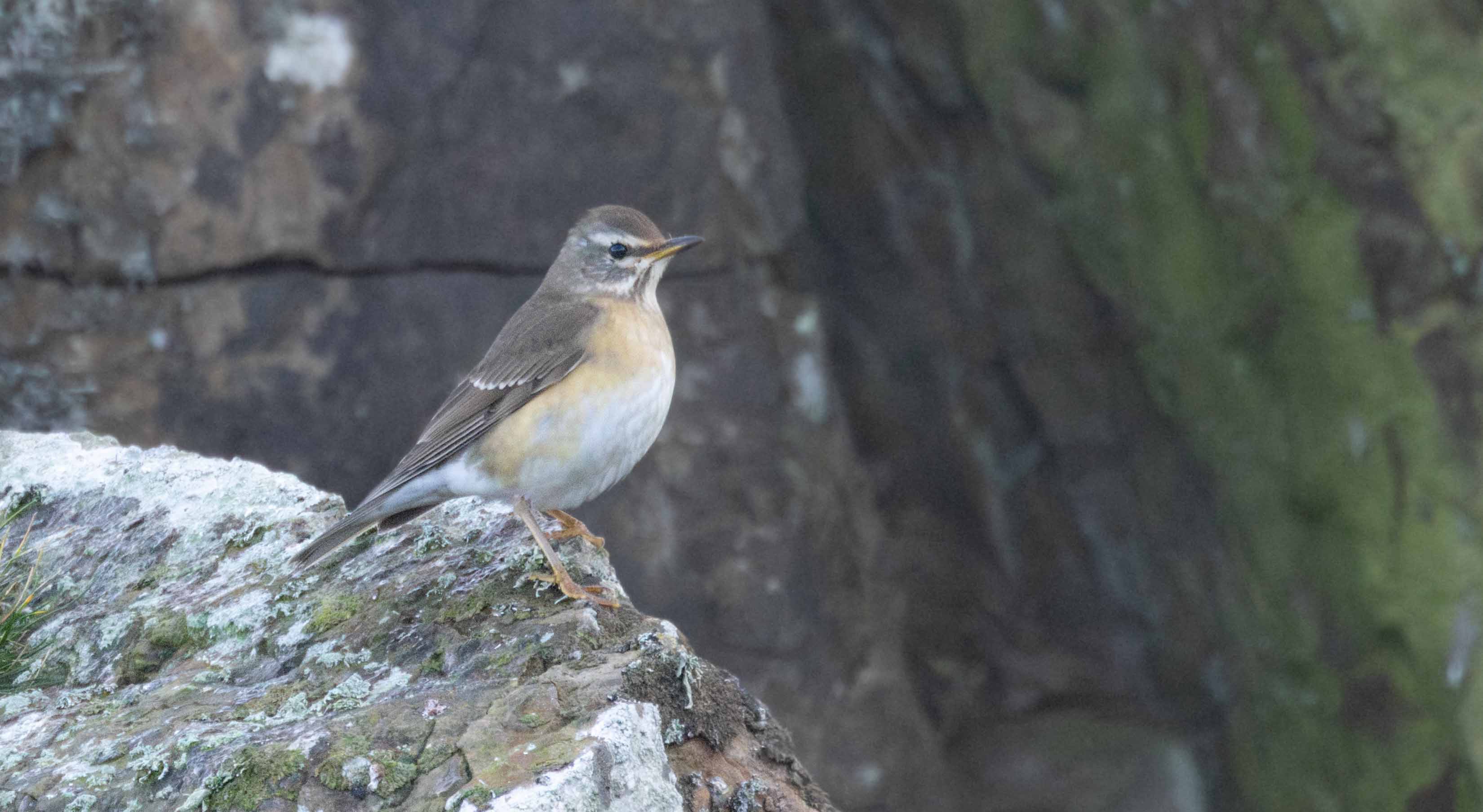
After trying not to look too hard at the forecast in recent days in case we scared this spell of southeasterlies away, today they finally arrived and for once, they fully lived up to the hype! A long day in the field finished with a mega thrush, a quality scattering of supporting scarcities and more Yellow-browed Warblers than you could shake a stick at. After beginning rather quietly with nothing new seen or trapped on the early round, spirits were somewhat dampened, though it became apparent as the morning wore on that birds were arriving and quickly seeking the shelter of the west cliffs of the isle. Reports of Yellow-browed Warblers gradually gathered pace, a Richard’s Pipit made its way noisily over Ward Hill, and the first few Redwings of the year were uncovered in sheltered spots. Upon reaching Guidicum, Alex flushed a couple of small thrushes from just below the clifftop, with one calling and revealing itself to be a Song Thrush. Both headed back onto the cliffs further into the geo, and on scanning back, panic quickly set in when relocating the second bird showed it to unmistakeably be an EYEBROWED THRUSH, gradually making its way up the cliff around 50m away. Thrushes on cliffs tend to be highly skittish and liable to quickly disappearing without trace, but fortunately the bird remained settled on the cliff for a few minutes allowing for excellent views, before being flushed by its more anxious Song Thrush companion. Over the next several hours it remained highly elusive, but a handful of persistent observers eventually managed good views. The new birds kept coming in the meantime, with a fine Red-flanked Bluetail briefly on Ward Hill before being taken by the wind towards Dronger and not seen again. A showy Red-breasted Flycatcher was around the clifftops of Guidicum, at least one new Little Bunting put in an appearance and a Bluethroat skulked in the grass and ditches around Pund. A brilliant day in the field was toasted in the Obs bar this evening, with lots to report at Log going some way to forgive what has been a very slow September!
BOOM! (Alex Penn)
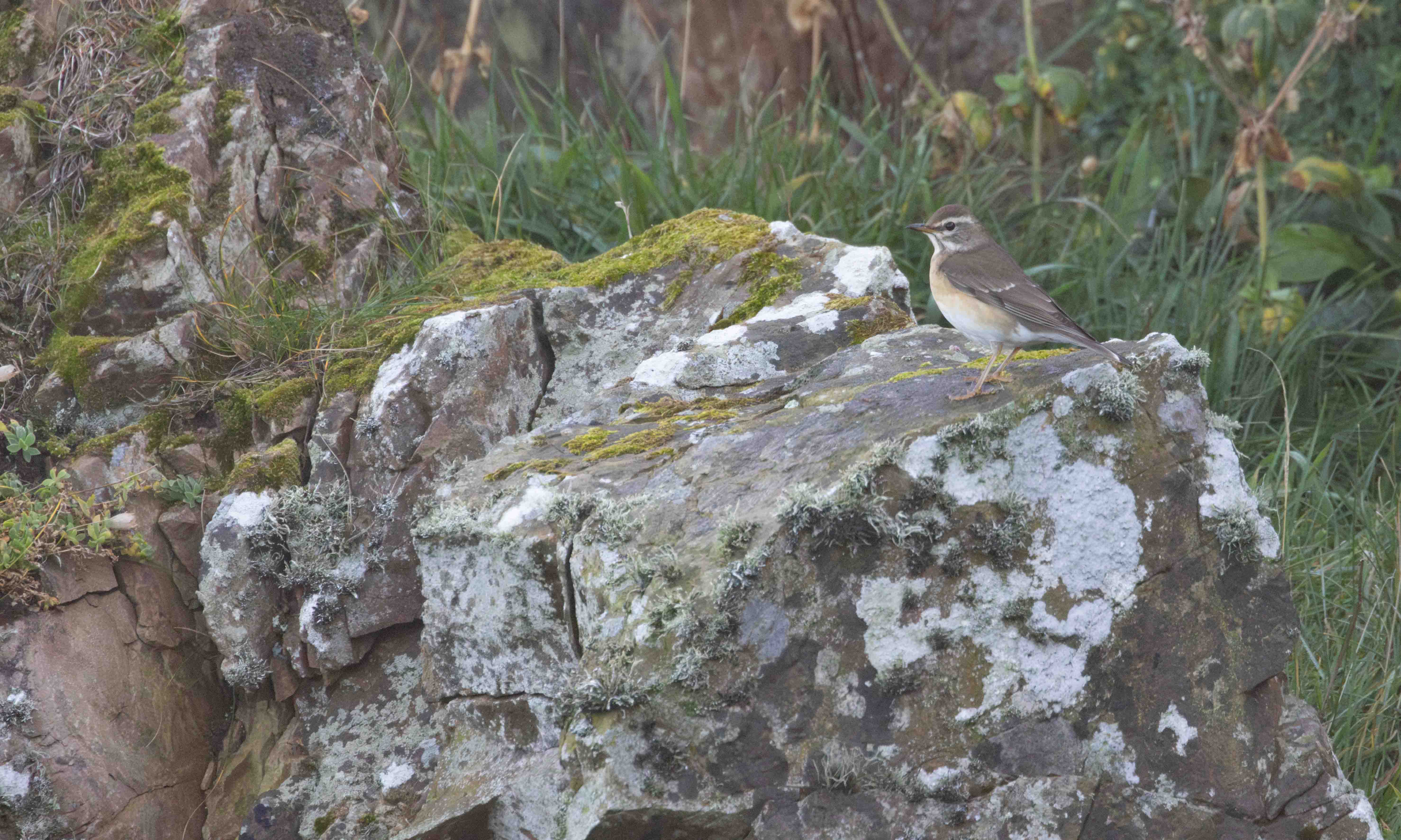
Adding to Guidicum’s mythos as a home of rare thrushes, Fair Isle’s third Eyebrowed Thrush and the first for 34 years (Alex Penn)
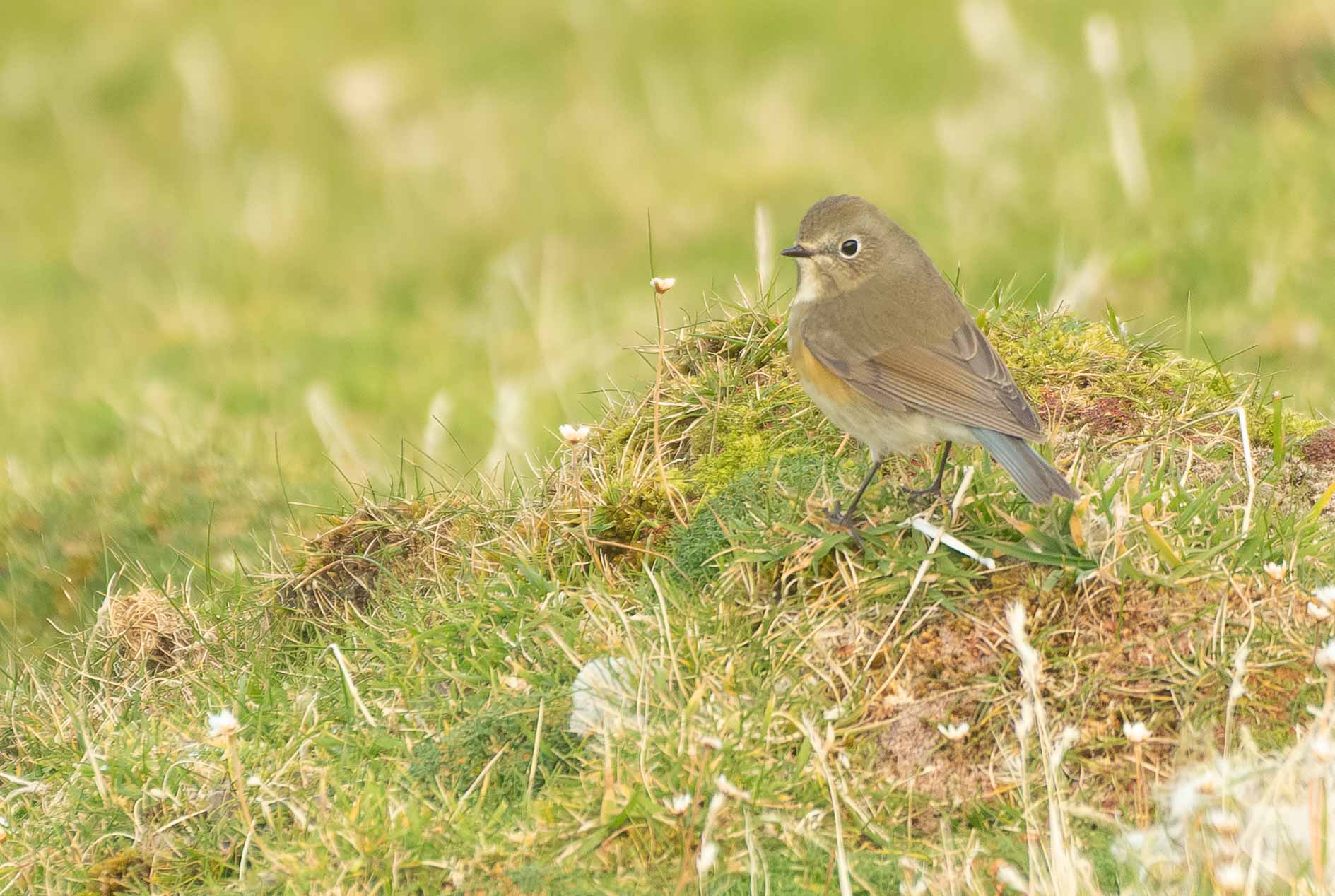
After a blank year in 2025, a welcome return to the yearlist for Red-flanked Bluetail (Jonathan Dodds)
HIGHLIGHTS
EYEBROWED THRUSH: a 1cy female at Guidicum (3rd isle record, previous in 1987 and 1992)
Brent Goose: pale-bellied bird at Muckle Uri Geo
Short-toed Lark: one still at North Light
Yellow-browed Warbler: 31 scattered around the isle, mostly along the west cliffs, with two birds newly colour-ringed
Barred Warbler: two still; at Burkle and Chalet
Bluethroat: one in ditches near Pund
Red-flanked Bluetail: one on Ward Hill sadly did not linger for most to catch up with it (29th isle record)
Red-breasted Flycatcher: one at Guidicum
Richard’s Pipit: one vocal bird flew north over Ward Hill
Common Rosefinch: one still at Burkle
Little Bunting: at least two; one between School and Setter, and another at the Mast
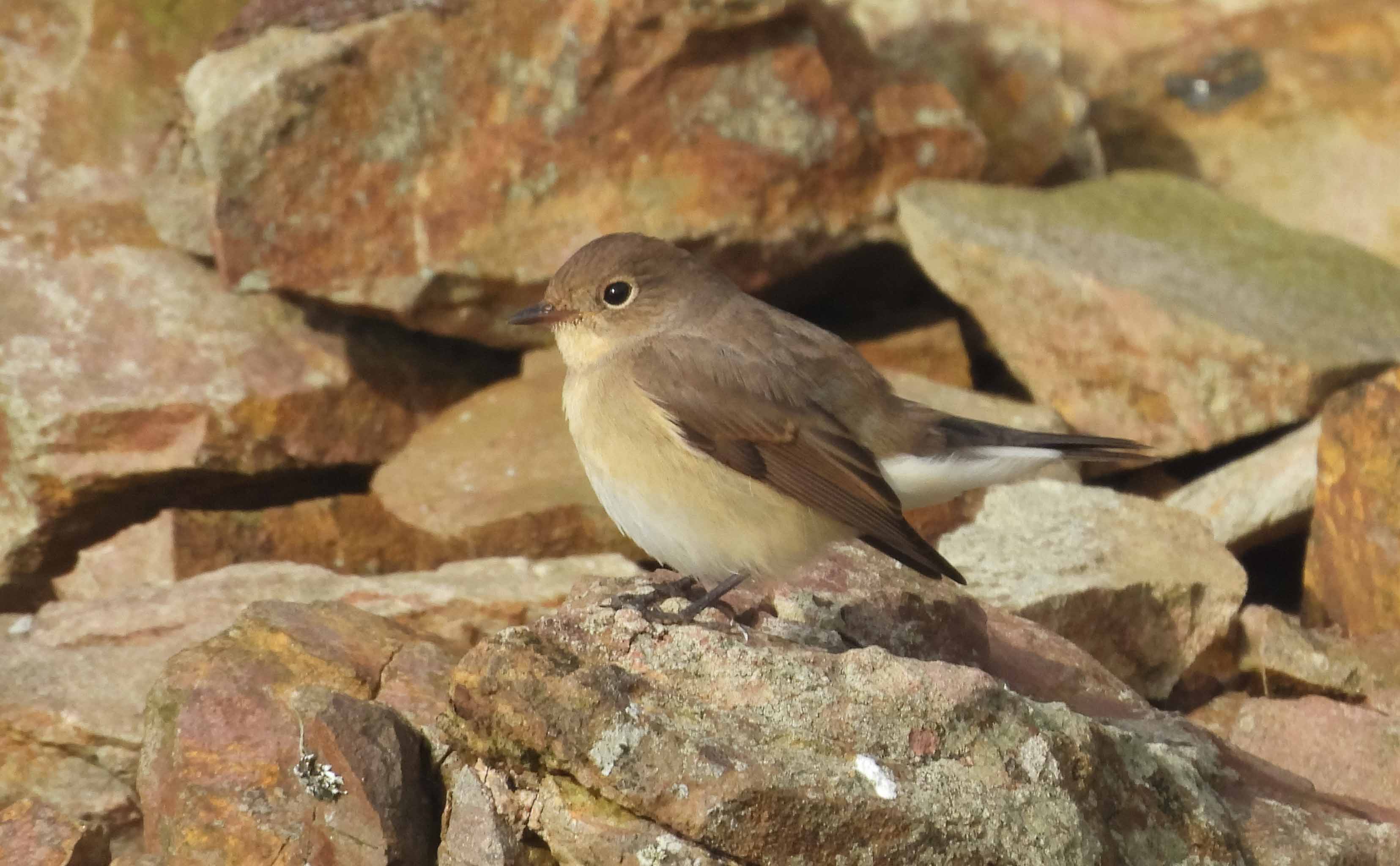
The first Red-breasted Flycatcher of the year was a beautifully showy bird sharing the Guidicum cliffs with our rare thrush (Luke Marriner)
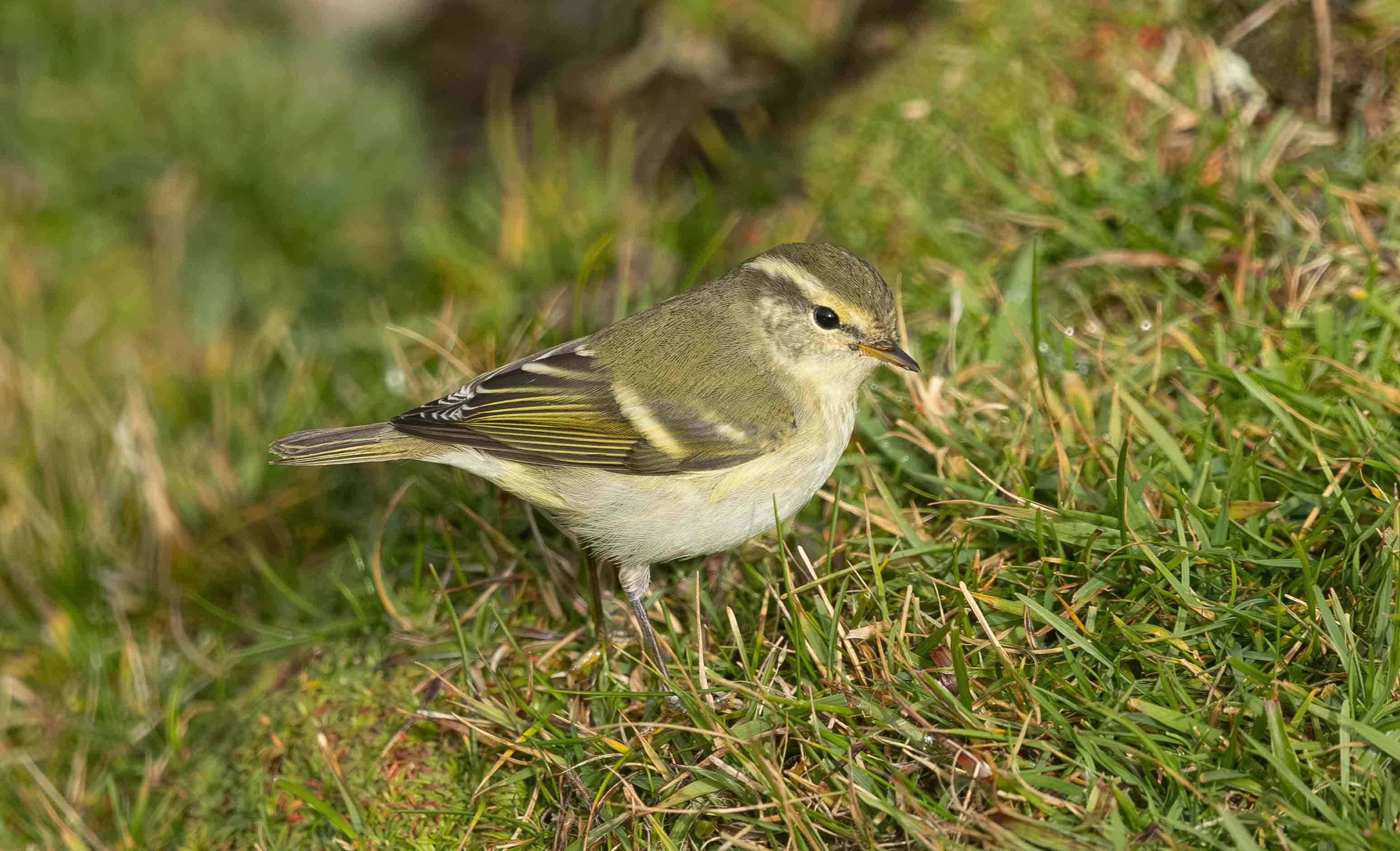
A day total of 31 Yellow-brows made them the most common warbler on the isle today, with most taking shelter along the west cliffs (Tom Wright)
Sightings of note: 25 Greylag Goose, 554 Pink-footed Goose, 40 Wigeon, 12 Teal, 1 Scaup, 3 Water Rail, 1 Slavonian Grebe, 6 Oystercatcher, 24 Lapwing, 76 Golden Plover, 17 Ringed Plover, 43 Curlew, 1 Bar-tailed Godwit, 1 Black-tailed Godwit, 66 Turnstone, 6 Jack Snipe, 87 Snipe, 30 Redshank, 1 Black-headed Gull, 9 Common Gull, 8 Great Skua, 2 Guillemot, 5 Grey Heron, 4 Sparrowhawk, 1 Kestrel, 3 Merlin, 1 Peregrine, 10 Carrion Crow, 140 Skylark, 3 Swallow, 15 Willow Warbler, 11 Chiffchaff, 1 Reed Warbler, 19 Blackcap, 2 Garden Warbler, 7 Lesser Whitethroat, 2 Blackbird, 19 Redwing, 4 Song Thrush, 1 Spotted Flycatcher, 1 Robin, 6 Pied Flycatcher, 1 Black Redstart, 2 Redstart, 2 Whinchat, 1 Stonechat, 44 Wheatear, 2 Dunnock, 3 Grey Wagtail, 4 Pied Wagtail, 31 alba Wagtail, 325 Meadow Pipit, 96 Rock Pipit, 10 Brambling, 131 Twite, 4 Linnet, 1 Mealy Redpoll, 1 Northwestern Redpoll, 20 Siskin, 4 Lapland Bunting, 1 Snow Bunting, 2 Reed Bunting
Other wildlife: 2 Painted Lady, 1 Minke Whale
Year list: 193
______________________________________________________________________
23rd to 28th September 2026
A generally quieter few days once more, with highlights rather few and far between before an upturn in movement on 28th. The American Pipit lingered to 25th, though frequently went missing for long periods before reappearing in its favoured area between the Rippack and Boini Mire. Numbers of common migrants remained dismally low, with birders outnumbering birds for much of this week, though two Corncrake were pleasant surprises on 25th and 27th, with birds at Aesterhoull and Gilsetter respectively. This period also saw some strong Pink-footed Goose passage through the isle, with the sight and sound of skeins passing southwards a regular feature, while other signs of the seasons changing included the first autumn appearances of Jack Snipe, Slavonian Grebe and Whooper Swan. The 28th saw the birding take a turn for the better, with new arrivals including a Little Bunting, Short-toed Lark and rise in Yellow-browed Warbler, amongst a scattering of common migrants. With the winds finally swinging to the southeast for the next few days, expectations are high for these last few days of the month.
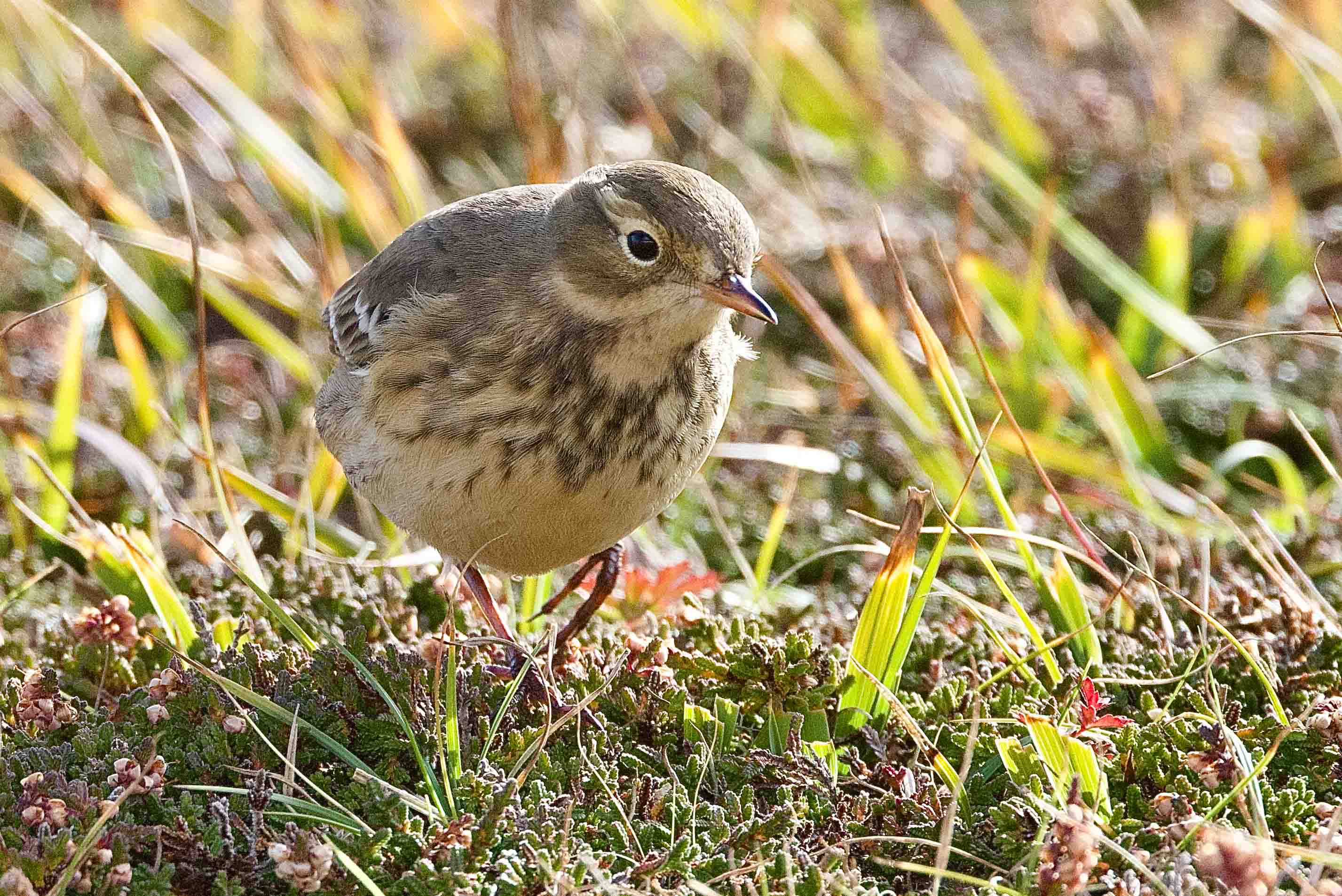
Between its bouts of disappearing completely, the American Pipit could be quite confiding (Ian Cowgill)
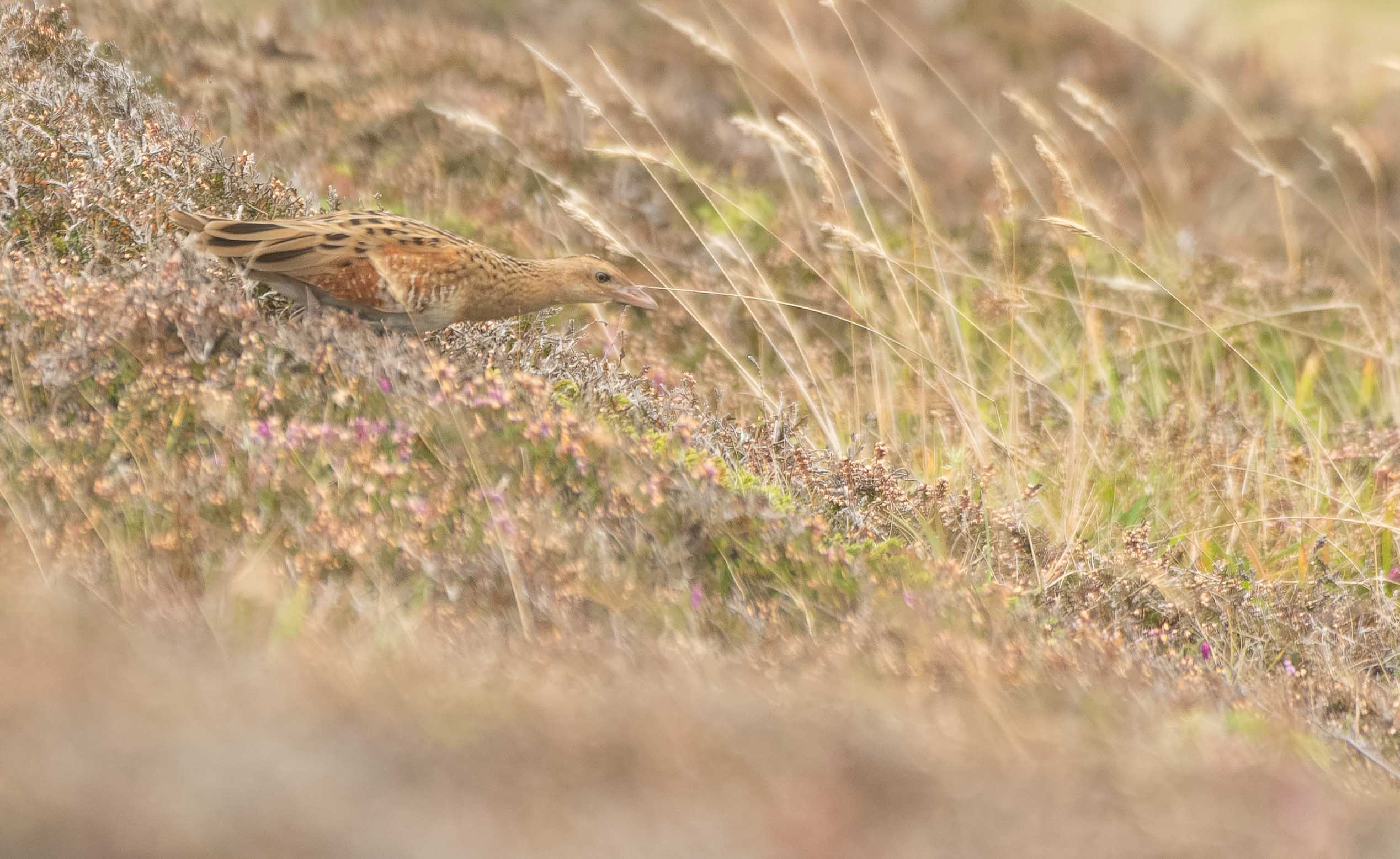
After flushing from Gilsetter, the Corncrake showed remarkably well as it sneaked its way back into the mire from Byerwalls (Jonathan Dodds)
HIGHLIGHTS
AMERICAN ‘BUFF-BELLIED’ PIPIT: one still to 25th
Corncrake: singles at Aesterhoull on 25th and Gilsetter on 27th
Short-toed Lark: one at North Light on 28th
Yellow-browed Warbler: single at Field from 25th, rising to four on 28th
Barred Warbler: single at Burkle still throughout, with a new bird at Plantation on 28th
Common Rosefinch: three on 25th, with a single then on 26th and 27th, rising to two on 28th
Little Bunting: one at the Vaadal on 28th
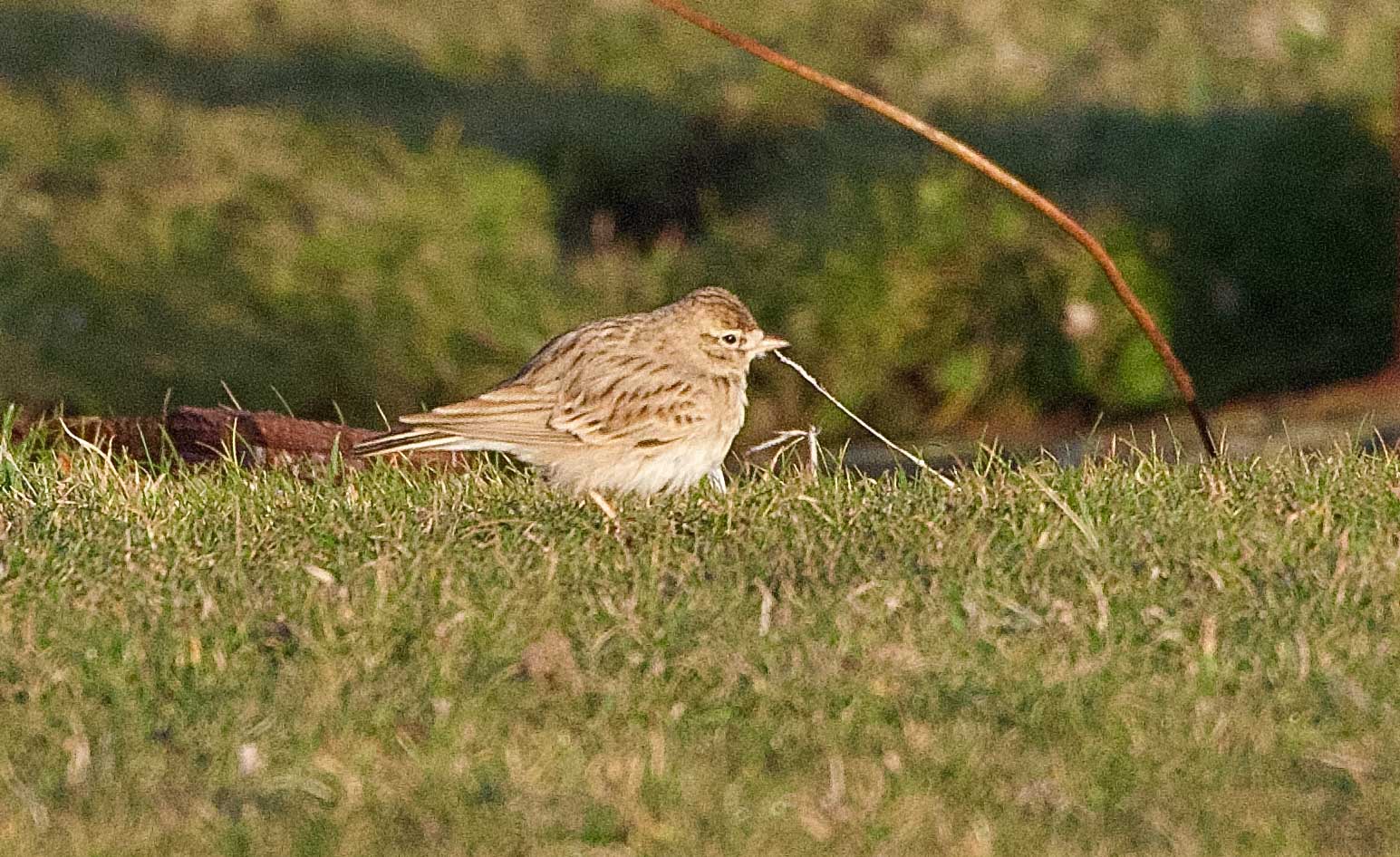
Our second Short-toed Lark of the year, after a long-staying bird in the spring (Ian Cowgill)
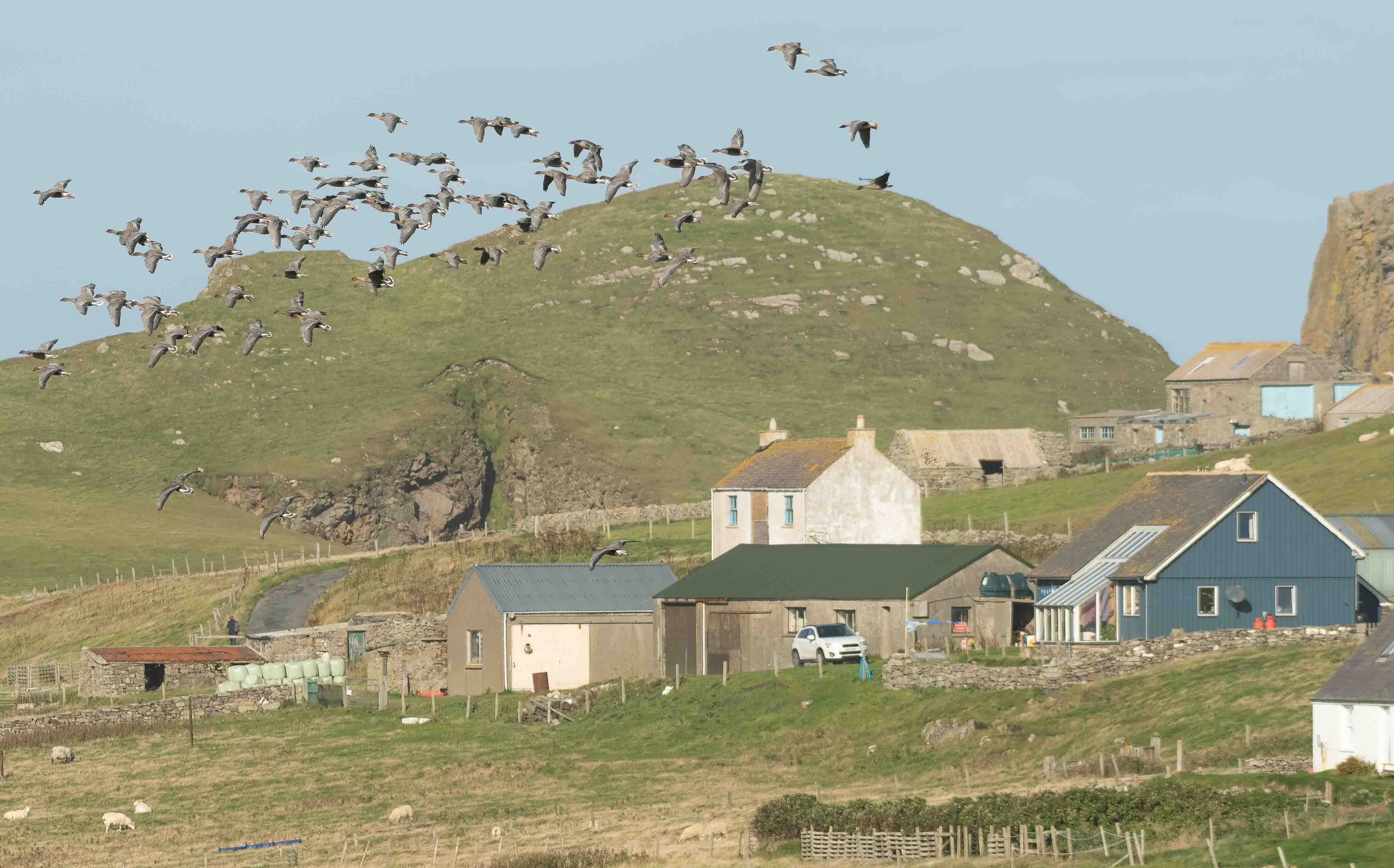
The squeaky ‘wink wink’ of Pink-footed Goose flocks has been a regular sound over the last few days (Jonathan Dodds)
Sightings of note (high counts): 194 Greylag Goose, 1,927 Pink-footed Goose, 2 Whooper Swan, 70 Wigeon, 1 Pintail, 26 Teal, 2 Tufted Duck, 14 Red-breasted Merganser, 1 Water Rail, 1 Slavonian Grebe, 18 Oystercatcher, 17 Lapwing, 87 Golden Plover, 27 Ringed Plover, 60 Curlew, 1 Bar-tailed Godwit, 1 Black-tailed Godwit, 182 Turnstone, 5 Knot, 1 Ruff, 4 Sanderling, 5 Dunlin, 11 Purple Sandpiper, 7 Jack Snipe, 84 Snipe, 55 Redshank, 4 Kittiwake, 2 Black-headed Gull, 51 Common Gull, 2 Lesser Black-backed Gull, 34 Great Skua, 13 Guillemot, 27 Razorbill, 3 Puffin, 2 Red-throated Diver, 1 Great Northern Diver, 5 Sooty Shearwater, 2 Manx Shearwater, 1 Cormorant, 10 Grey Heron, 1 Sparrowhawk, 1 Kestrel, 2 Merlin, 1 Peregrine, 4 Carrion Crow, 138 Skylark, 2 Sand Martin, 31 Swallow, 10 Willow Warbler, 5 Chiffchaff, 8 Blackcap, 4 Garden Warbler, 2 Lesser Whitethroat, 2 Blackbird, 1 Song Thrush, 2 Black Redstart, 2 Redstart, 2 Stonechat, 41 Wheatear, 1 Dunnock, 2 Grey Wagtail, 4 Pied Wagtail, 40 alba Wagtail, 409 Meadow Pipit, 1 Tree Pipit, 83 Rock Pipit, 1 Chaffinch, 2 Brambling, 172 Twite, 11 Linnet, 1 Mealy Redpoll, 3 Northwestern Redpoll, 1 Goldfinch, 14 Siskin, 2 Lapland Bunting, 1 Snow Bunting
Other wildlife (high counts): 1 Red Admiral, 1 Painted Lady, 2 Shetland Bee, 1 Buff-tailed Bumblebee, 4 Orca (24th), 3 Minke Whale, 3 Risso’s Dolphin
Year list: 188
______________________________________________________________________
21st to 22nd September 2026
At last, some quality birds to report on from what has been a very slow September! The 21st delivered an excellent birthday bird for our Head of Ornithology, when our visiting Naturetrek tour unearthed an American ‘Buff-bellied’ Pipit at the Rippack on a damp afternoon. After initially disappearing, the bird was fortunately pinned down for the masses at Boini Mire, where everyone managed good views despite the weather. A juvenile Turtle Dove at Setter earlier in the day was another good addition to the yearlist, though was not seen again after the initial sighting. The following day brought little change, with the star bird still present in the same area, though a Marsh Warbler in the dense Setter garden Rosa was apparently newly-arrived. Aside from the rarities, these two days also brought us our first Reed Bunting and Brambling of the autumn, with the dwindling numbers of Wheatear and Bonxie further marking the inexorable advancing of the autumn.
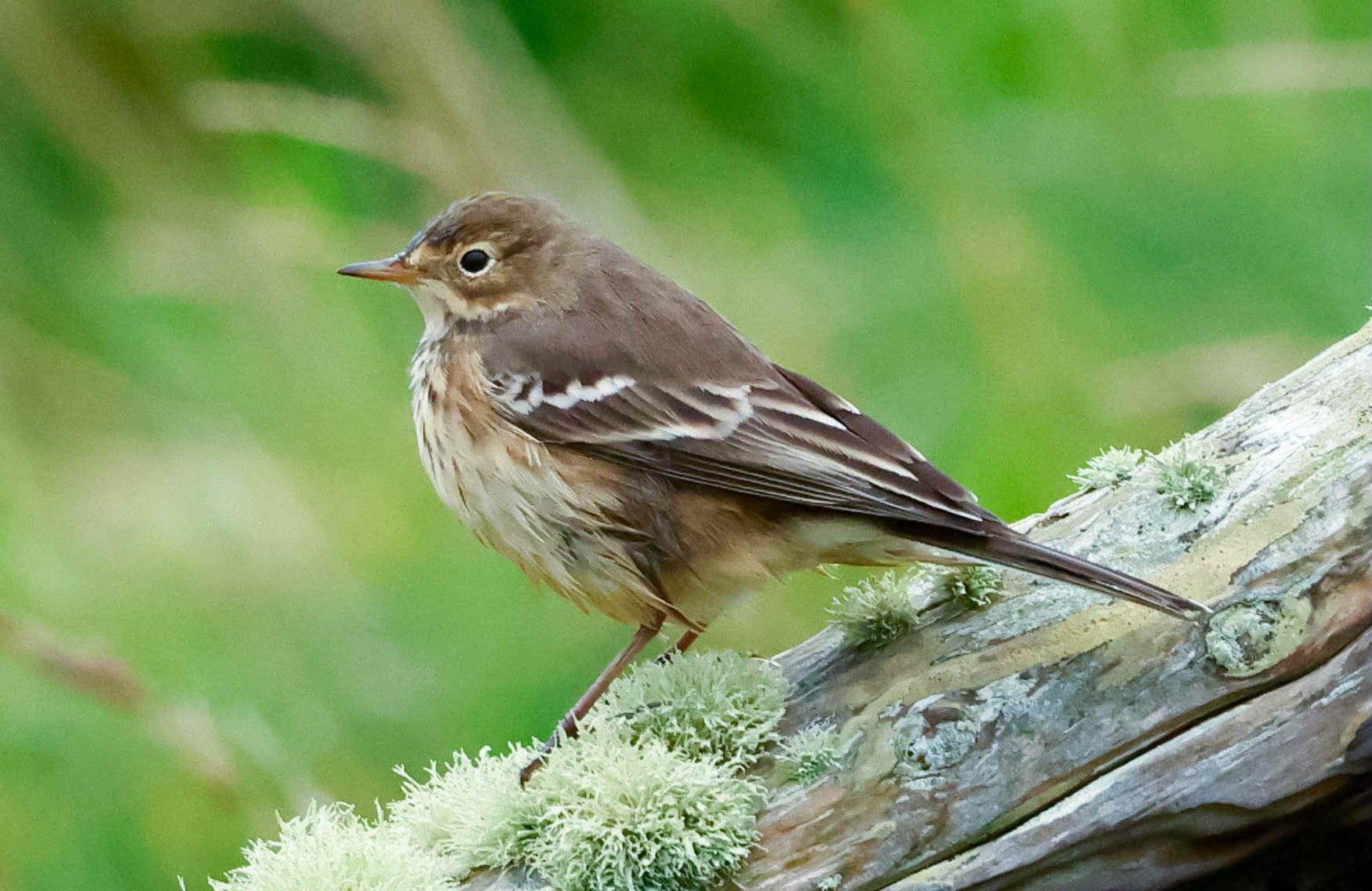
The recent upturn in American Pipit records continues, with six of the seven records coming since 2007 (Steve Arlow)
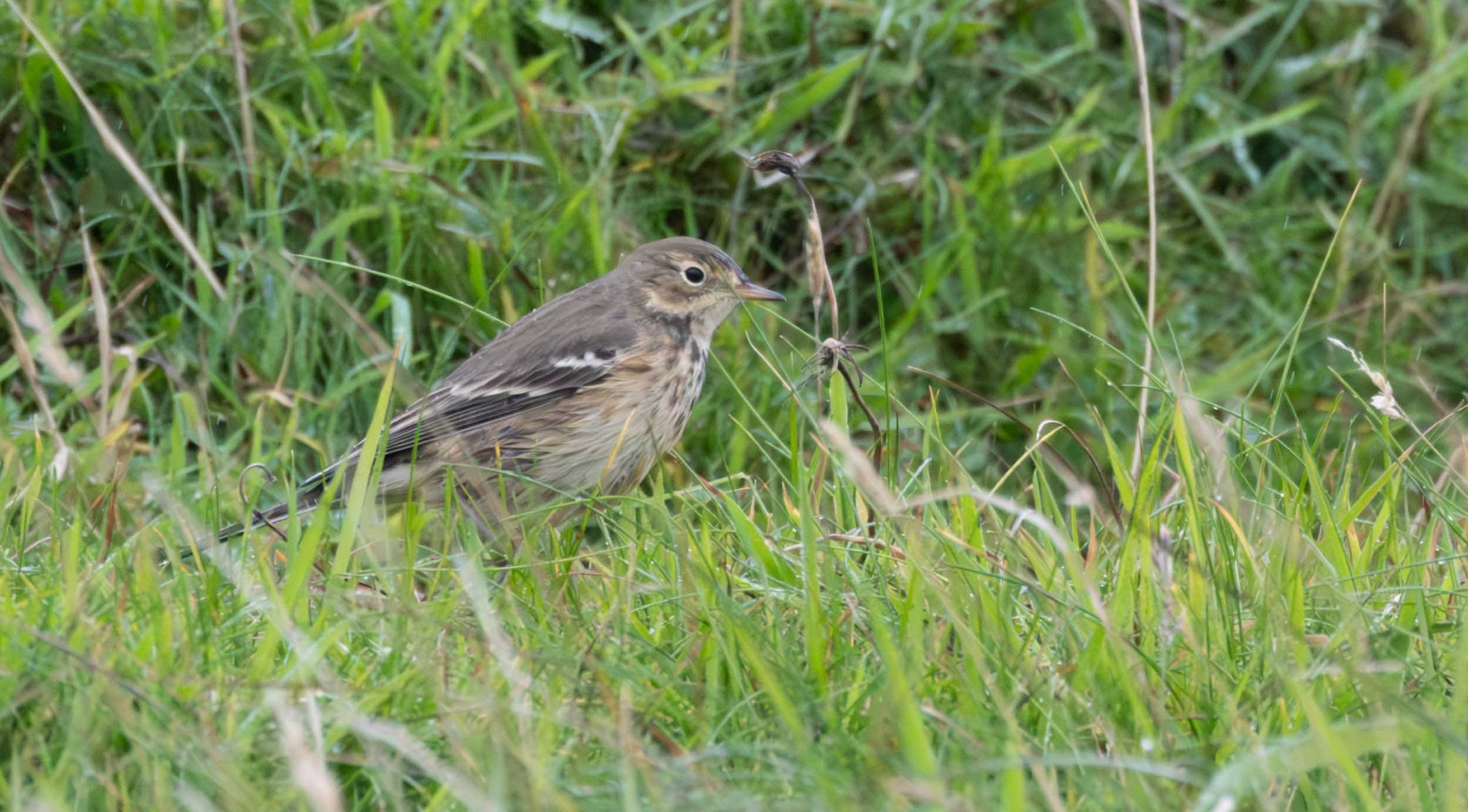
The second species of Nearctic passerine to be recorded here this year, though arguably not quite as exciting as the first (Alex Penn)
HIGHLIGHTS
AMERICAN ‘BUFF-BELLIED’ PIPIT: one on the Rippack on 21st remained around the Boini Mire area to 22nd (7th isle record, first since 2021)
Turtle Dove: juvenile briefly around Setter area on 21st
Marsh Warbler: one at Setter on 22nd
Barred Warbler: single at Burkle still
Common Rosefinch: two at Burkle still
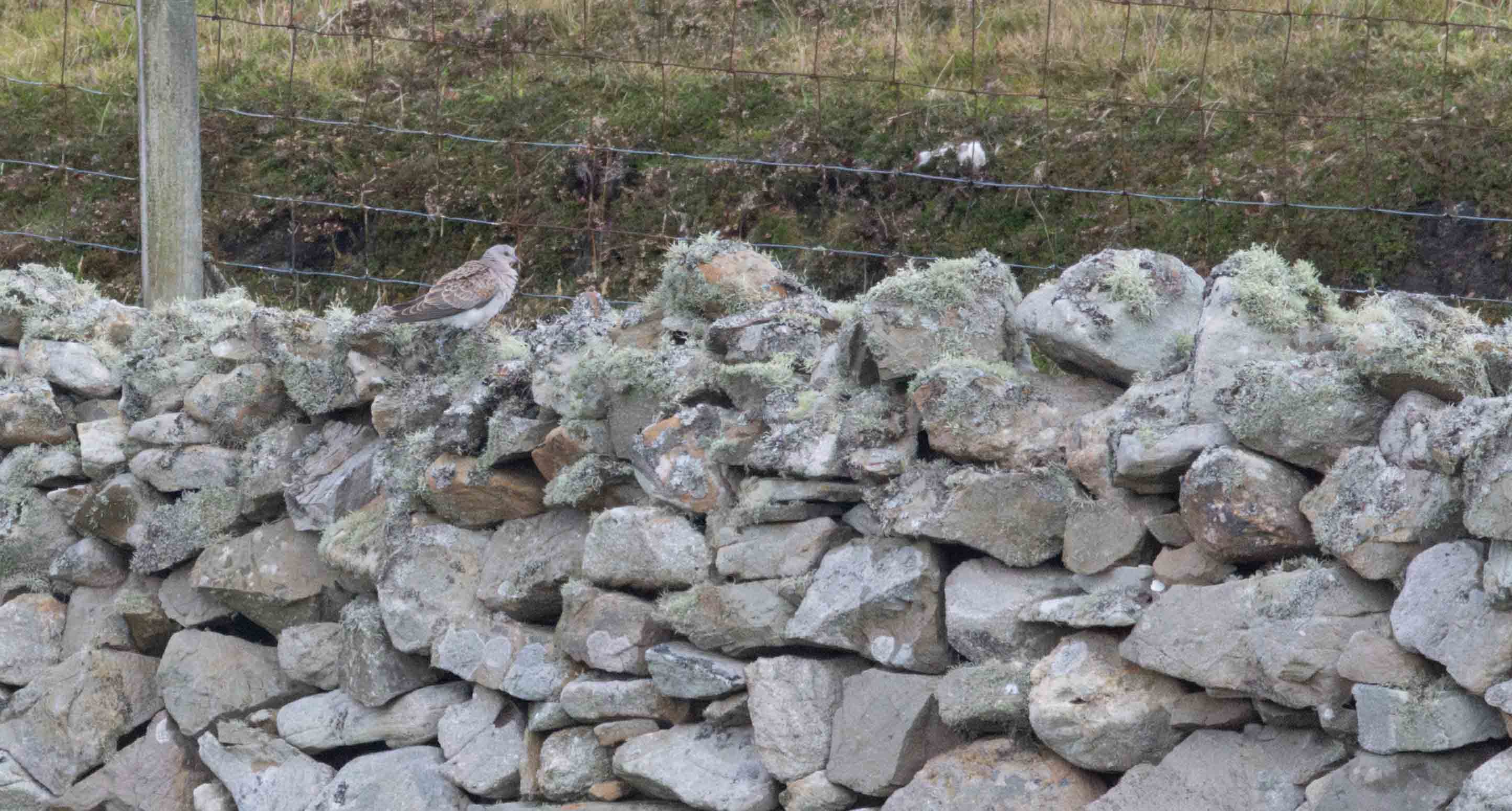
A good start to census when this Turtle Dove flew across Alex’s path at the Ringing Hut marsh on 21st (Alex Penn)
Sightings of note (high counts): 36 Greylag Goose, 34 Pink-footed Goose, 3 Wigeon, 37 Teal, 49 Eider, 1 Red-breasted Merganser, 76 Rock Dove, 2 Water Rail, 10 Oystercatcher, 7 Lapwing, 12 Golden Plover, 1 Grey Plover, 28 Ringed Plover, 32 Curlew, 1 Bar-tailed Godwit, 93 Turnstone, 4 Knot, 3 Sanderling, 7 Dunlin, 3 Purple Sandpiper, 84 Snipe, 61 Redshank, 3 Kittiwake, 1 Black-headed Gull, 47 Common Gull, 1 Lesser Black-backed Gull, 20 Great Skua, 2 Storm Petrel, 3 Sooty Shearwater, 1 Cormorant, 7 Grey Heron, 1 Sparrowhawk, 1 Short-eared Owl, 2 Kestrel, 2 Merlin, 1 Peregrine, 4 Carrion Crow, 111 Skylark, 19 Swallow, 8 Willow Warbler, 3 Chiffchaff, 2 Lesser Whitethroat, 1 Blackbird, 3 Black Redstart, 38 Wheatear, 101 House Sparrow, 1 Grey Wagtail, 1 Pied Wagtail, 42 alba Wagtail, 464 Meadow Pipit, 1 Tree Pipit, 88 Rock Pipit, 1 Brambling, 176 Twite, 5 Linnet, 1 Mealy Redpoll, 1 Northwestern Redpoll, 5 Siskin, 1 Lapland Bunting, 1 Snow Bunting, 1 Reed Bunting
Other wildlife (high counts): 1 Shetland Bee, 1 Buff-tailed Bumblebee, 3 Harbour Porpoise, 1 Minke Whale, 4 White-beaked Dolphin
Year list: 185
______________________________________________________________________
15th to 20th September 2026
A further westerly-dominated few days, though a brief switch to some lighter southerlies allowed some light passage, including a pulse of Yellow-browed Warbler, an increase in Rosefinch and the first Snow Bunting, Goldeneye and Moorhen of the autumn. The Obs boat was removed from the Haven to be stored for the winter, and the new boardwalk was finished in the Obs garden, ticking off some useful practical jobs during these quieter days of birding.
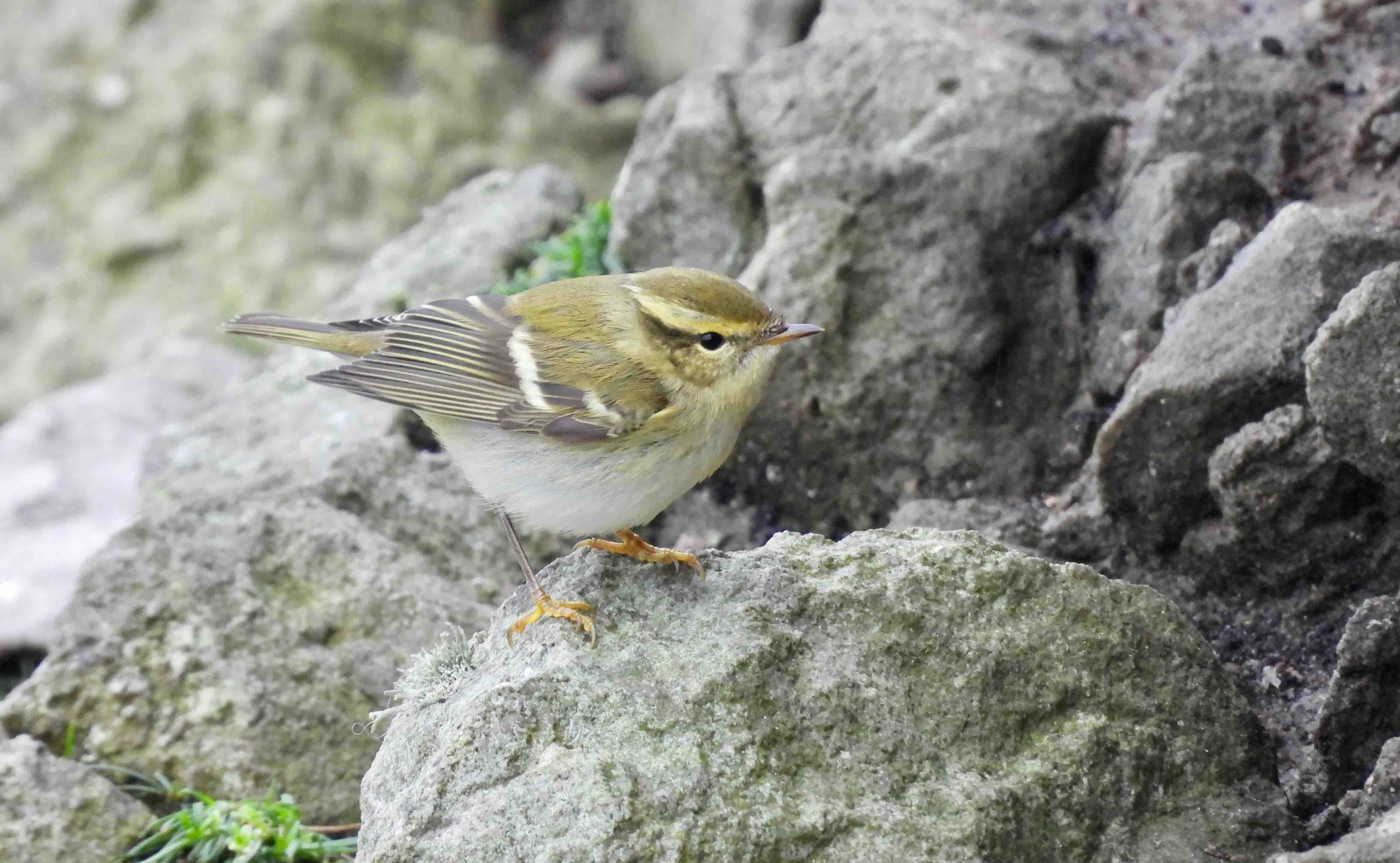
Yellow-browed Warbler are always a delight, especially when as tame as this (Luke Marriner)
HIGHLIGHTS
Yellow-browed Warbler: daily from 15th to 18th, peaking at five on 17th
Barred Warbler: single at Burkle throughout
Common Rosefinch: recorded daily at Burkle, with the flock peaking at seven on 17th
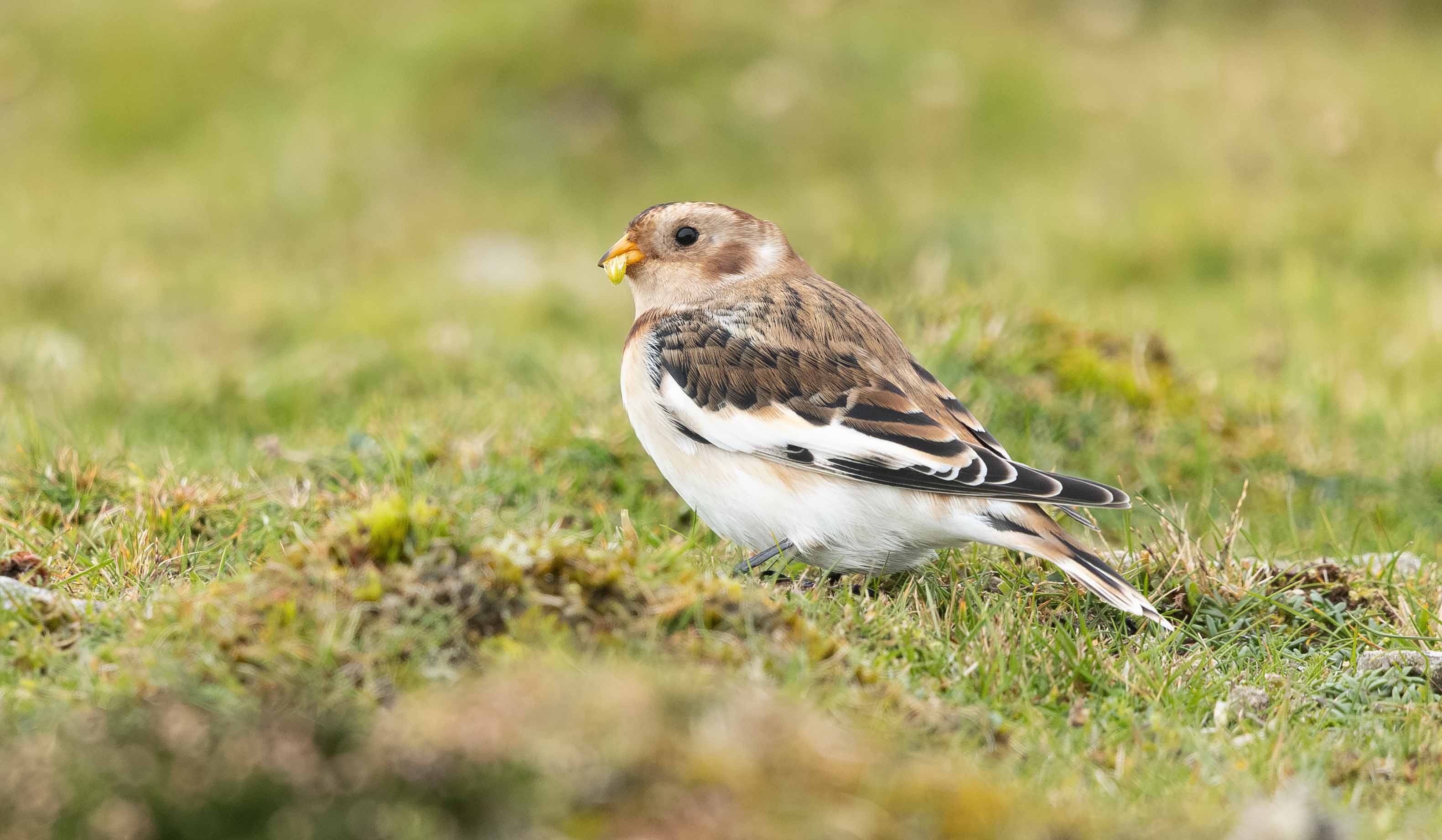
A fresh Snow Bunting making the slog to the top of Ward Hill worthwhile for Tom (Tom Wright)
Sightings of note (high counts): 45 Greylag Goose, 116 Pink-footed Goose, 24 Wigeon, 14 Teal, 1 Tufted Duck, 2 Goldeneye, 1 Red-breasted Merganser, 1 Moorhen, 37 Oystercatcher, 6 Lapwing, 16 Golden Plover, 85 Ringed Plover, 1 Whimbrel, 46 Curlew, 1 Bar-tailed Godwit, 159 Turnstone, 5 Knot, 1 Ruff, 8 Sanderling, 10 Dunlin, 9 Purple Sandpiper, 95 Snipe, 1 Green Sandpiper, 74 Redshank, 6 Kittiwake, 2 Black-headed Gull, 34 Common Gull, 2 Lesser Black-backed Gull, 1 Common Tern, 2 Arctic Tern, 30 Great Skua, 1 Arctic Skua, 2 Guillemot, 4 Razorbill, 2 Red-throated Diver, 1 Great Northern Diver, 2 Storm Petrel, 12 Sooty Shearwater, 1 Manx Shearwater, 1 Cormorant, 5 Grey Heron, 1 Sparrowhawk, 1 Kestrel, 2 Merlin, 1 Peregrine, 5 Carrion Crow, 95 Skylark, 8 Swallow, 9 Willow Warbler, 5 Chiffchaff, 2 Sedge Warbler, 3 Blackcap, 2 Garden Warbler, 3 Lesser Whitethroat, 1 Blackbird, 1 Pied Flycatcher, 1 Black Redstart, 38 Wheatear, 1 Yellow Wagtail, 3 Grey Wagtail, 4 Pied Wagtail, 44 alba Wagtail, 258 Meadow Pipit, 1 Tree Pipit, 117 Rock Pipit, 137 Twite, 1 Siskin, 8 Lapland Bunting, 4 Snow Bunting
Other wildlife (high counts): 2 Red Admiral, 1 Painted Lady, 1 Silver Y, 1 Buff-tailed Bumblebee, 4 Minke Whale, 4 Risso’s Dolphin, 20 White-beaked Dolphin
Year list: 183
______________________________________________________________________
9th to 14th September 2026
Though the westerly winds continue, by mid-September birds are firmly on the move and this week has seen a few migrants battle their way across to us regardless. The first Yellow-browed Warblers of the year appeared on 14th, joining a handful of Rosefinch and a lingering Barred Warbler as further scarcities. Small numbers of Lapland Bunting continue to pass through, with the first returning Pink-footed Geese and Fieldfare of the autumn adding a more wintry feel. The quieter days have meant more practical work has been carried out, with the final touches added to the Plantation trap and work begun on replacing the Obs garden boardwalk.
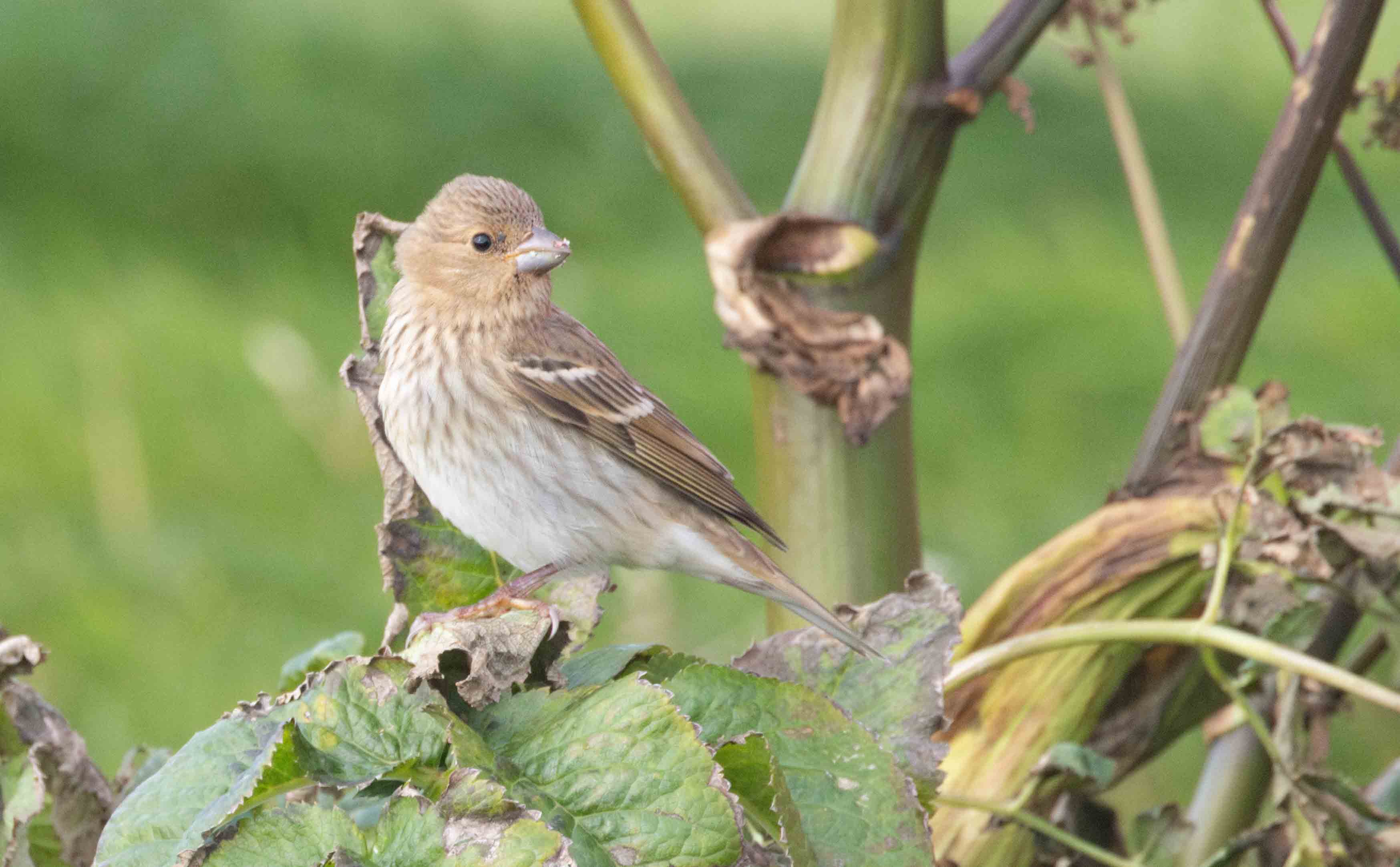
Rosefinches have been a regular feature of the last week (Alex Penn)
HIGHLIGHTS
Yellow-browed Warbler: singles at Gully and Shirva on 14th
Barred Warbler: single seen on 10th and 13th
Common Rosefinch: recorded daily, with five on 14th
Sightings of note (high counts): 43 Greylag Goose, 36 Pink-footed Goose, 24 Wigeon, 12 Teal, 30 Oystercatcher, 6 Lapwing, 8 Golden Plover, 56 Ringed Plover, 1 Whimbrel, 32 Curlew, 1 Black-tailed Godwit, 105 Turnstone, 5 Knot, 3 Ruff, 11 Sanderling, 20 Dunlin, 6 Purple Sandpiper, 91 Snipe, 1 Common Sandpiper, 2 Green Sandpiper, 56 Redshank, 1 Greenshank, 7 Kittiwake, 3 Black-headed Gull, 39 Common Gull, 1 Lesser Black-backed Gull, 72 Great Skua, 1 Arctic Skua, 2 Guillemot, 3 Razorbill, 1 Manx Shearwater, 5 Grey Heron, 2 Sparrowhawk, 1 Kestrel, 2 Merlin, 5 Carrion Crow, 66 Skylark, 1 Sand Martin, 12 Swallow, 2 House Martin, 11 Willow Warbler, 4 Chiffchaff, 2 Sedge Warbler, 4 Blackcap, 1 Garden Warbler, 2 Lesser Whitethroat, 1 Whitethroat, 1 Goldcrest, 1 Blackbird, 1 Fieldfare, 1 Spotted Flycatcher, 1 Pied Flycatcher, 1 Black Redstart, 88 Wheatear, 1 Yellow Wagtail, 2 Grey Wagtail, 2 Pied Wagtail, 4 White Wagtail, 67 alba Wagtail, 335 Meadow Pipit, 3 Tree Pipit, 107 Rock Pipit, 1 Brambling, 145 Twite, 2 Linnet, 3 Lesser Redpoll, 5 Siskin, 5 Lapland Bunting
Other wildlife (high counts): 1 Red Admiral, 2 Painted Lady, 1 Silver Y, 6 Shetland Bee, 1 Buff-tailed Bumblebee, 3 Minke Whale, 10 Risso’s Dolphin, 1 Common Seal
Year list: 183
______________________________________________________________________
5th to 8th September 2026
Another rather quiet few days as the westerly winds continue to blow, bringing regular rain showers with them. The 7th was particularly damp, with the continuous rain making that the first day we’ve been unable to carry out a census this year. Despite the blocking winds, a small number of birds have still battled their way here, with a new juvenile Red-backed Shrike and Rosefinch being the scarcity highlights along with a handful of Lapland Bunting joining the Meadow Pipit passage. Afternoons have been dedicated to further trap work and odd jobs, with the outer roof of Plantation now fully repaired, ready for flocks of autumn finches to arrive.
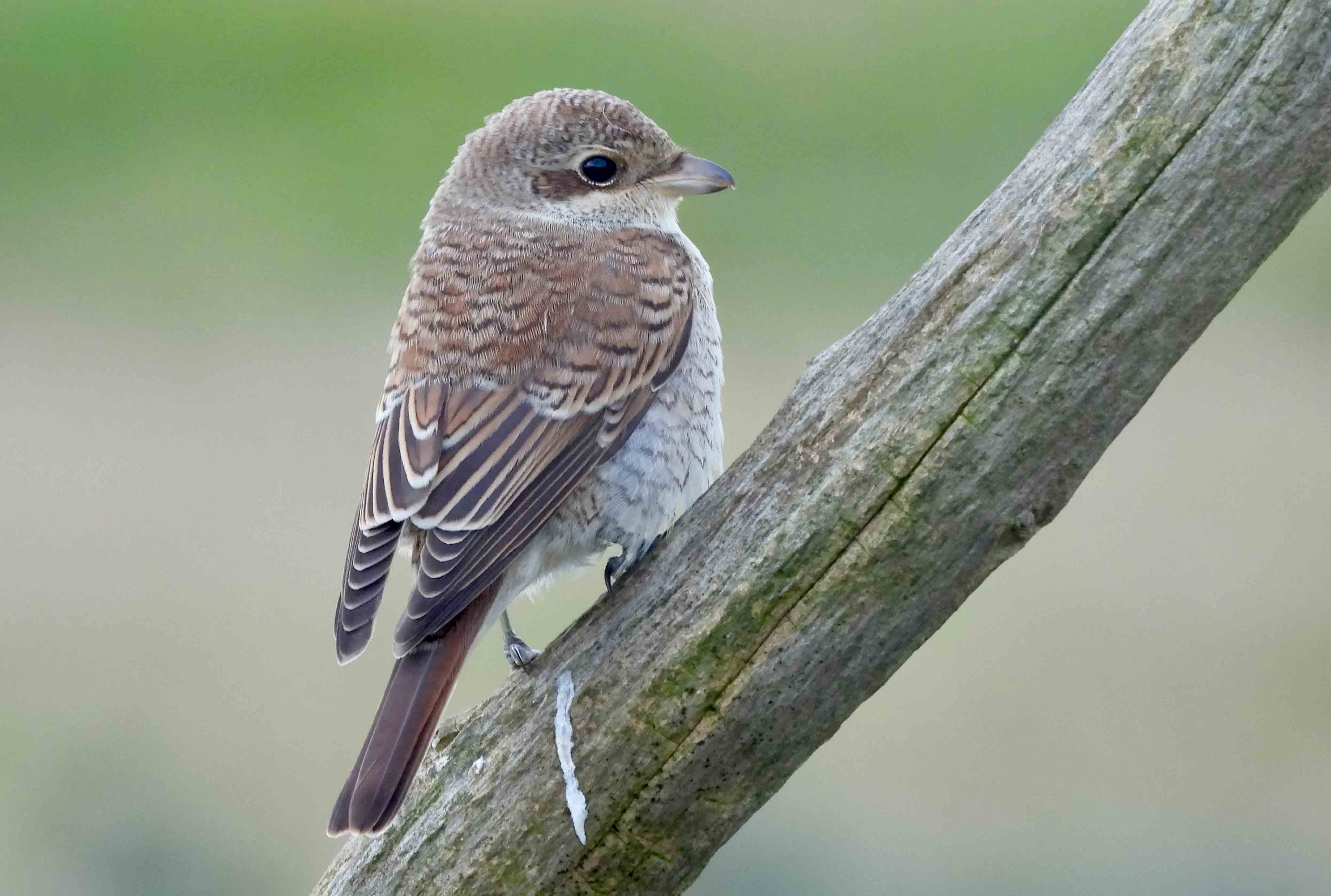
A confiding Red-backed Shrike at the Haa on 7th (Luke Marriner)
HIGHLIGHTS
Red-backed Shrike: juvenile at the Obs to 5th, with a new juvenile then at Shirva on 6th, moving to Haa on 7th
Barred Warbler: one at Burkle on 7th
Common Rosefinch: one on 8th
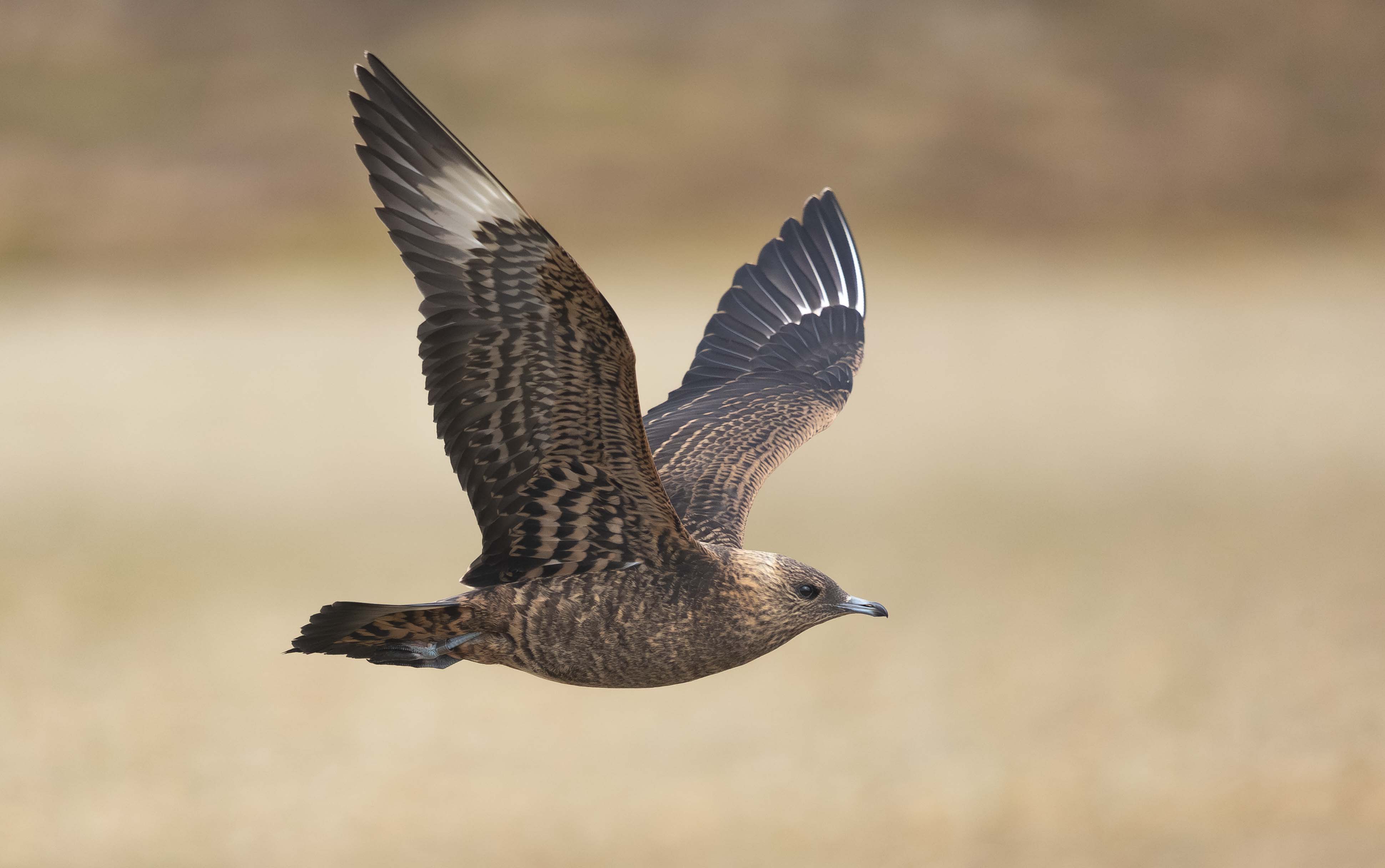
This young Arctic Skua seems reluctant to leave, lingering near its Airstrip natal site with one of its parents still in attendance (Tom Wright)
Sightings of note (high counts): 34 Greylag Goose, 1 Shoveler, 24 Wigeon, 10 Teal, 24 Oystercatcher, 6 Lapwing, 16 Golden Plover, 82 Ringed Plover, 1 Whimbrel, 21 Curlew, 12 Black-tailed Godwit, 93 Turnstone, 4 Knot, 3 Ruff, 7 Sanderling, 13 Dunlin, 1 Purple Sandpiper, 62 Snipe, 1 Common Sandpiper, 60 Redshank, 1 Greenshank, 2 Kittiwake, 4 Black-headed Gull, 67 Common Gull, 2 Lesser Black-backed Gull, 51 Great Skua, 4 Arctic Skua, 3 Guillemot, 3 Razorbill, 1 Puffin, 10 Storm Petrel, 3 Sooty Shearwater, 3 Grey Heron, 3 Sparrowhawk, 1 Kestrel, 1 Merlin, 4 Carrion Crow, 63 Skylark, 13 Swallow, 2 House Martin, 12 Willow Warbler, 4 Chiffchaff, 1 Sedge Warbler, 1 Lesser Whitethroat, 1 Whitethroat, 2 Goldcrest, 1 Blackbird, 2 Spotted Flycatcher, 1 Pied Flycatcher, 2 Black Redstart, 2 Whinchat, 106 Wheatear, 1 Yellow Wagtail, 3 Grey Wagtail, 1 Pied Wagtail, 58 alba Wagtail, 461 Meadow Pipit, 6 Tree Pipit, 96 Rock Pipit, 1 Brambling, 128 Twite, 3 Siskin, 9 Lapland Bunting
Other wildlife: 1 Red Admiral, 5 Painted Lady, 1 Small Tortoiseshell
Year list: 182
______________________________________________________________________
2nd to 4th September 2026
A few days of unsettled weather but little change to the island avifauna, with a persistently westerly airflow that looks set to continue for some time yet. The limited changeover did include the first Lapland Bunting of the year, heard over Burkle on 2nd and then settled on the Rippack the following day. There were small increases in wildfowl numbers, and some limited wader passage, with birds encouraged to stop off at the isle by the spells of heavy rain. A quartet of Common Tern in the North Haven on 4th were just the third record this year, appearing on the same day as the first Song Thrush of the autumn. The uninspiring birding did give the team chance to catch up on some other jobs, with a tricky Plantation roof panel replaced and the Hesti Geo boat taken back in.
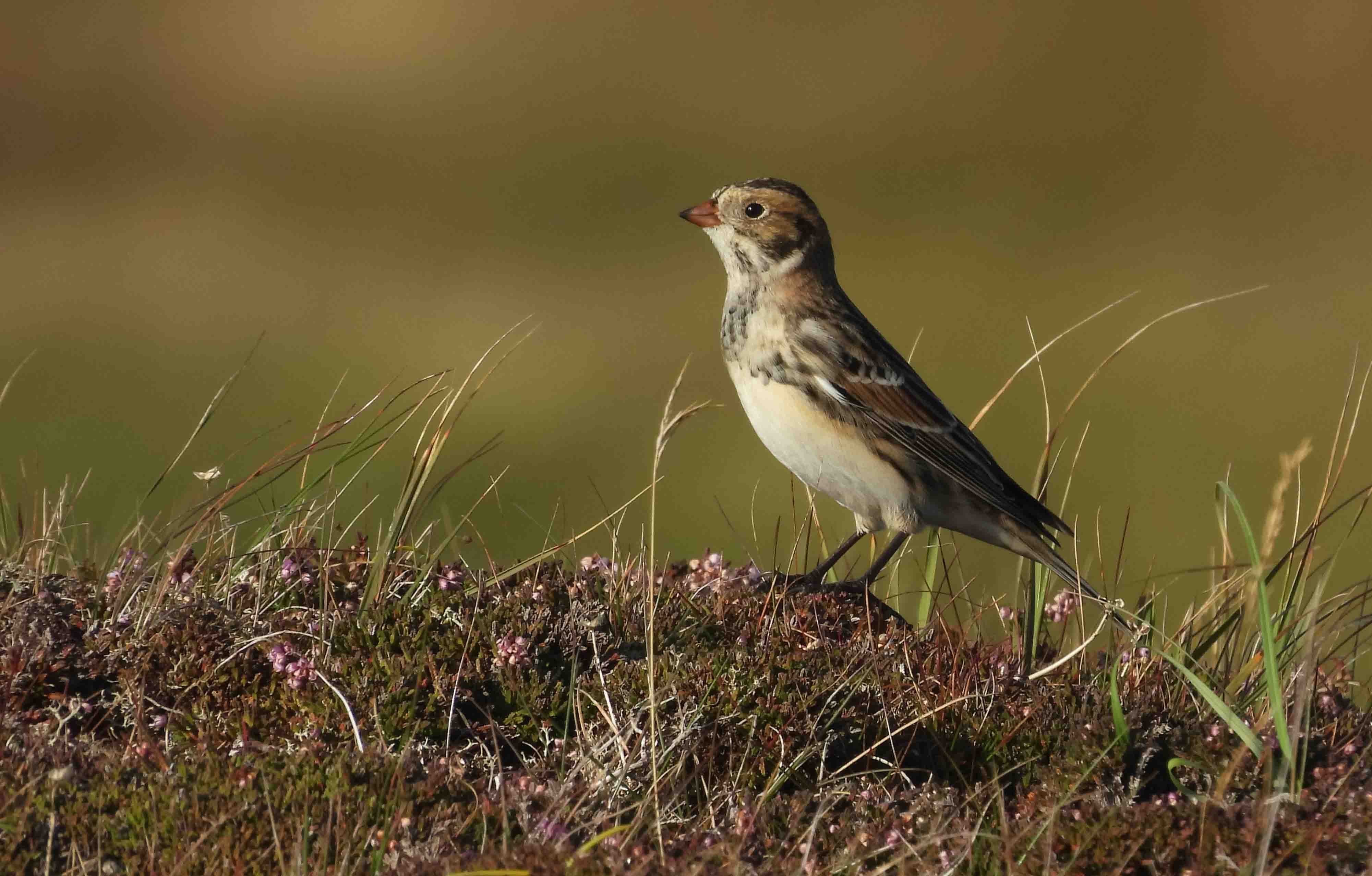
Lapland Bunting brightening up a quiet census for Luke on 3rd (Luke Marriner)
HIGHLIGHTS
Wood Sandpiper: one at Da Water still to 3rd
Red-backed Shrike: juvenile at the Obs throughout
Barred Warbler: one still to 2nd
Common Rosefinch: one on 3rd
Sightings of note (high counts): 61 Greylag Goose, 27 Wigeon, 7 Teal, 32 Oystercatcher, 6 Lapwing, 9 Golden Plover, 45 Ringed Plover, 1 Whimbrel, 38 Curlew, 56 Turnstone, 3 Knot, 1 Ruff, 1 Sanderling, 15 Dunlin, 1 Purple Sandpiper, 74 Snipe, 4 Common Sandpiper, 1 Green Sandpiper, 40 Redshank, 1 Greenshank, 3 Kittiwake, 1 Black-headed Gull, 52 Common Gull, 1 Lesser Black-backed Gull, 4 Common Tern, 2 Arctic Skua, 1 Guillemot, 1 Razorbill, 4 Puffin, 1 Sooty Shearwater, 3 Grey Heron, 2 Sparrowhawk, 1 Short-eared Owl, 2 Kestrel, 1 Merlin, 1 Peregrine, 2 Carrion Crow, 78 Skylark, 2 House Martin, 19 Willow Warbler, 8 Chiffchaff, 2 Sedge Warbler, 1 Reed Warbler, 1 Garden Warbler, 1 Lesser Whitethroat, 1 Whitethroat, 1 Goldcrest, 1 Song Thrush, 3 Spotted Flycatcher, 5 Pied Flycatcher, 1 Black Redstart, 2 Redstart, 5 Whinchat, 141 Wheatear, 3 Grey Wagtail, 1 Pied Wagtail, 65 alba Wagtail, 326 Meadow Pipit, 19 Tree Pipit, 94 Rock Pipit, 1 Brambling, 113 Twite, 4 Siskin, 1 Lapland Bunting
Other wildlife: 1 Red Admiral, 10 Painted Lady, 2 Silver Y, 3 Shetland Bee
Year list: 182
______________________________________________________________________
30th August to 1st September 2026
A fairly unchanging few days birding, though there were still highlights there to be found. The best of the new arrivals included a Citrine Wagtail over the Vaadal on 1st, and a surprise Corncrake discovered in the Walli Burn on 31st during attempts to relocate a possible Spotted Crake earlier in the day! Efforts to catch Sparrowhawks to roost on 30th were successful, with two female Sparrowhawk and a bonus juvenile male Merlin caught – the latter already ringed, most likely in a Shetland nest. The quieter spell allowed some less exciting jobs to be done too, including taking the Oysterplant fence back in from Muckle Uri Geo and retreiving the dinghy from Hesti Geo now that the Puffin season is over.
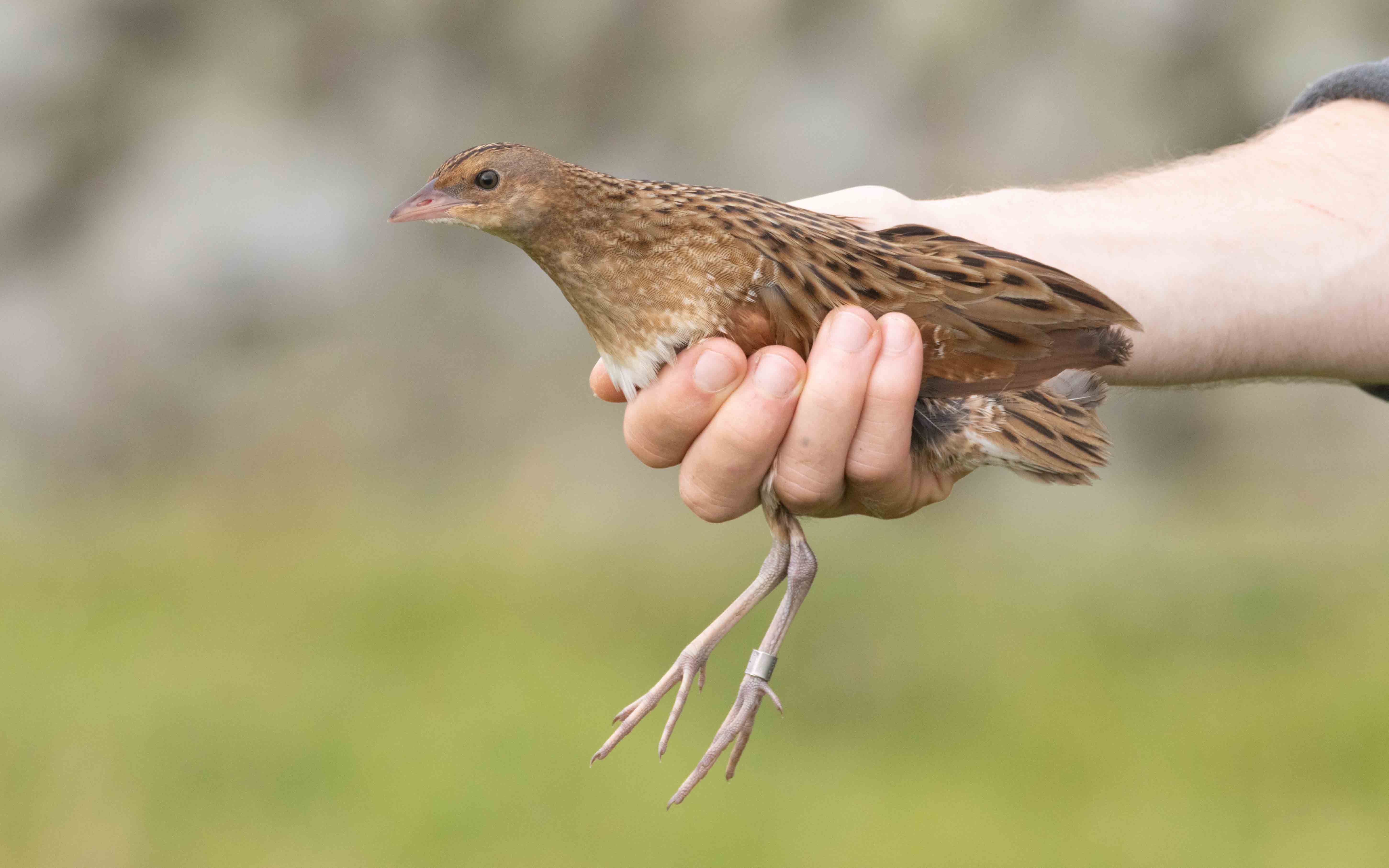
Corncrake was an unexpected bonus capture in the Walli Burn (Alex Penn)
HIGHLIGHTS
WESTERN SUBALPINE WARBLER: male still at the Obs on 31st
Corncrake: one caught in the Walli Burn on 31st during attempts to relocate a possible Spotted Crake!
Wood Sandpiper: one at Da Water on 31st and 1st
Red-backed Shrike: a juvenile at the Obs on 31st and 1st
Barred Warbler: one throughout
Yellow Wagtail: up to two daily
Citrine Wagtail: one over Vaadal on 1st
Common Rosefinch: up to two daily
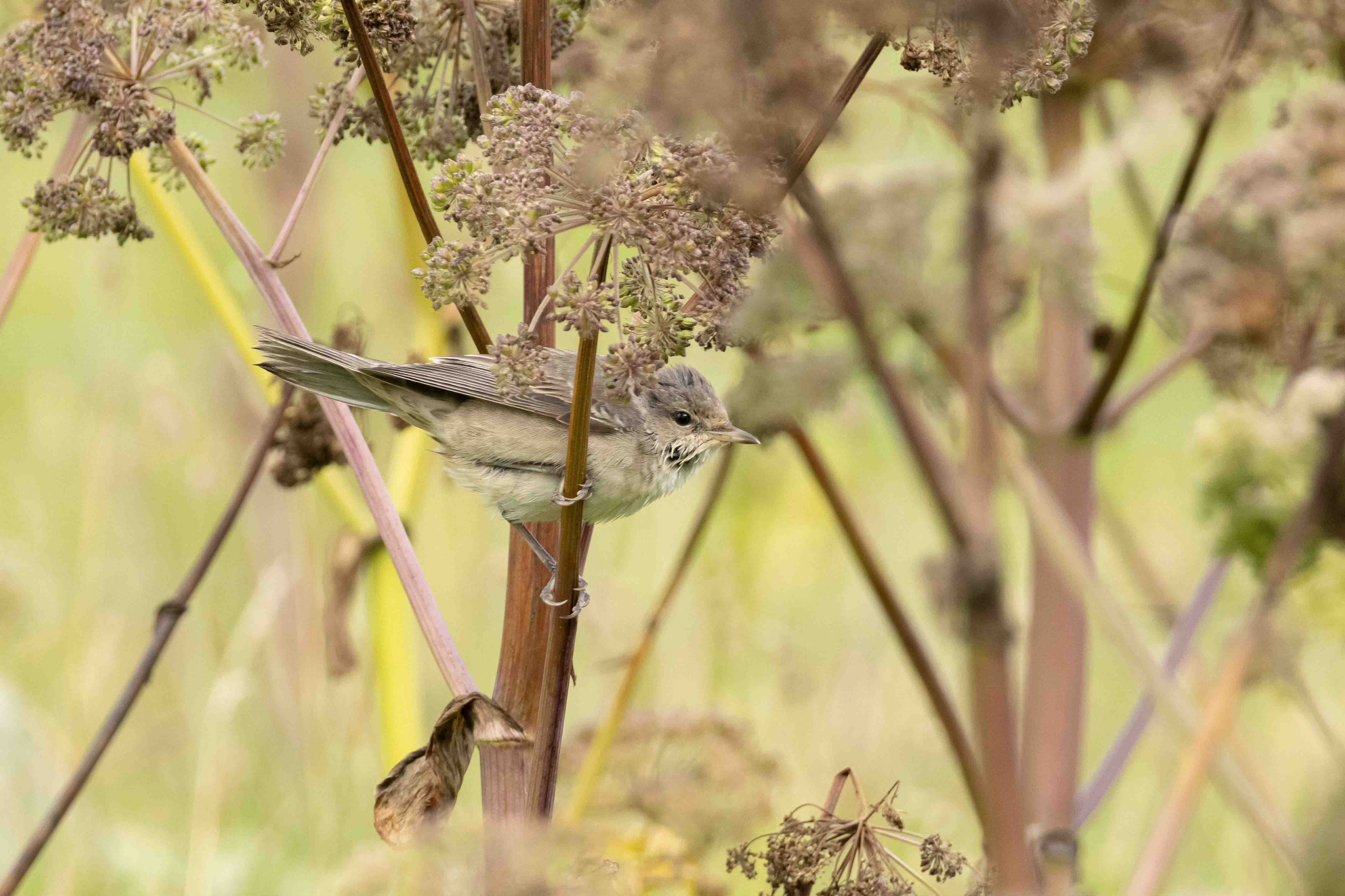
Unusually good views of a Barred Warbler at Midway (Carla Hill)
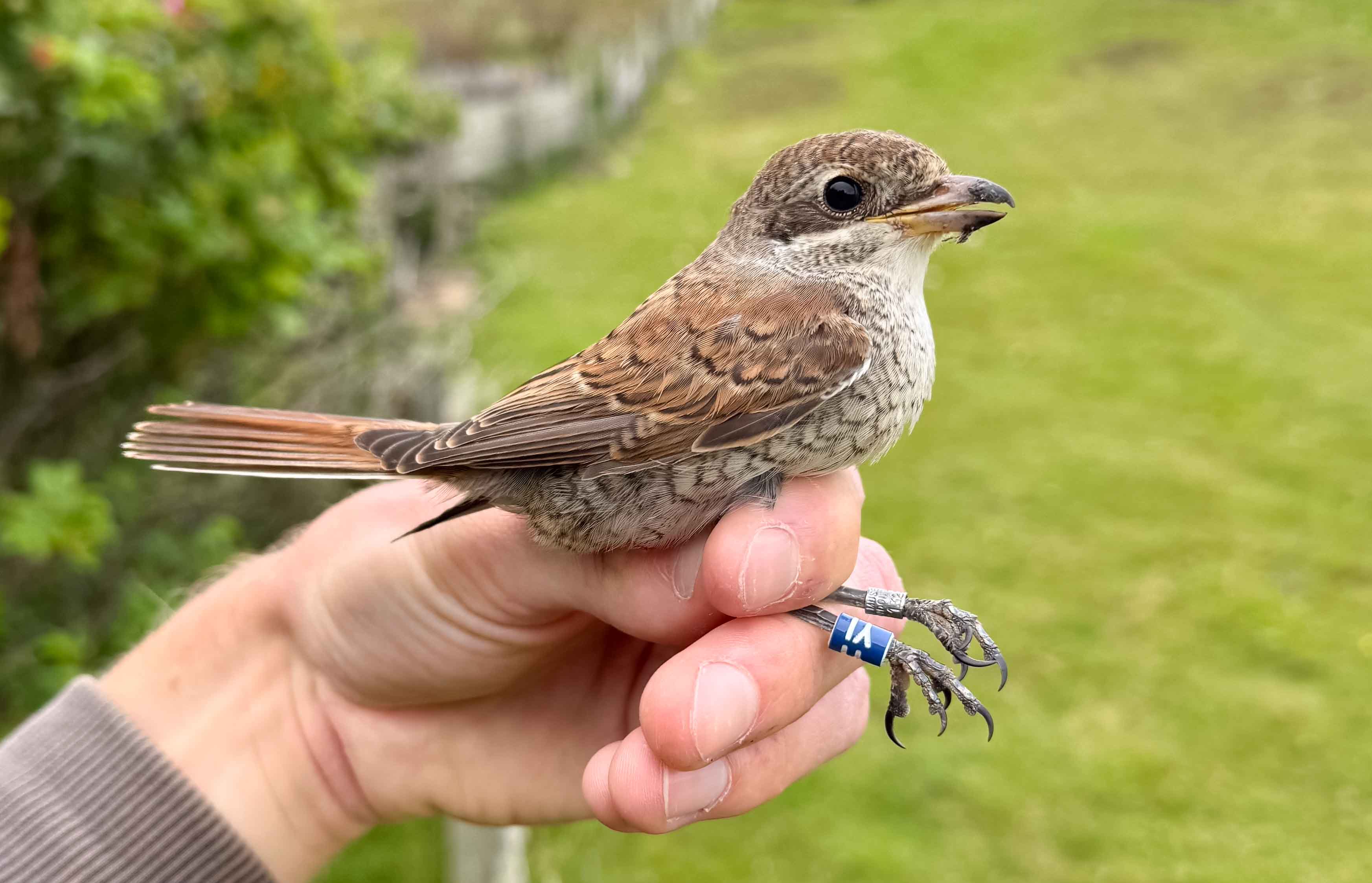
The second Red-backed Shrike to be colour-ringed this year (Alex Penn)
Sightings of note (high counts): 32 Greylag Goose, 10 Wigeon, 7 Teal, 35 Oystercatcher, 8 Lapwing, 11 Golden Plover, 110 Ringed Plover, 1 Whimbrel, 38 Curlew, 82 Turnstone, 1 Knot, 1 Ruff, 7 Sanderling, 17 Dunlin, 31 Purple Sandpiper, 41 Snipe, 3 Common Sandpiper, 1 Green Sandpiper, 67 Redshank, 1 Greenshank, 1 Kittiwake, 1 Black-headed Gull, 76 Common Gull, 1 Lesser Black-backed Gull, 3 Arctic Skua, 1 Guillemot, 4 Puffin, 1 Great Northern Diver, 2 Sooty Shearwater, 3 Grey Heron, 8 Sparrowhawk, 1 Short-eared Owl, 3 Kestrel, 2 Merlin, 1 Peregrine, 4 Carrion Crow, 59 Skylark, 1 Swallow, 2 House Martin, 76 Willow Warbler, 8 Chiffchaff, 1 Sedge Warbler, 5 Reed Warbler, 3 Blackcap, 5 Garden Warbler, 3 Lesser Whitethroat, 2 Whitethroat, 7 Spotted Flycatcher, 5 Pied Flycatcher, 1 Black Redstart, 4 Redstart, 7 Whinchat, 138 Wheatear, 5 Grey Wagtail, 2 Pied Wagtail, 2 White Wagtail, 64 alba Wagtail, 210 Meadow Pipit, 41 Tree Pipit, 84 Rock Pipit, 1 Brambling, 101 Twite, 15 Siskin
Other wildlife: 2 Red Admiral, 18 Painted Lady, 4 Silver Y, 6 Shetland Bee
Year list: 182
______________________________________________________________________
29th August 2026
Weather: Overcast and cool. F4-5 N
Another productive day despite the winds switching to a chillier northerly today, with birds clearly arriving through the day. Increases in Whinchat and Tree Pipit were most obvious, though the star bird was a Dotterel over the traps first thing. At least two Wryneck were present, though whether either were new individuals is tricky to determine. Barred Warbler numbers dropped to just a single, and the remaining Rosefinches had apparently moved on. A look at the sea from South Light in the late afternoon revealed a surprising movement of Sooty Shearwater, with the 15 recorded passing being the first of the year and a respectable day total by Fair Isle standards.
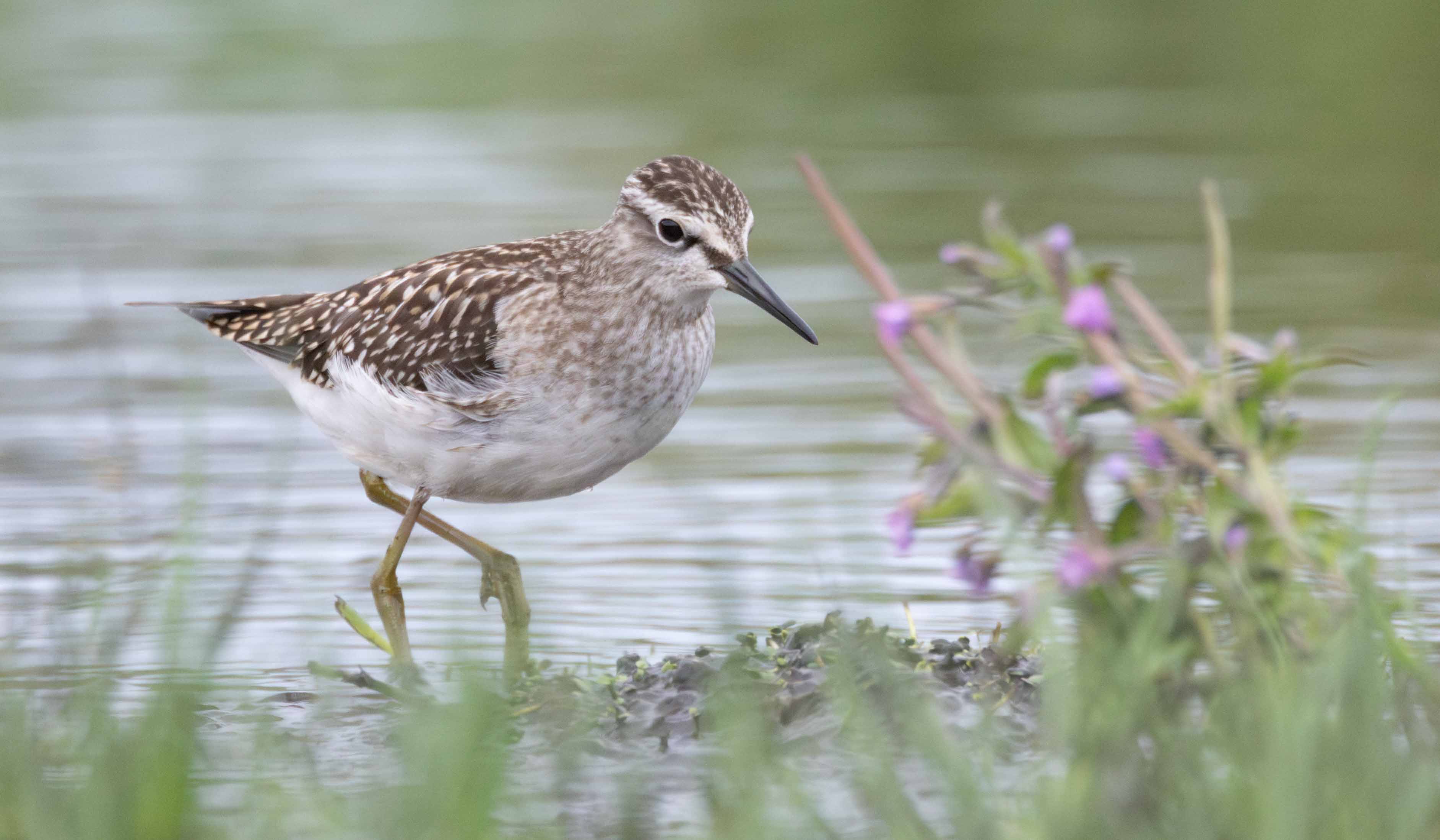
One of the many highlights of early autumn is the passage of confiding juvenile waders, with Wood Sandpiper surely one of the best (Alex Penn)
HIGHLIGHTS
Dotterel: one circled over Plantation calling early morning, but was sadly not relocated later in the day
Wood Sandpiper: one dropped into Da Water late morning
Wryneck: at least two, with sightings from Shirva to Chalet and another around the Haa and Utra
Wood Warbler: one at Grey Geo
Barred Warbler: one at Burkle
Yellow Wagtail: female-type at Lower Leogh
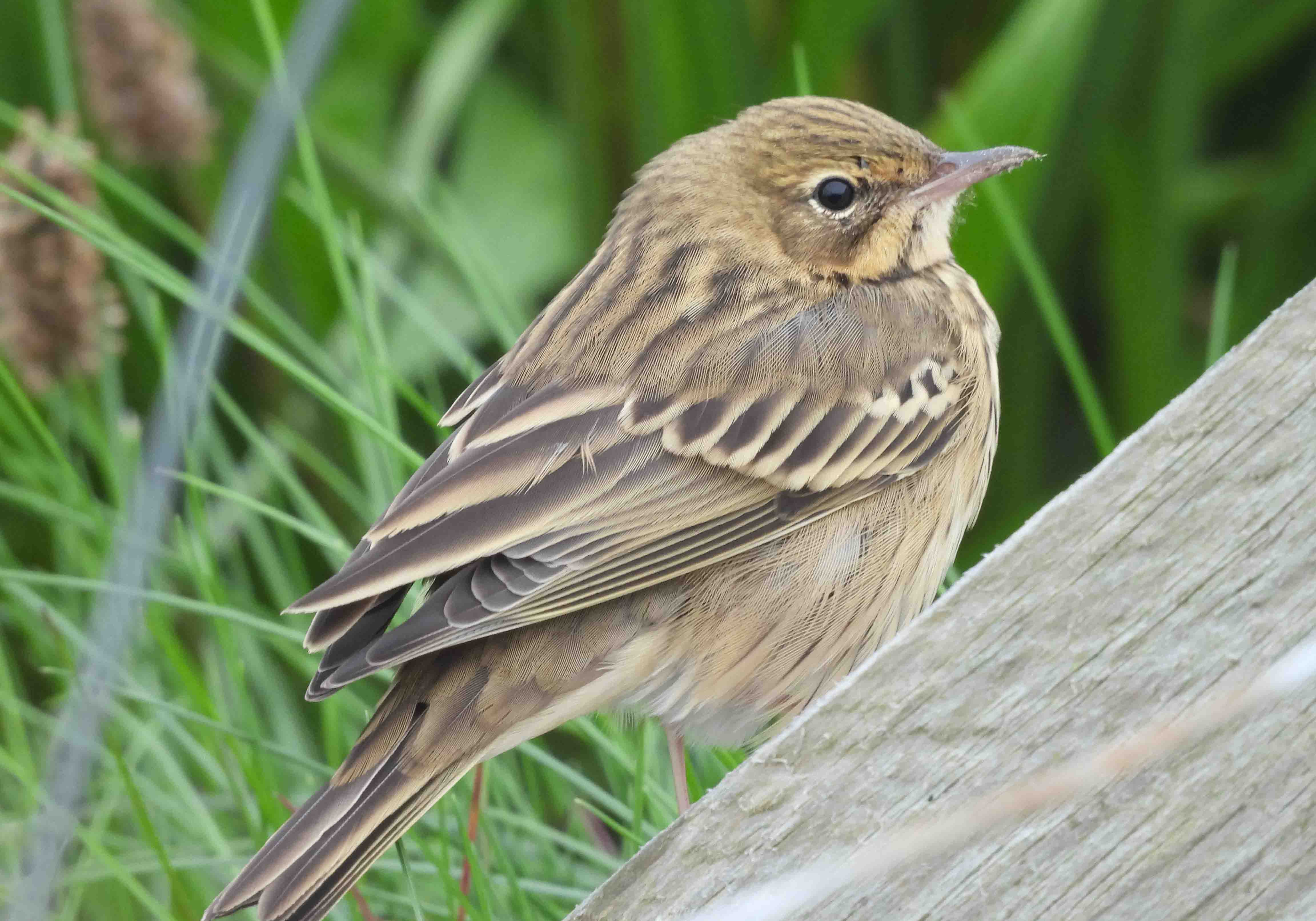
A clear arrival of Tree Pipit today, with numbers present growing through the afternoon (Luke Marriner)
Sightings of note: 12 Greylag Goose, 1 Shoveler, 4 Wigeon, 24 Teal, 19 Oystercatcher, 5 Lapwing, 6 Golden Plover, 108 Ringed Plover, 1 Whimbrel, 26 Curlew, 2 Black-tailed Godwit, 34 Turnstone, 1 Knot, 1 Ruff, 12 Sanderling, 28 Dunlin, 1 Purple Sandpiper, 56 Snipe, 2 Common Sandpiper, 1 Green Sandpiper, 44 Redshank, 2 Kittiwake, 1 Black-headed Gull, 27 Common Gull, 1 Lesser Black-backed Gull, 2 Arctic Skua, 3 Puffin, 15 Sooty Shearwater, 5 Grey Heron, 5 Sparrowhawk, 3 Kestrel, 5 Carrion Crow, 50 Skylark, 1 Swallow, 53 Willow Warbler, 9 Chiffchaff, 1 Sedge Warbler, 3 Reed Warbler, 1 Blackcap, 3 Garden Warbler, 2 Lesser Whitethroat, 6 Spotted Flycatcher, 2 Pied Flycatcher, 1 Black Redstart, 4 Redstart, 9 Whinchat, 134 Wheatear, 3 Grey Wagtail, 2 White Wagtail, 40 alba Wagtail, 255 Meadow Pipit, 23 Tree Pipit, 71 Rock Pipit, 59 Twite
Other wildlife: 3 Painted Lady, 3 Harbour Porpoise
Year list: 182
______________________________________________________________________
27th to 28th August 2026
Weather: Sunny and warm on 27th, mostly breezy and rainy on 28th
An excellent couple of days of migration, with a pleasant scattering of scarce migrants unearthed and clear turnover of birds each day making for some great birding around the isle. Barred Warbler and Rosefinch were regular sights around the south, with multiple Wryneck adding a touch of further excitement. The cliffs of the north meanwhile hosted a Corncrake in the unlikely location of Tineside, and a gleaming Wood Warbler at Wester Lother. Aside from the scarcities, there was some clear small raptor passage with Sparrowhawks and Kestrels terrorising the broad selection of common migrants present.
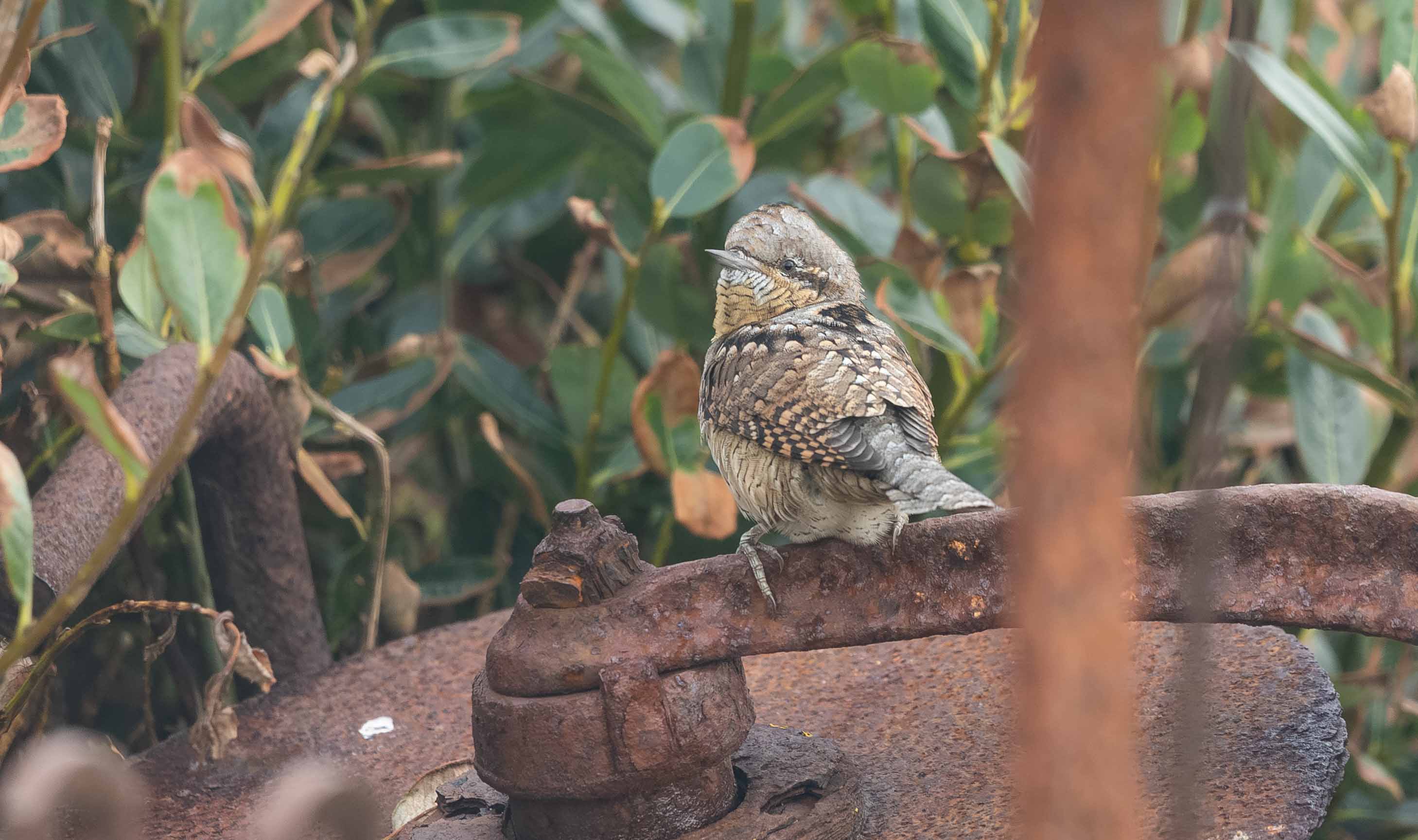
It’s been a good spell for Wryneck, with this showy bird at Field on 27th (Tom Wright)
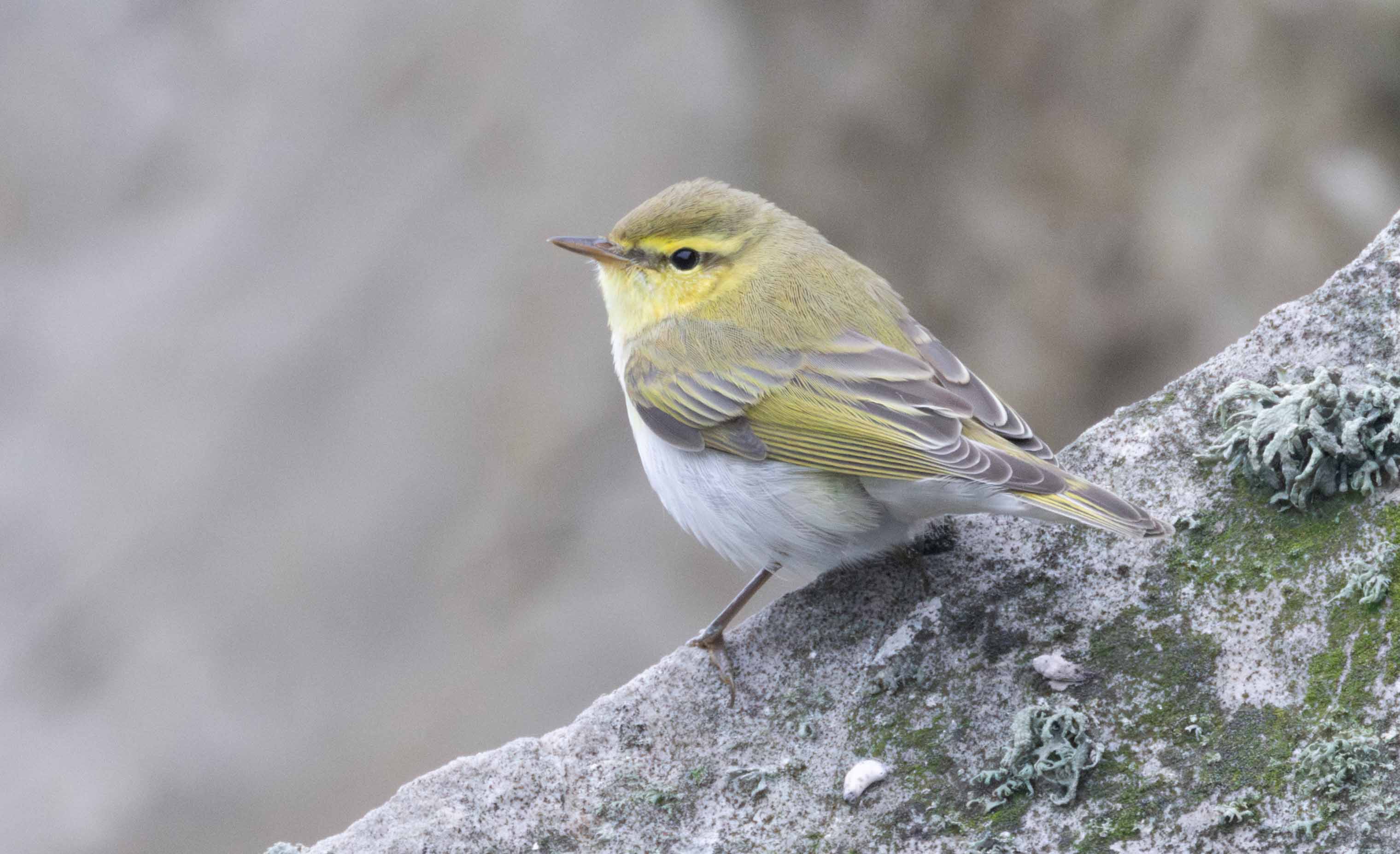
Wood Warbler is always a pleasure to come across, particularly on the cliffs (Alex Penn)
HIGHLIGHTS
WESTERN SUBALPINE WARBLER: male still at the Obs on 27th
Corncrake: one flushed from Tineside on 27th
Wryneck: two on 27th at Field and Burkle, one on 28th at Johnny Arcus Park, later seen in Plantation
Wood Warbler: one at Wester Lother on 28th
Barred Warbler: four on 27th, five on 28th
’Blue-headed’ Wagtail: female-type on 27th
Common Rosefinch: four on 27th, two on 28th
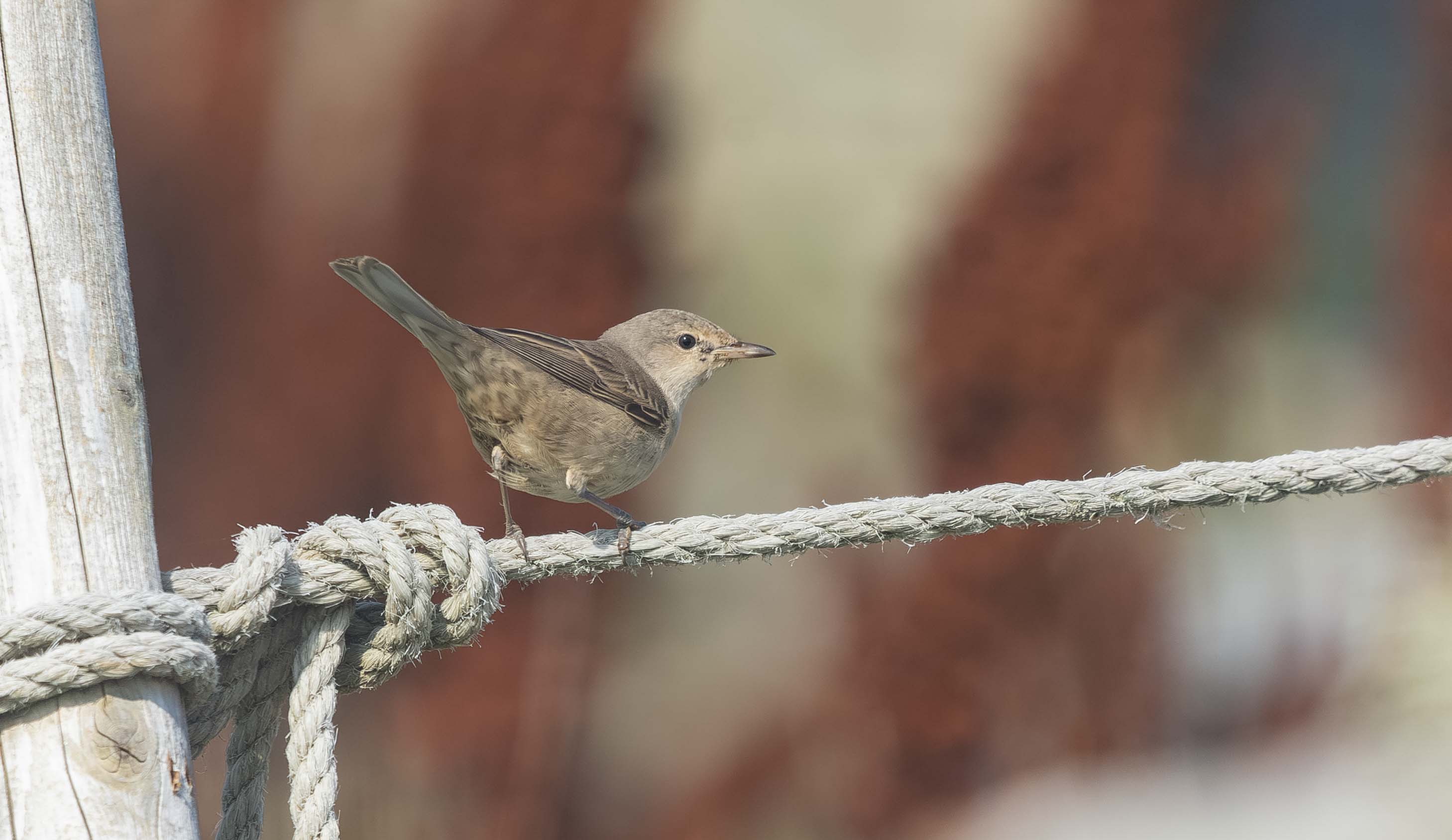
Barred Warblers continue to dominate the isle news group (Tom Wright)
Sightings of note (high counts): 30 Greylag Goose, 5 Wigeon, 17 Teal, 37 Oystercatcher, 2 Lapwing, 5 Golden Plover, 56 Ringed Plover, 26 Curlew, 2 Black-tailed Godwit, 21 Turnstone, 1 Ruff, 1 Sanderling, 13 Dunlin, 49 Snipe, 4 Common Sandpiper, 1 Green Sandpiper, 23 Redshank, 2 Greenshank, 3 Kittiwake, 5 Black-headed Gull, 47 Common Gull, 1 Lesser Black-backed Gull, 1 Arctic Tern, 2 Arctic Skua, 1 Puffin, 3 Grey Heron, 11 Sparrowhawk, 4 Kestrel, 1 Merlin, 1 Peregrine, 3 Carrion Crow, 52 Skylark, 3 Swallow, 74 Willow Warbler, 12 Chiffchaff, 2 Reed Warbler, 1 Blackcap, 5 Garden Warbler, 5 Lesser Whitethroat, 2 Whitethroat, 6 Spotted Flycatcher, 6 Pied Flycatcher, 8 Redstart, 2 Whinchat, 184 Wheatear, 2 Grey Wagtail, 2 Pied Wagtail, 56 alba Wagtail, 210 Meadow Pipit, 4 Tree Pipit, 100 Rock Pipit, 1 Brambling, 56 Twite, 1 Siskin
Other wildlife: 31 Red Admiral, 46 Painted Lady, 59 Silver Y, 1 Diamondback Moth, 1 Hummingbird Hawkmoth, 5 Risso’s Dolphin (27th)
Year list: 180
______________________________________________________________________
26th August 2026
Weather: Calm and sunny. F4-5 ESE
Another day of baking sunshine and light southeasterlies brought new birds again today, and whilst numbers were relatively low, the variety was good. Best of the new arrivals were a Blyth’s Reed Warbler trapped in Plantation after lunch, and a new Citrine Wagtail that buzzed its way around much of the island. The supporting cast included new Barred Warblers, Wood Warbler and Rosefinch, as well as the first Redstarts and Sparrowhawk of the autumn.
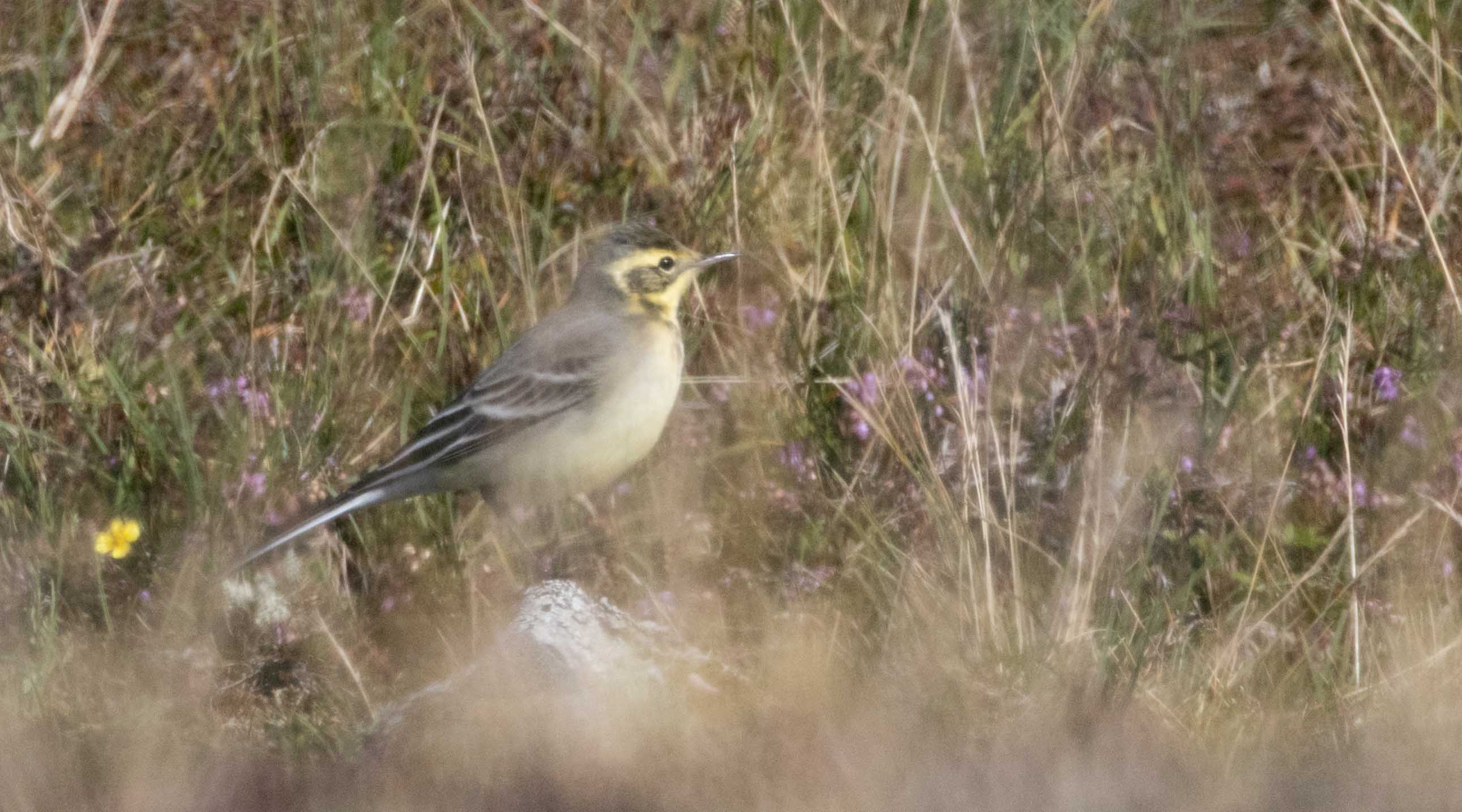
Our second Citrine Wagtail of the autumn, this bird being much more strongly marked and well washed with yellow through the face (Alex Penn)
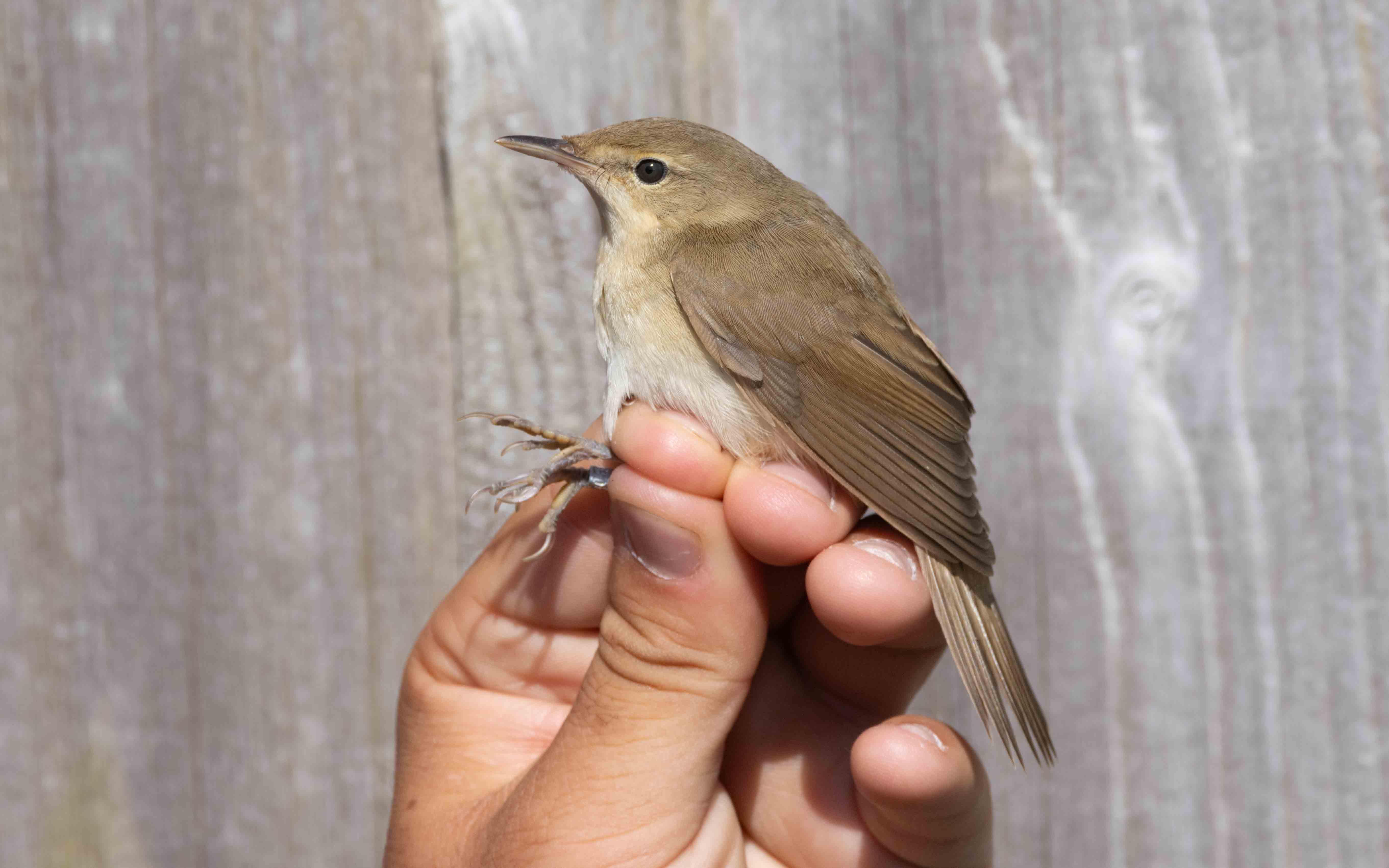
A Blyth’s Reed Warbler was a pleasant surprise in a productive day for the traps, with a further two new Barred Warbler also ringed (Alex Penn)
HIGHLIGHTS
WESTERN SUBALPINE WARBLER: male still at the Obs
Woodchat Shrike: 1cy still around Brecks
Wood Warbler: one at Midway
Blyth’s Reed Warbler: one trapped in Plantation
Barred Warbler: seven; singles at Shirva, Midway and the Haa, two at Burkle and two trapped in Plantation
Citrine Wagtail: a mobile bird was heard over several locations around the isle, and seen briefly on the ground at Johnny Arcus Park (91st isle record)
Common Rosefinch: four; two still in Plantation and singles at Ditfield and Shirva
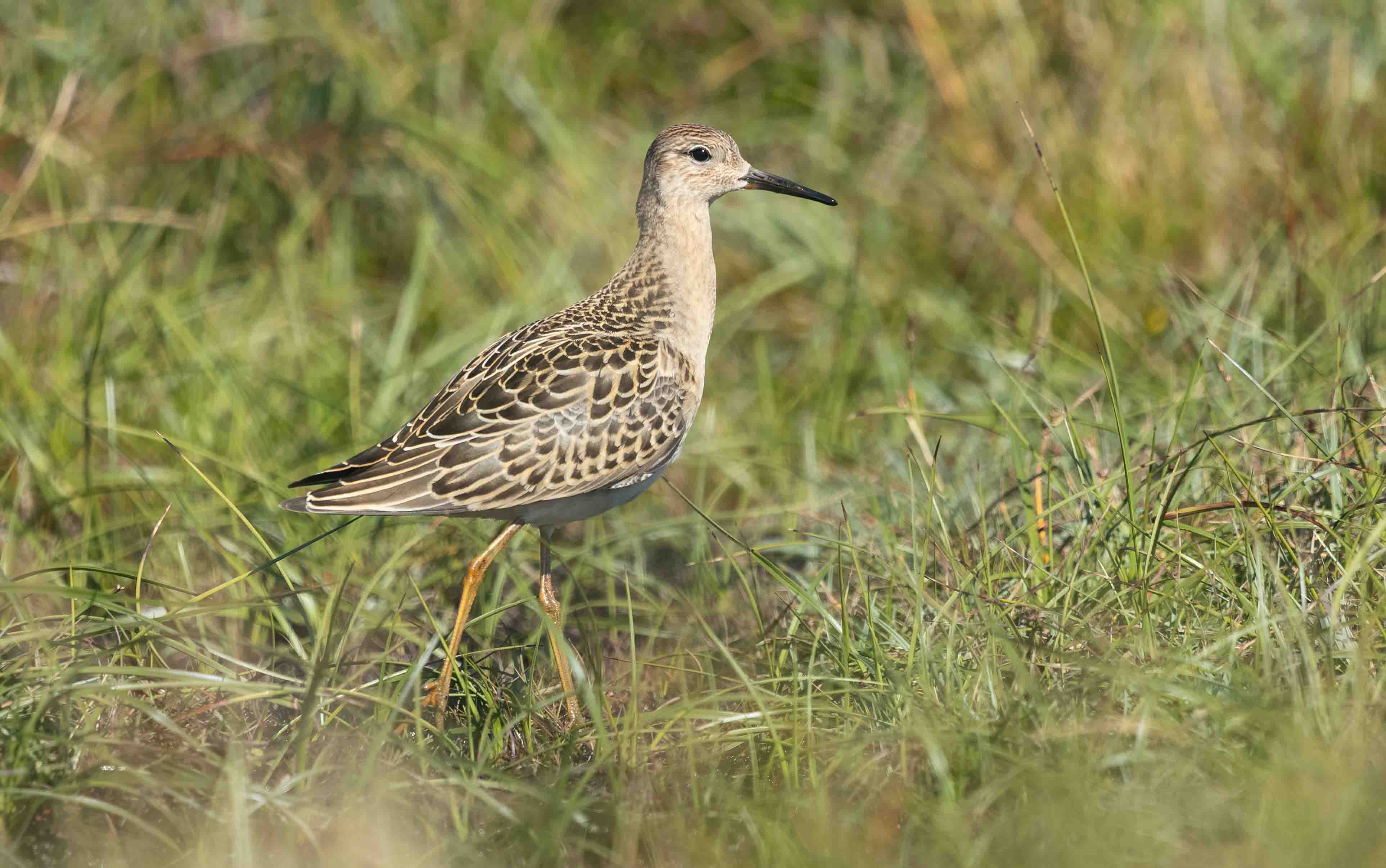
It’s been a fairly quiet autumn for Ruff thus far (Tom Wright)
Sightings of note (high counts): 14 Greylag Goose, 2 Wigeon, 6 Teal, 57 Oystercatcher, 2 Lapwing, 5 Golden Plover, 36 Ringed Plover, 30 Curlew, 2 Black-tailed Godwit, 27 Turnstone, 6 Knot, 2 Sanderling, 8 Dunlin, 82 Snipe, 34 Redshank, 2 Greenshank, 1 Kittiwake, 2 Black-headed Gull, 18 Common Gull, 1 Arctic Tern, 5 Arctic Skua, 5 Puffin, 5 Grey Heron, 1 Sparrowhawk, 3 Kestrel, 2 Carrion Crow, 54 Skylark, 1 Sand Martin, 6 Swallow, 58 Willow Warbler, 9 Chiffchaff, 1 Reed Warbler, 1 Blackcap, 5 Garden Warbler, 3 Lesser Whitethroat, 1 Whitethroat, 4 Spotted Flycatcher, 4 Pied Flycatcher, 1 Black Redstart, 2 Redstart, 2 Whinchat, 235 Wheatear, 2 Grey Wagtail, 2 Pied Wagtail, 1 White Wagtail, 78 alba Wagtail, 303 Meadow Pipit, 6 Tree Pipit, 76 Rock Pipit, 1 Brambling, 89 Twite
Other wildlife: 11 Red Admiral, 2 Painted Lady, 1 Small Tortoiseshell, 5 Silver Y, 1 Hummingbird Hawkmoth, 12 Shetland Bee, 1 Green Lacewing, 1 Minke Whale
Year list: 179
______________________________________________________________________
25th August 2026
Weather: Calm and sunny. F4-2 SE
A very pleasant day of sun and light southeasterly winds that brought a scattering of migrants to the isle, headlined by the typical early autumn scarcities of Wryneck, Barred Warbler and Rosefinch. Willow Warbler dominated the migrant totals, with birds hopping along the clifftops of many of the coastal geos and flitting through the croft gardens and thistle patches, resulting in a day total of 71 birds logged. New arrivals of common migrants were otherwise fairly limited, though the six Pied Flycatcher sprinkled mostly along the west cliffs were also clearly new-in.
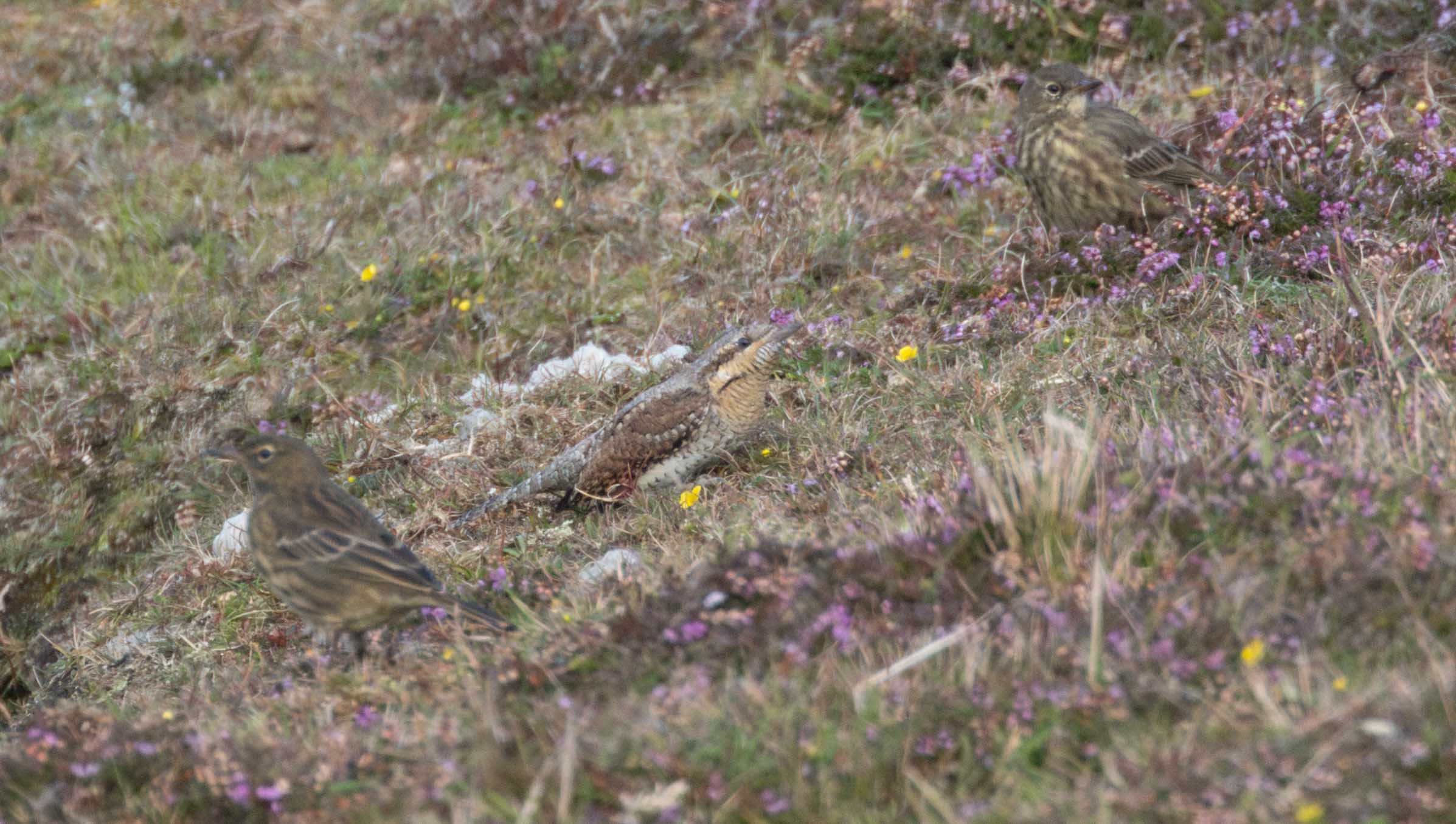
Wryneck flanked by a Rock Pipit entourage on Dronger (Alex Penn)
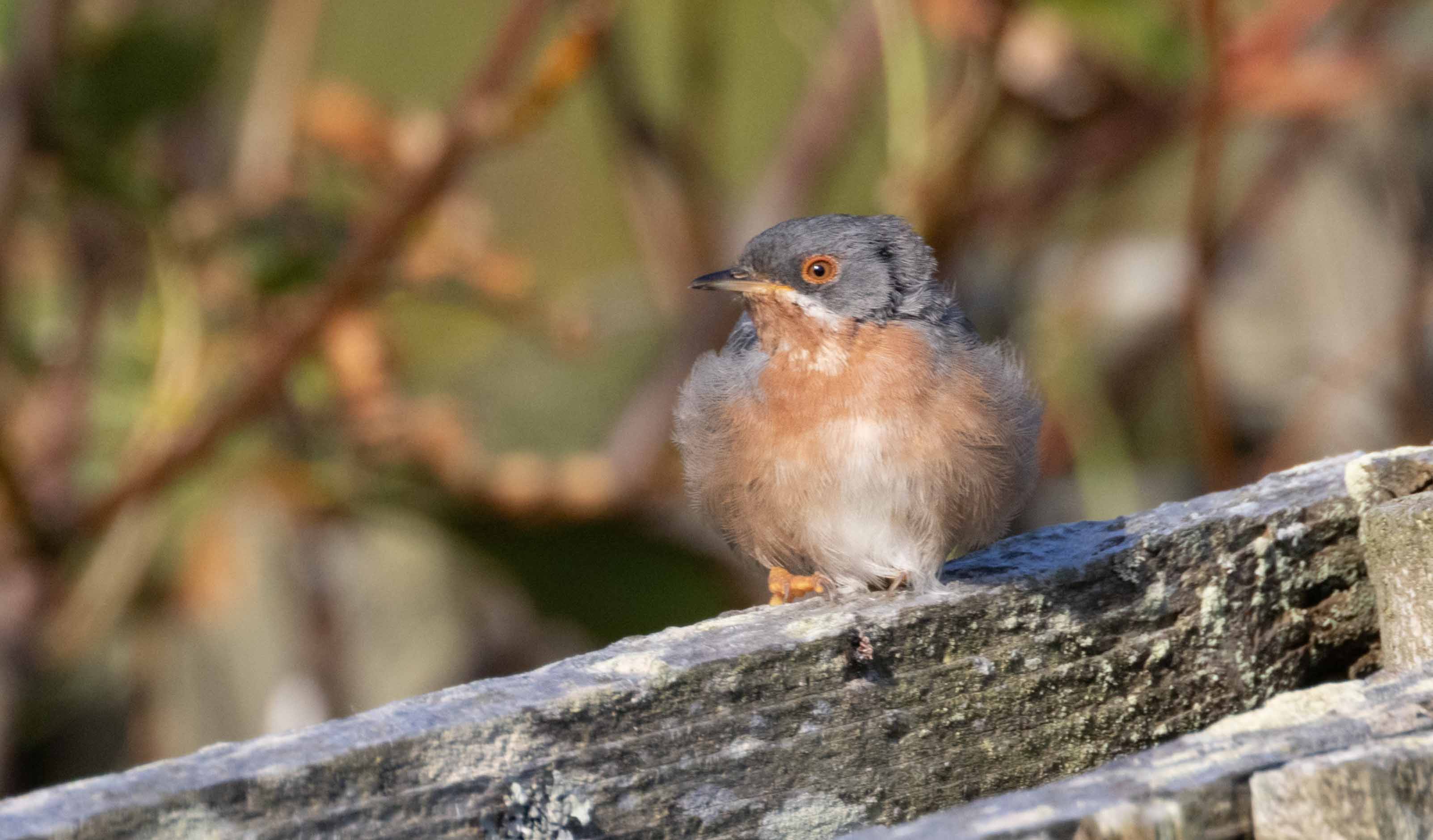
The male Western Subalpine Warbler has now been present at the Obs for almost two months, and is close to finishing its complete moult (Alex Penn)
HIGHLIGHTS
WESTERN SUBALPINE WARBLER: male still at the Obs
Wryneck: two; birds at the Ringing Hut and the top of Ward Hill
Woodchat Shrike: 1cy still around Brecks
Barred Warbler: four; singles at Vaila’s Trees, Quoy, Burkle and trapped in Plantation
Common Rosefinch: three; two trapped in Plantation and a single at Shirva
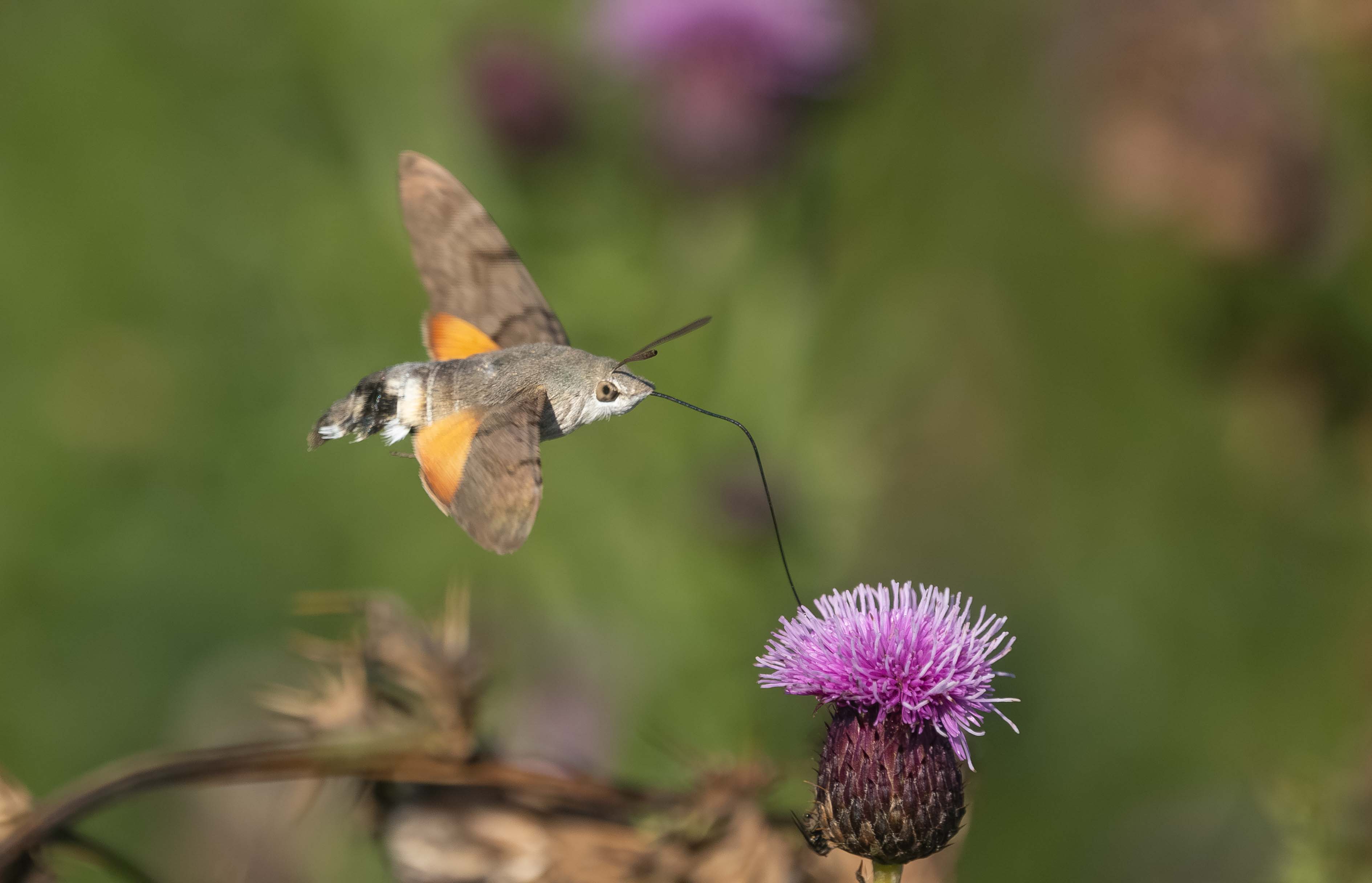
The sunny southeasterlies brought a Hummingbird Hawkmoth to the North Shirva thistle patch, where it joined a Rosefinch (Tom Wright)
Sightings of note: 16 Greylag Goose, 3 Wigeon, 3 Teal, 48 Oystercatcher, 2 Lapwing, 2 Golden Plover, 81 Ringed Plover, 30 Curlew, 1 Black-tailed Godwit, 21 Turnstone, 7 Knot, 4 Sanderling, 11 Dunlin, 77 Snipe, 93 Redshank, 1 Greenshank, 3 Kittiwake, 1 Black-headed Gull, 14 Common Gull, 2 Lesser Black-backed Gull, 5 Arctic Skua, 14 Puffin, 3 Grey Heron, 1 Hen Harrier, 3 Kestrel, 2 Peregrine, 65 Skylark, 2 Sand Martin, 13 Swallow, 71 Willow Warbler, 11 Chiffchaff, 1 Reed Warbler, 1 Garden Warbler, 2 Lesser Whitethroat, 1 Whitethroat, 6 Pied Flycatcher, 1 Black Redstart, 2 Whinchat, 260 Wheatear, 1 Grey Wagtail, 2 Pied Wagtail, 59 alba Wagtail, 254 Meadow Pipit, 4 Tree Pipit, 96 Rock Pipit, 1 Brambling, 56 Twite, 3 Siskin
Other wildlife: 3 Silver Y, 1 Hummingbird Hawkmoth, 8 Shetland Bee
Year list: 178
______________________________________________________________________
20th – 24th August 2026
A relatively unchanging few days, with the headline birds remaining much the same throughout and limited changeover of common migrants. We said goodbye to our volunteers on 21st after a two-week placement that rushed by – we hope to see them both back in the isle at some point in the future! The first fledged Tysties and Fulmars have been seen in recent days, with the Gannets now the last of our breeding seabirds still to fledge. Some wader movement has seen up to 23 Black-tailed Godwit passing through, as well as the first wave of Cormorant passage of the autumn, and the recent calm seas have encouraged plenty of scanning for cetaceans, with Minke Whale, Risso’s and White-beaked Dolphin recorded making the most of Fair Isle’s rich surrounding waters.
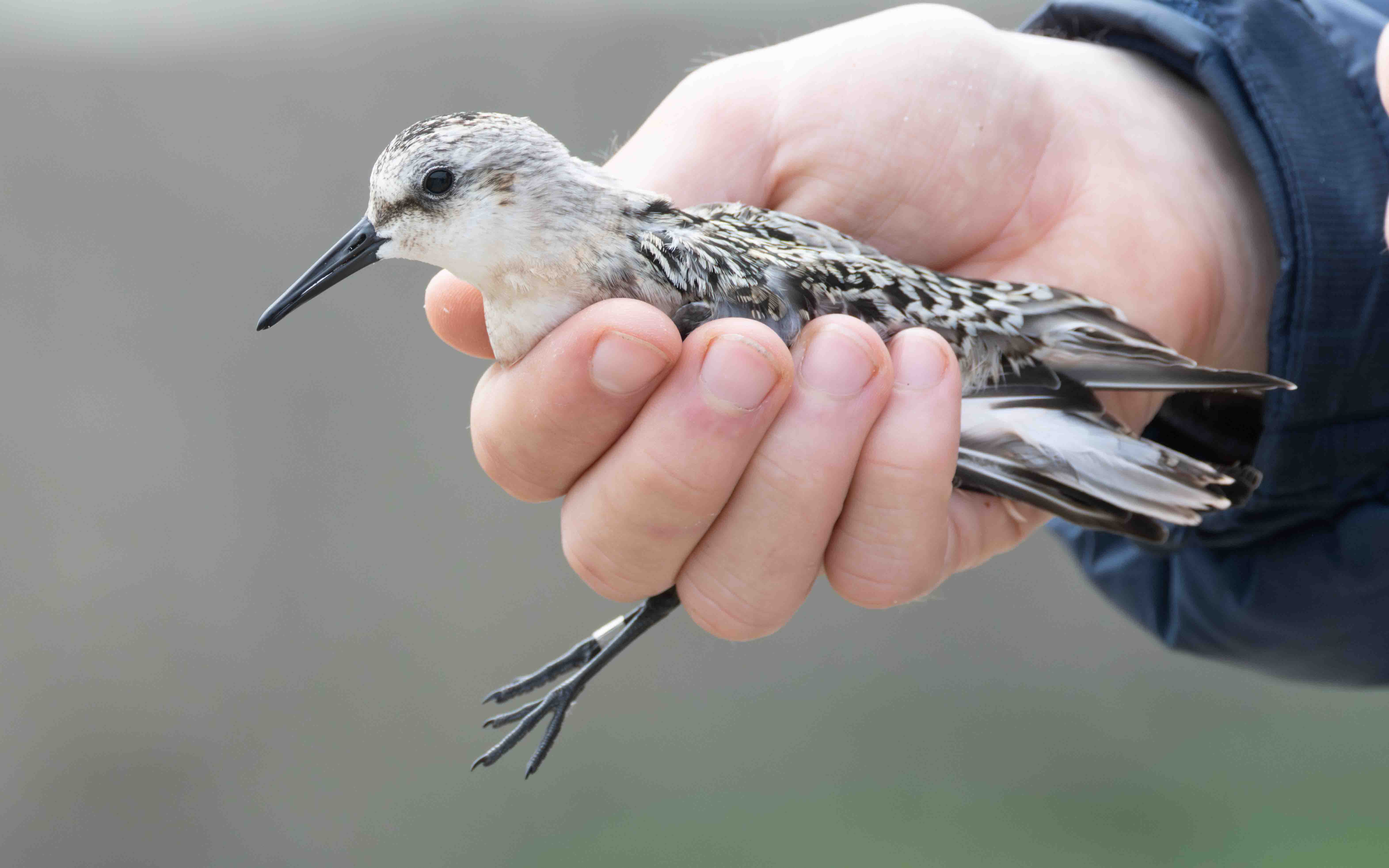
Quieter afternoons meant time for some wader trapping, with small numbers of Sanderling (pictured), Dunlin, Ringed Plover and Turnstone trapped on North Haven beach (Alex Penn)
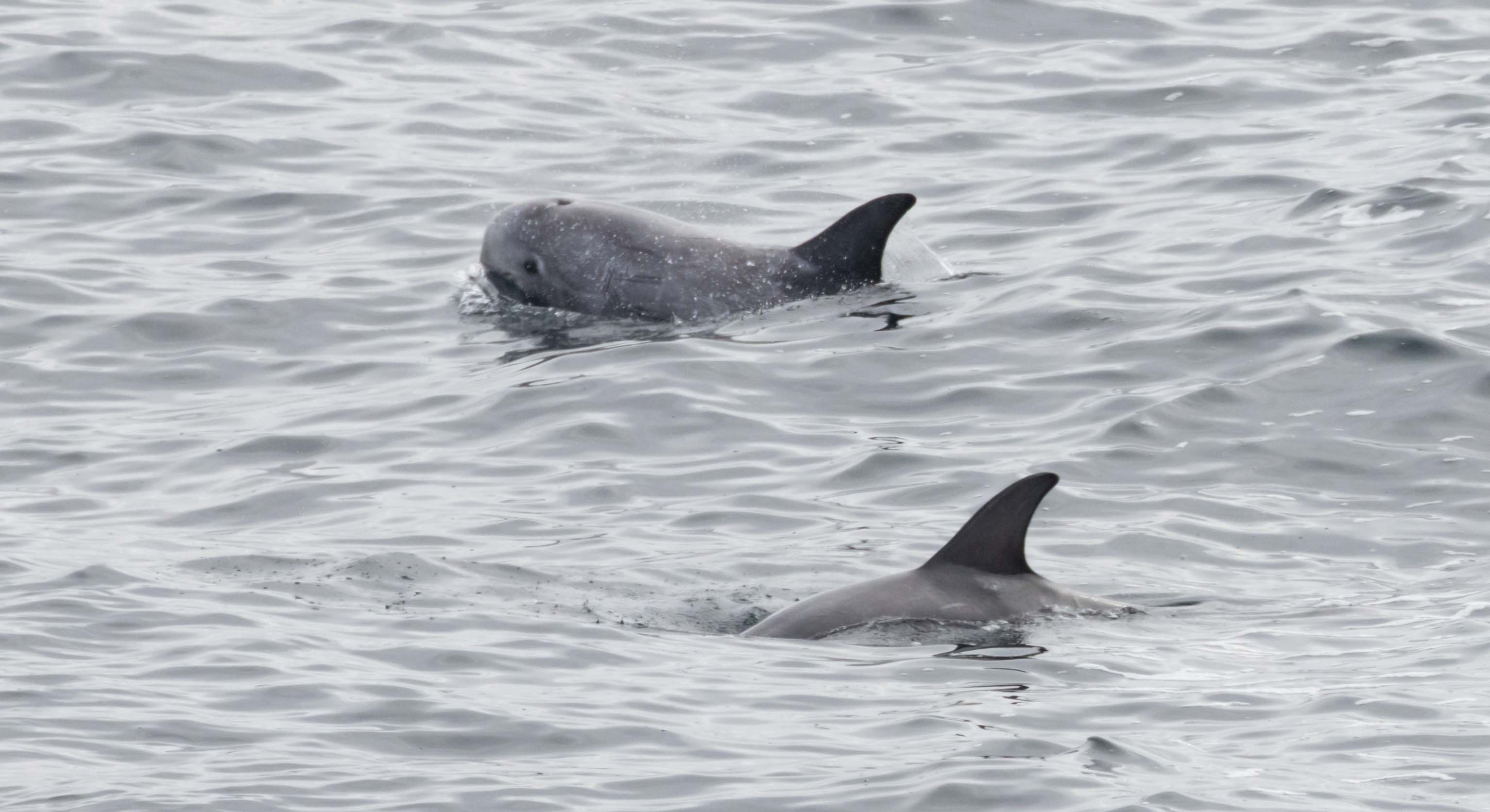
In a good month for cetacean sightings, Risso’s Dolphin have been regularly seen feeding close inshore (Alex Penn)
HIGHLIGHTS
WESTERN SUBALPINE WARBLER: male still at the Obs throughout
Red-backed Shrike: 1cy around Kenaby throughout
Woodchat Shrike: 1cy still around Chapel Plantation and Kenaby throughout
Wood Warbler: one at Shirva on 21st
Barred Warbler: up to four still throughout
Citrine Wagtail: 1cy still to 22nd
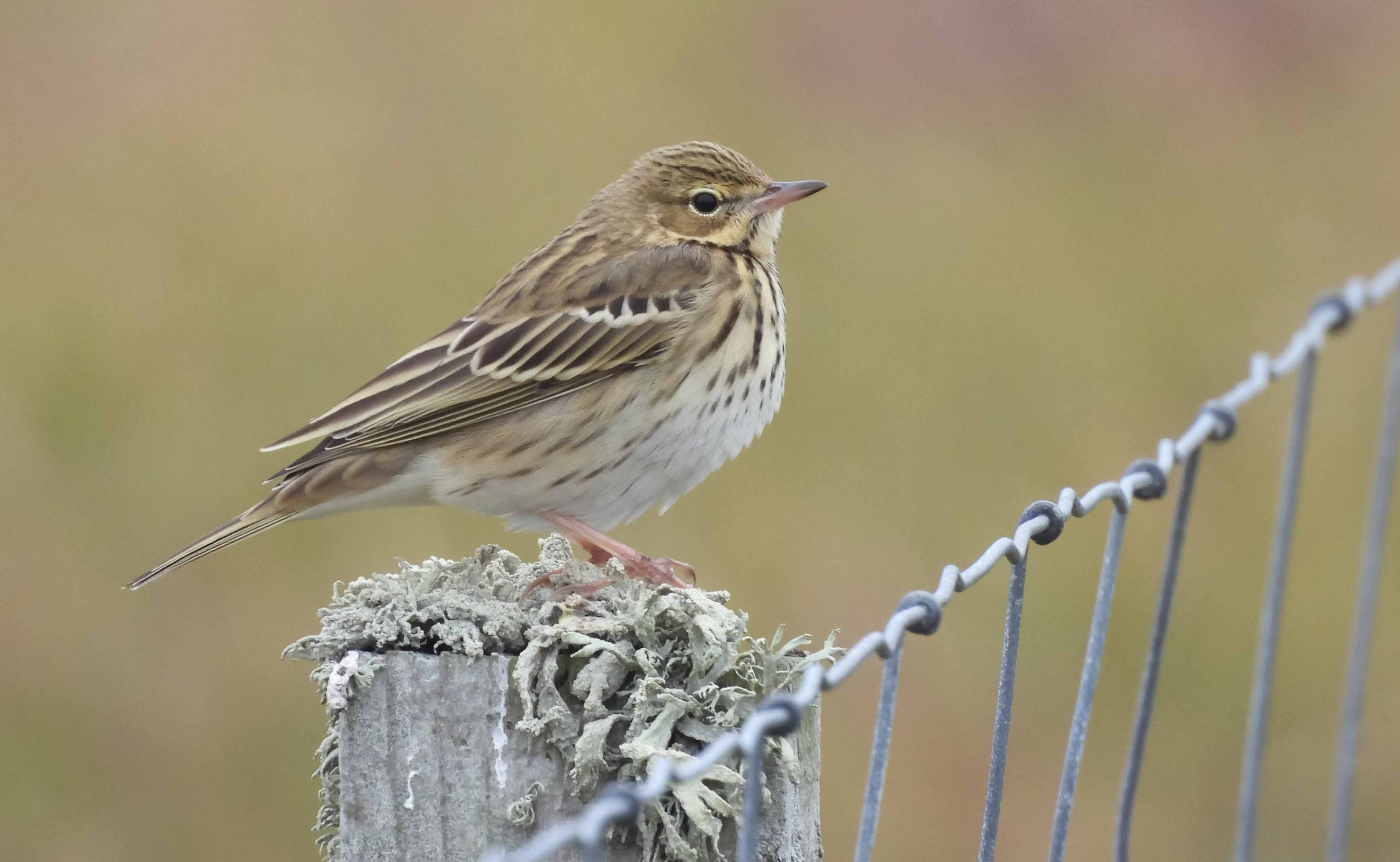
The first Tree Pipit of the autumn has been amongst the modest passage of common migrants in recent days (Luke Marriner)
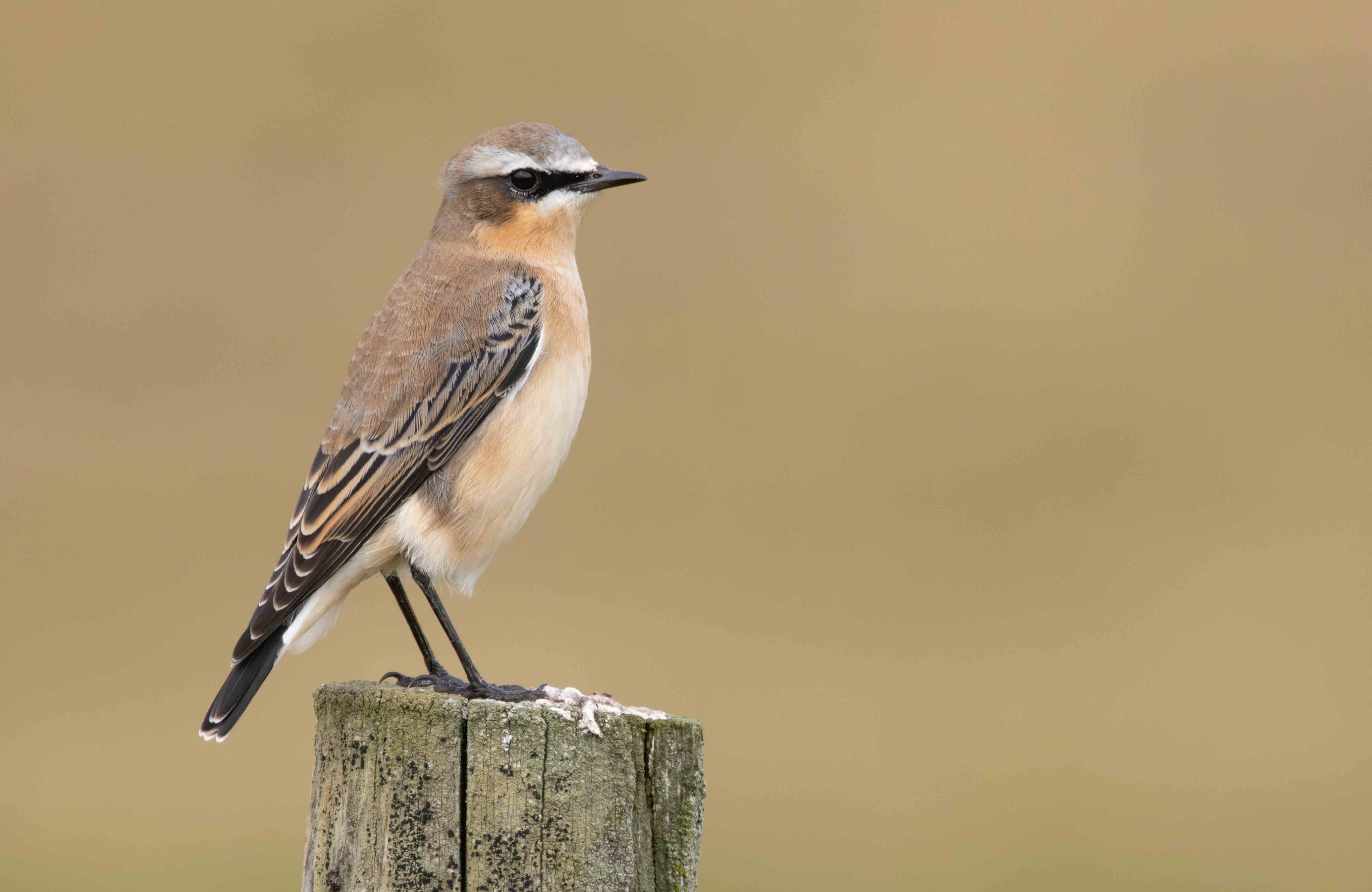
Wheatear continue to be present in good numbers, with many now fully moulted into their smart autumn plumage (Alex Penn)
Sightings of note (high counts): 43 Greylag Goose, 2 Wigeon, 5 Teal, 1 Woodpigeon, 45 Oystercatcher, 17 Lapwing, 16 Golden Plover, 48 Ringed Plover, 28 Curlew, 1 Bar-tailed Godwit, 23 Black-tailed Godwit, 84 Turnstone, 4 Knot, 4 Ruff, 11 Sanderling, 12 Dunlin, 1 Purple Sandpiper, 88 Snipe, 3 Green Sandpiper, 23 Redshank, 1 Greenshank, 4 Kittiwake, 2 Black-headed Gull, 13 Common Gull, 3 Lesser Black-backed Gull, 2 Arctic Tern, 7 Arctic Skua, 1 Guillemot, 26 Puffin, 1 Red-throated Diver, 1 Great Northern Diver, 16 Cormorant, 3 Grey Heron, 1 Hen Harrier, 1 Short-eared Owl, 3 Kestrel, 1 Peregrine, 3 Carrion Crow, 84 Skylark, 4 Sand Martin, 31 Swallow, 18 Willow Warbler, 10 Chiffchaff, 1 Reed Warbler, 2 Garden Warbler, 1 Lesser Whitethroat, 1 Whitethroat, 1 Spotted Flycatcher, 2 Pied Flycatcher, 2 Whinchat, 203 Wheatear, 5 Grey Wagtail, 1 Pied Wagtail, 47 alba Wagtail, 232 Meadow Pipit, 1 Tree Pipit, 85 Rock Pipit, 1 Brambling, 62 Twite, 2 Siskin
Other wildlife: 1 Peacock, 3 Silver Y, 2 Hummingbird Hawkmoth, 8 Shetland Bee, 1 Minke Whale, 16 Risso’s Dolphin, 4 White-beaked Dolphin
Year list: 178
______________________________________________________________________
19th August 2026
Weather: Breezy and partly sunny. F4-6 NE
The best birding day of the autumn so far, with a regular ‘pinging’ of the news groups as various early autumn scarcities were picked up through the day. Two each of Pied Flycatcher and Willow Warbler caught on the early trap round raised hopes for the day before breakfast, with an early Osprey then drifting south through the isle shortly into census. A new Barred Warbler at Chalet was followed by a Citrine Wagtail on Skadan, which then proved to be rather tricky to pin down through the rest of the day as it buzzed around the south of the isle. A gleaming Wood Warbler was new at North Raeva, with yesterday’s Icterine Warbler still sharing the same cliffs, and a juvenile Red-backed Shrike was found patrolling the fencelines around Kenaby. After lunch, the Barred Warbler at Chalet had become two, with another individual trapped in the Plantation taking today’s total to four birds, and a Wryneck put in a brief appearance at Midway before melting away as quickly as it had appeared. A handful of Whinchat amongst a modest supporting cast of common migrants made for a very pleasant early autumn day’s birding in the isle.
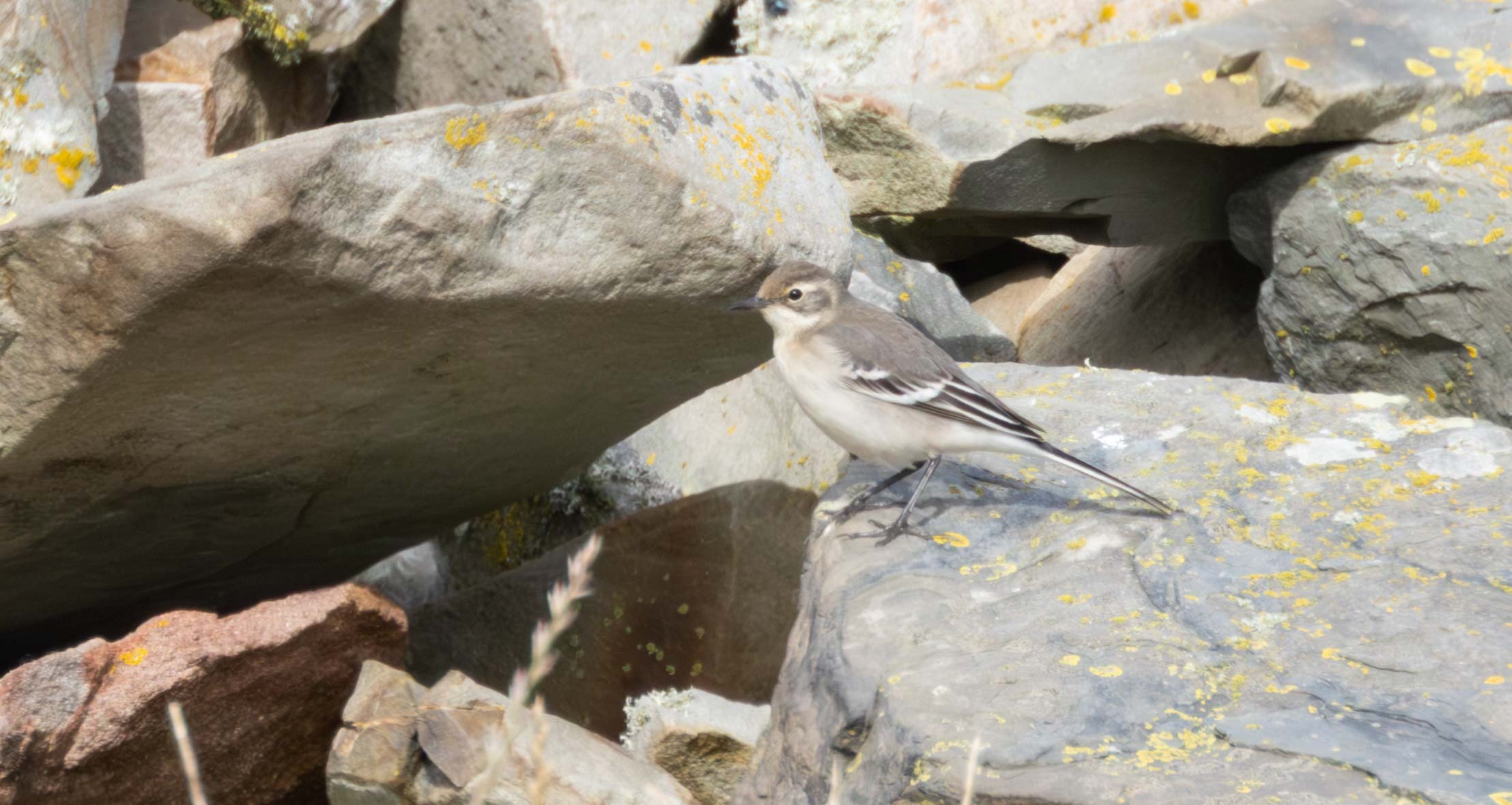
After a blank year for records in 2025, today's early Citrine Wagtail was very welcome (Alex Penn)
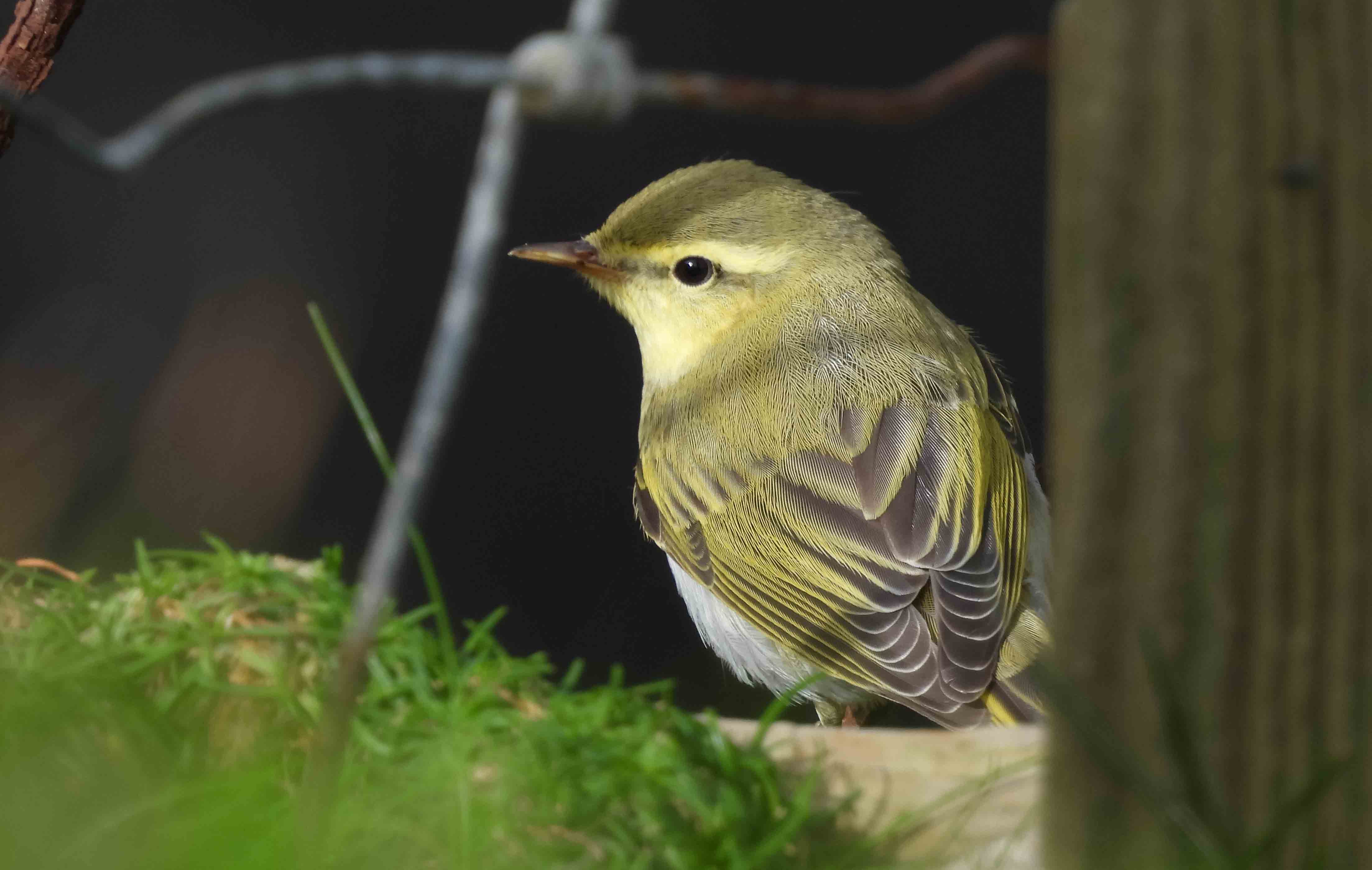
The obliging Wood Warbler showed down to a few feet as it flitted around after flies on the North Raeva cliffs (Luke Marriner)
HIGHLIGHTS
WESTERN SUBALPINE WARBLER: male still at the Obs
Osprey: female over Easter Lother then drifted south
Wryneck: one at Midway
Red-backed Shrike: 1cy around Kenaby
Woodchat Shrike: 1cy still around Chapel Plantation
Wood Warbler: one in North Raeva
Icterine Warbler: one still around the Raevas
Barred Warbler: four; two birds at Chalet, the ringed bird still at Burkle and one trapped in Plantation
Citrine Wagtail: a vocal 1cy was mobile around the south, favouring the Walli Birn area in the afternoon (90th isle record)
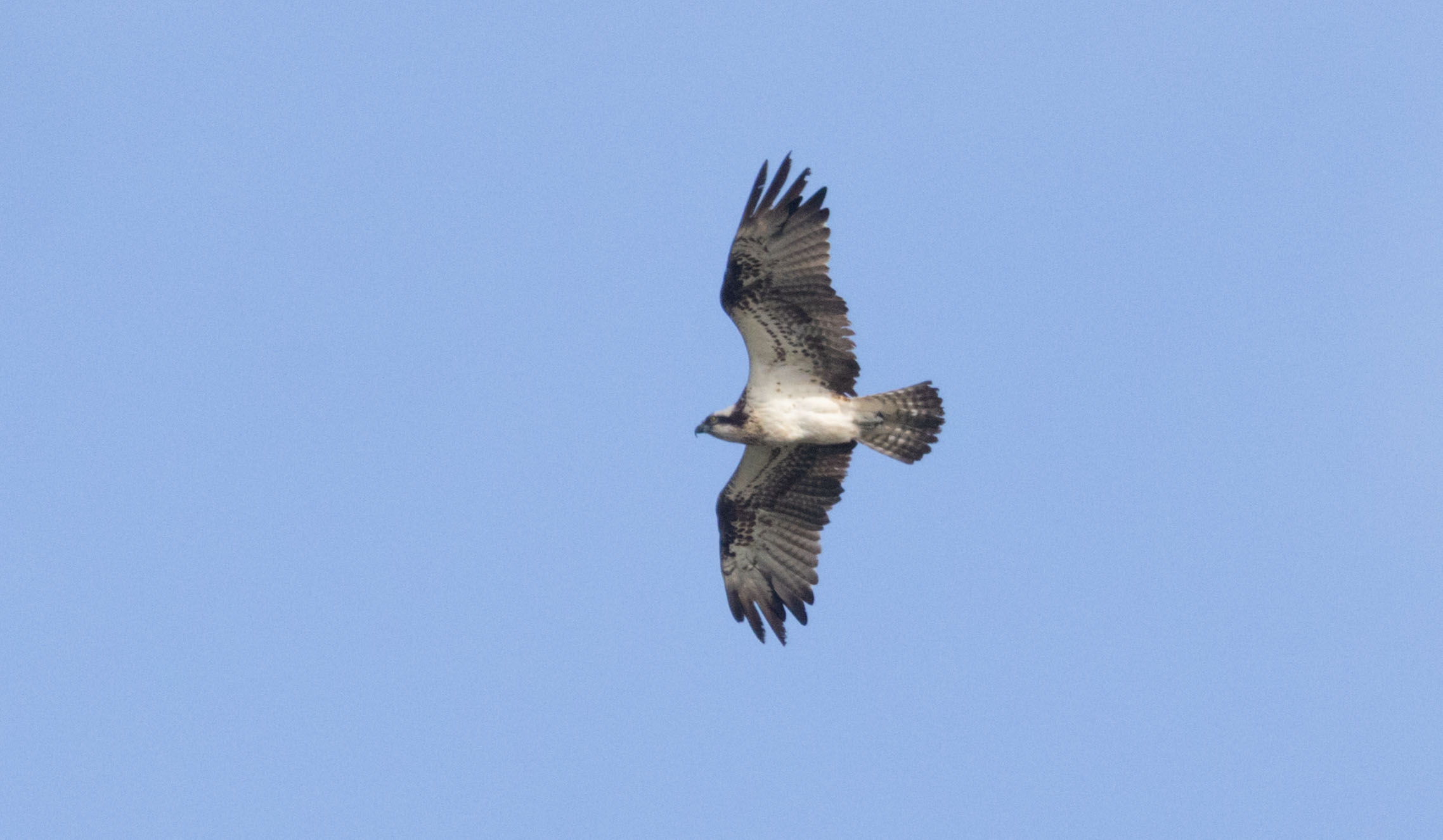
Just the second August record of Osprey (after one in 2001) and the earliest ever in autumn (Alex Penn)
Sightings of note: 43 Greylag Goose, 1 Wigeon, 7 Teal, 64 Oystercatcher, 9 Lapwing, 1 Golden Plover, 63 Ringed Plover, 1 Whimbrel, 16 Curlew, 83 Turnstone, 21 Knot, 1 Ruff, 16 Sanderling, 11 Dunlin, 1 Purple Sandpiper, 80 Snipe, 1 Green Sandpiper, 36 Redshank, 1 Black-headed Gull, 45 Common Gull, 2 Lesser Black-backed Gull, 1 Arctic Skua, 3 Grey Heron, 1 Hen Harrier, 1 Short-eared Owl, 1 Kestrel, 1 Peregrine, 3 Carrion Crow, 73 Skylark, 1 Sand Martin, 16 Swallow, 1 House Martin, 26 Willow Warbler, 12 Chiffchaff, 4 Lesser Whitethroat, 1 Whitethroat, 1 Spotted Flycatcher, 2 Pied Flycatcher, 1 Black Redstart, 4 Whinchat, 233 Wheatear, 3 Grey Wagtail, 5 Pied Wagtail, 45 alba Wagtail, 194 Meadow Pipit, 96 Rock Pipit, 1 Brambling, 58 Twite
Other wildlife: 2 Painted Lady, 3 Shetland Bee
Year list: 178
______________________________________________________________________
15th to 18th August 2026
Some good early autumn fare over the last few days, with light wader passage and small numbers of early autumn passerine migrants appearing. The 18th saw the most significant arrival, with an Icterine Warbler headlining a small arrival that included the autumn’s first Pied and Spotted Flycatchers on the isle, as well as a handful of Willow Warbler around the crofts and cliffs. The final Storm Petrel session of the year was carried out on 16th, with 155 birds trapped taking the annual total to just under 1,200 birds.
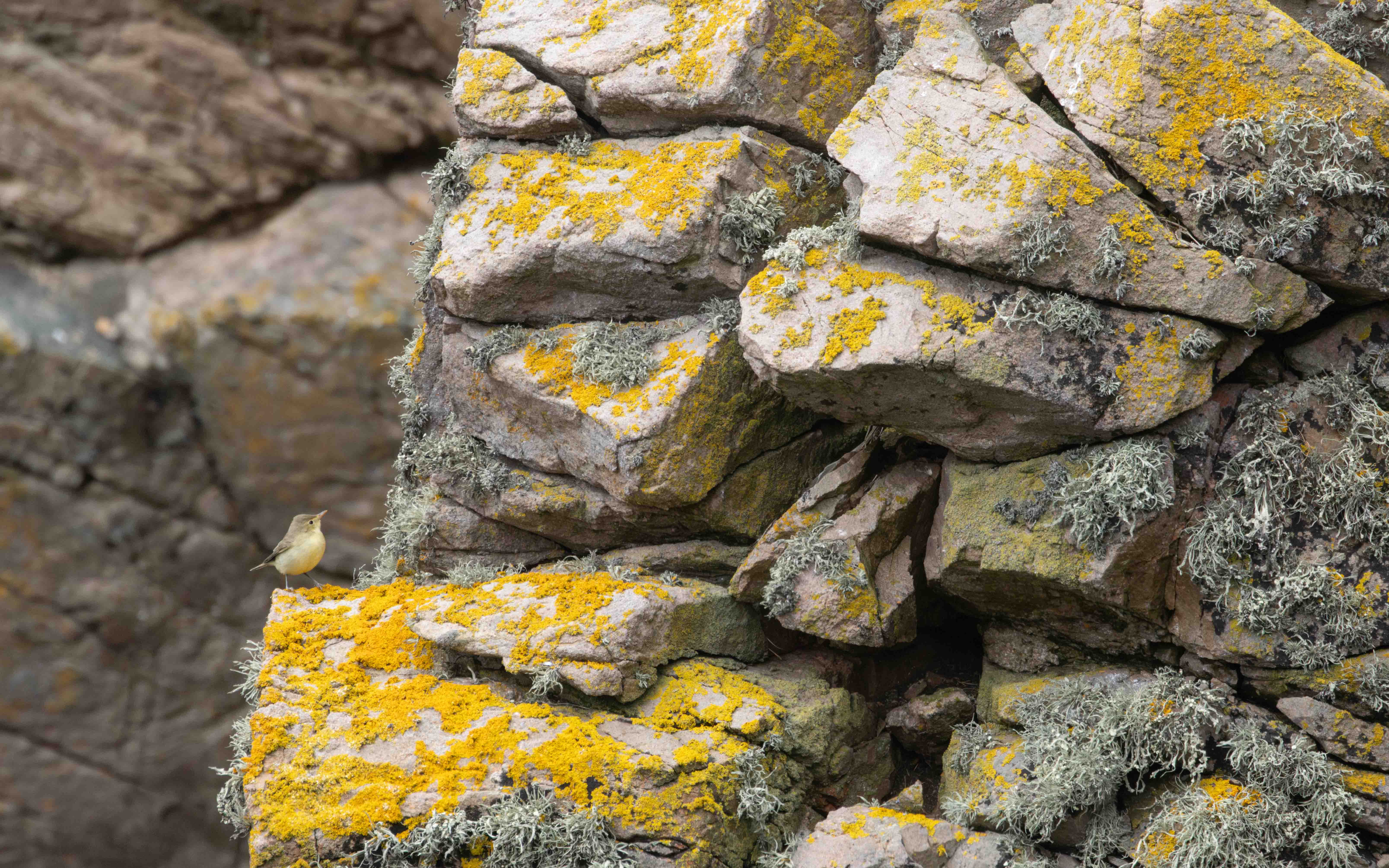
The lichen-covered cliffs of North Raeva hosted the first Icterine Warbler of the autumn on 18th (Alex Penn)
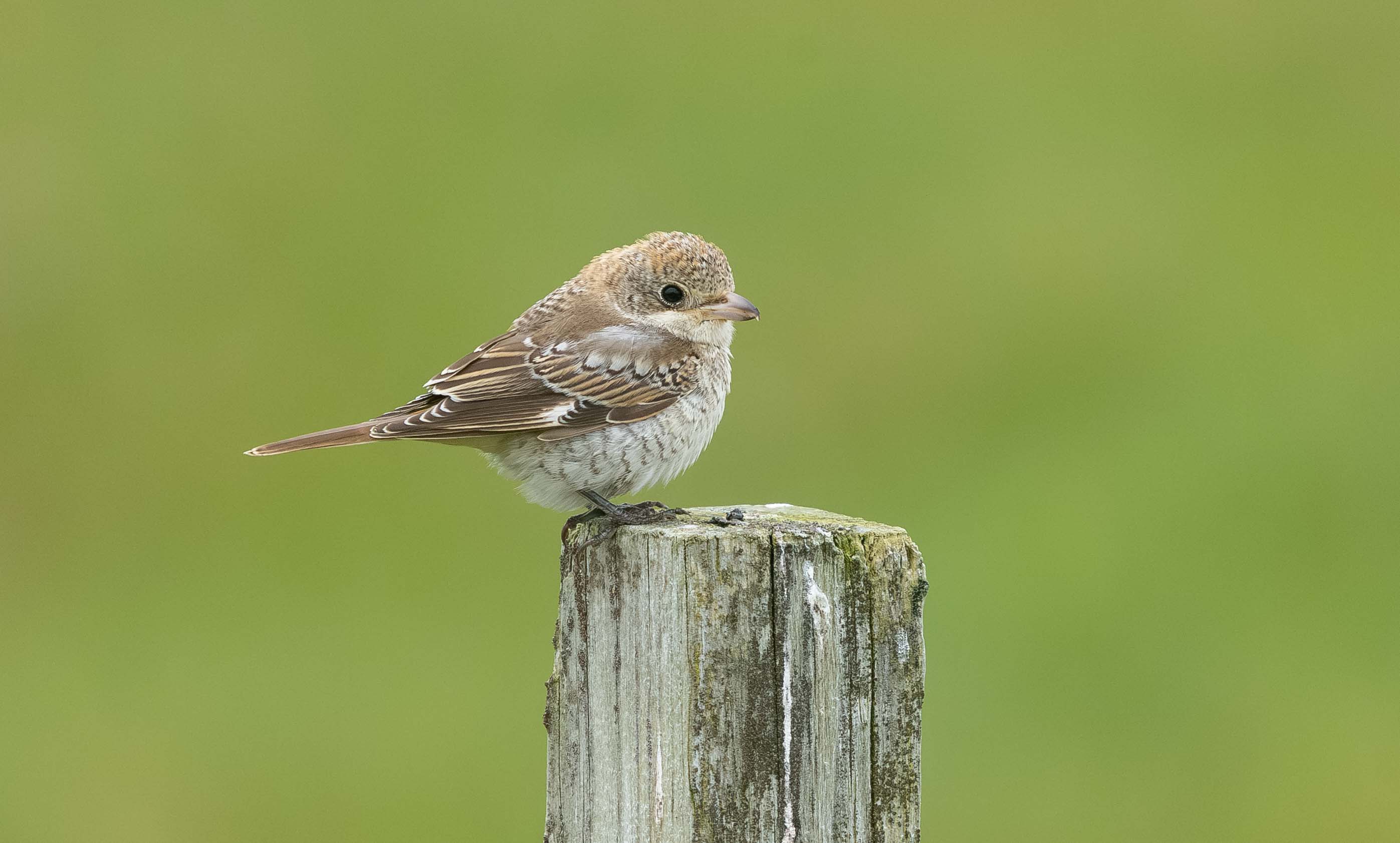
Since moving to the Chapel Plantation area, the Woodchat Shrike has become a little more obliging as it works its way through the isle’s bee population (Tom Wright)
HIGHLIGHTS
WESTERN SUBALPINE WARBLER: male still at the Obs to at least 16th
Woodchat Shrike: 1cy still throughout
Icterine Warbler: one in North Raeva on 18th
Barred Warbler: one still throughout
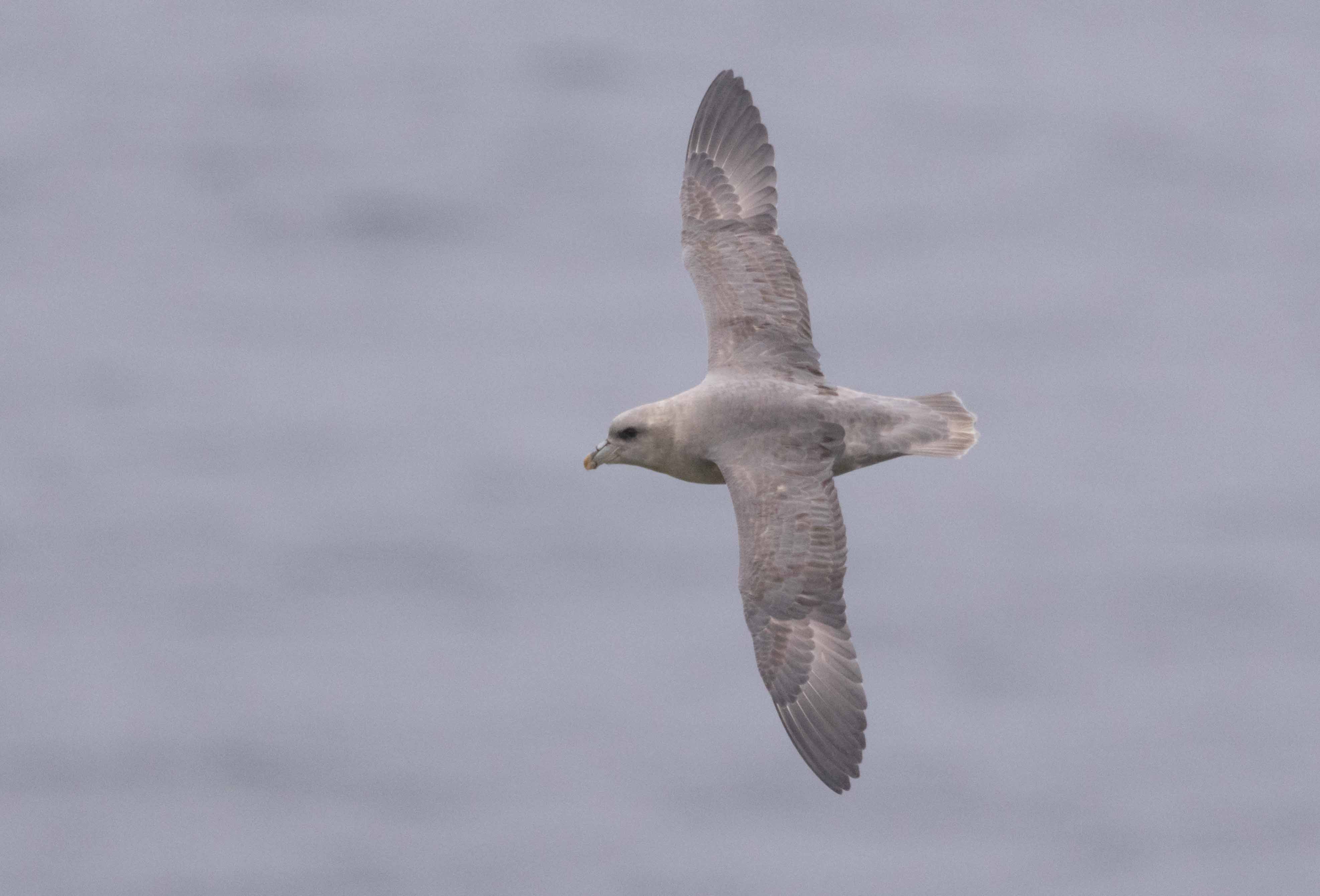
August is not a typical month for Blue Fulmar sightings, so this bird cruising the clifftops at Sheena Wheeda on 16th was a surprise (Alex Penn)
Sightings of note (high counts): 72 Greylag Goose, 3 Wigeon,
17 Teal, 1 Woodpigeon, 60 Oystercatcher, 13 Lapwing, 21 Golden Plover, 140 Ringed Plover, 1 Whimbrel, 54 Curlew, 1 Bar-tailed Godwit, 1 Black-tailed Godwit, 59 Turnstone, 3 Knot, 4 Ruff, 9 Sanderling, 14 Dunlin, 2 Purple Sandpiper, 89 Snipe, 3 Green Sandpiper, 32 Redshank, 2 Greenshank, 11 Black-headed Gull, 278 Common Gull, 5 Lesser Black-backed Gull, 1 Arctic Tern, 1 Guillemot, 155 Storm Petrel, 1 Blue Fulmar, 5 Grey Heron, 1 Hen Harrier, 1 Short-eared Owl, 2 Kestrel, 3 Carrion Crow, 89 Skylark, 11 Swallow, 10 Willow Warbler, 12 Chiffchaff, 1 Sedge Warbler, 1 Garden Warbler, 2 Lesser Whitethroat, 1 Spotted Flycatcher, 3 Pied Flycatcher, 1 Black Redstart, 1 Whinchat, 224 Wheatear, 3 Grey Wagtail, 12 Pied Wagtail, 3 White Wagtail, 22 alba Wagtail, 264 Meadow Pipit, 139 Rock Pipit, 1 Brambling, 86 Twite
Other wildlife: 1 Red Admiral, 4 Painted Lady, 1 Silver Y, 10 Shetland Bee, 2 Minke Whale, 4 Risso’s Dolphin
Year list: 175
______________________________________________________________________
10th to 14th August 2026
A few days of little change were brought to a halt on 14th, when a scattering of new birds were evident, dropped by a morning of continuous light rain. The best of these was a juvenile Woodchat Shrike, hunting the gardens and fencelines around Kenaby – the 35th isle record and first since 2023. A handful of Willow Warbler, and first Grasshopper Warbler and White Wagtail of the autumn have also whet the appetite for autumn migration picking up in earnest through the remainder of the month. A visit to the Fulmar plots showed productivity to have taken another slight drop this year, a worrying trend for this species as declines become evident across the UK. A calm night on 12th was taken advantage of with another Storm Petrel ringing session, with 236 birds caught alongside a bonus Leach’s Petrel – the third ringed this year.
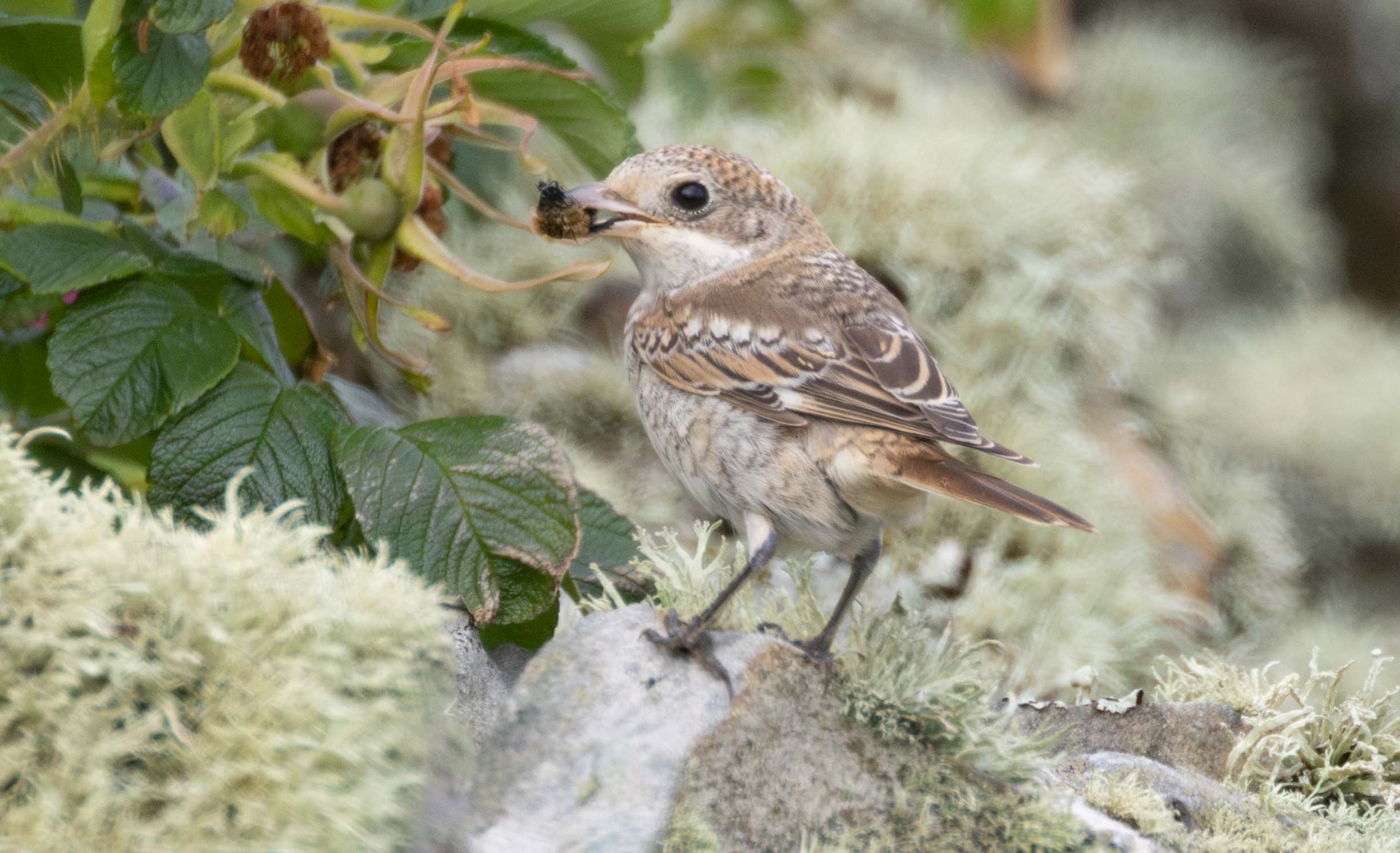
Not the ‘bee eater’ we’d been hoping for, but we can’t complain! (Alex Penn)
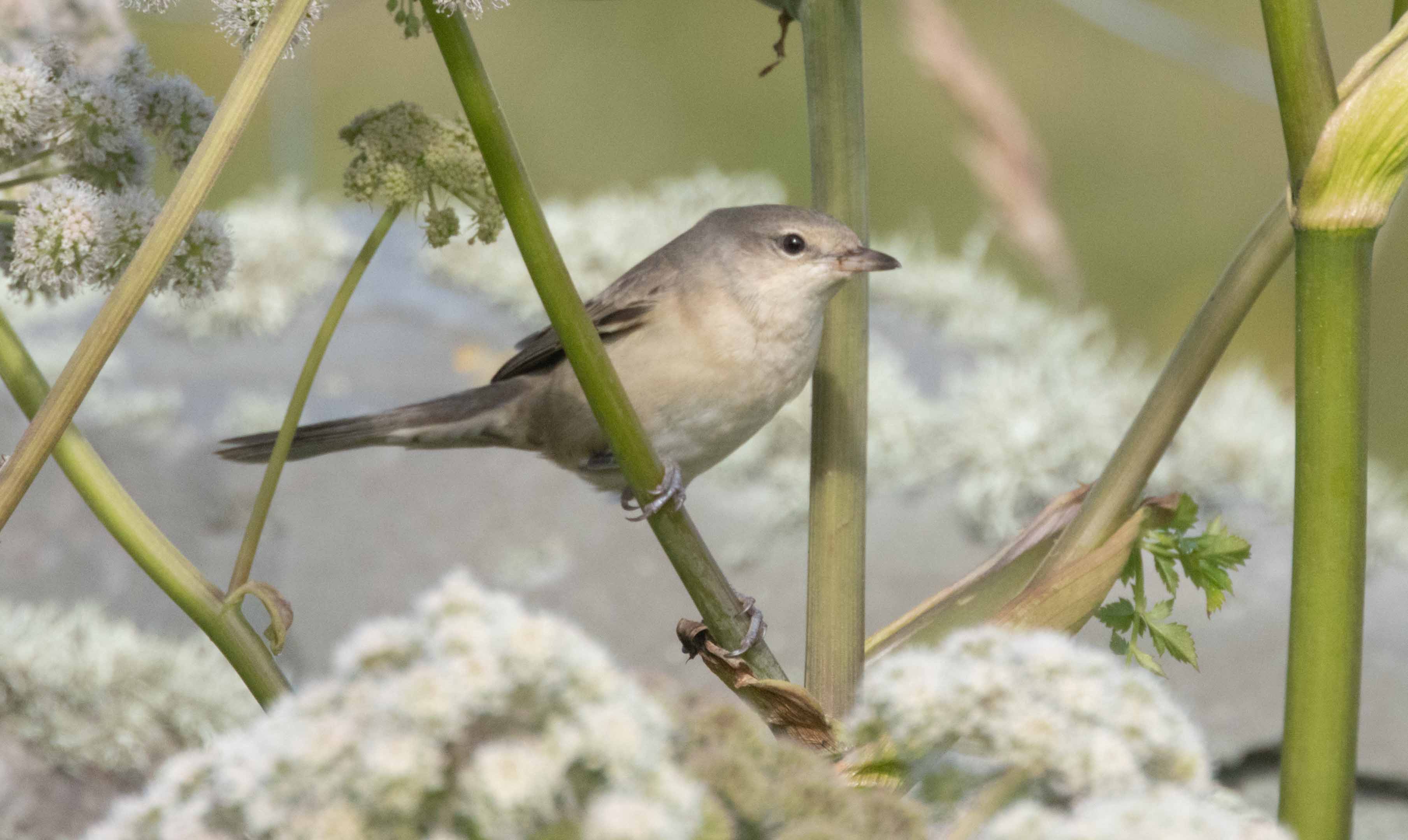
Typically elusive even around the Angelica ‘forest’ of Midway, with some luck and perseverance the Barred Warbler can be seen well (Alex Penn)
HIGHLIGHTS
WESTERN SUBALPINE WARBLER: male still at the Obs to at least 12th
Leach’s Petrel: one trapped at the Haven on night of 12th
Woodchat Shrike: a 1cy at Kenaby on 14th (35th isle record)
Melodious Warbler: one still throughout, moving to Shirva from 12th
Barred Warbler: one still around Midway throughout, trapped at Shirva on 13th

A light layer of cloud at the crucial moment allowed for easier viewing of the solar eclipse on 12th (Alex Penn)
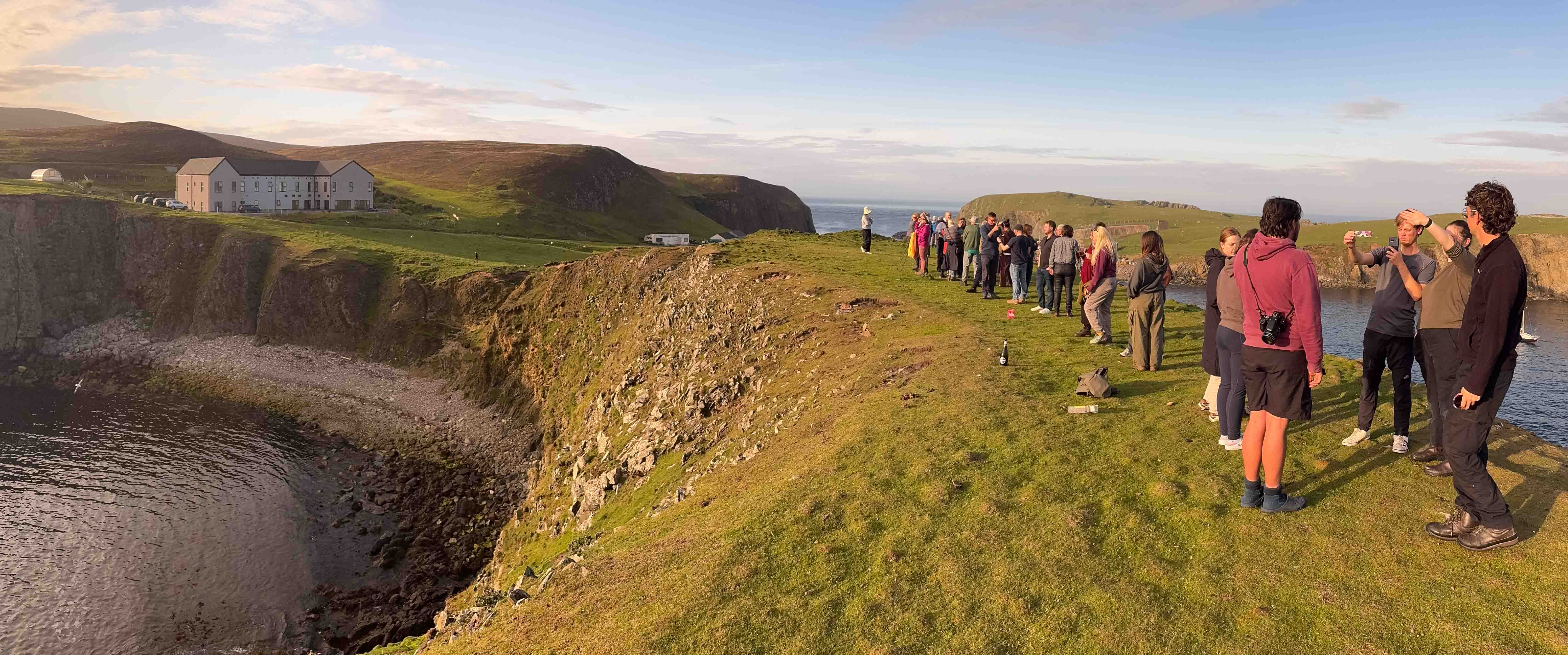
Landberg made for a picturesque stage to watch the heavens align (Alex Penn)
Sightings of note (high counts): 54 Greylag Goose, 3 Teal, 1 Red-breasted Merganser, 3 Swift, 66 Oystercatcher, 7 Lapwing, 5 Golden Plover, 1 Whimbrel, 34 Curlew, 2 Bar-tailed Godwit, 54 Turnstone, 1 Knot, 2 Sanderling, 18 Dunlin, 3 Purple Sandpiper, 40 Snipe, 5 Green Sandpiper, 38 Redshank, 1 Greenshank, 4 Black-headed Gull, 54 Common Gull, 5 Lesser Black-backed Gull, 3 Common Tern, 3 Arctic Tern, 7 Guillemot, 4 Razorbill, 236 Storm Petrel, 5 Grey Heron, 1 Hen Harrier, 1 Short-eared Owl, 1 Kestrel, 1 Merlin, 8 Carrion Crow, 1 Sand Martin, 33 Swallow, 1 House Martin, 2 Willow Warbler, 9 Chiffchaff, 1 Sedge Warbler, 1 Reed Warbler, 1 Grasshopper Warbler, 1 Garden Warbler, 1 Blackbird, 1 Pied Flycatcher (13th), 3 Grey Wagtail, 1 White Wagtail, 1 Brambling
Other wildlife: 20 Painted Lady, 1 Silver Y, 2 Hummingbird Hawkmoth, 12 Shetland Bee, 2 Harbour Porpoise, 3 White-beaked Dolphin (13th)
Year list: 175
______________________________________________________________________
31st July to 9th August 2026
The season continues apace, with these last few days showing a clear shift from summer towards autumn as the seabirds depart and migrants begin to move. The cliffs are now empty of Guillemots and Razorbills, and the last few Puffins are set to disappear any day. Fulmars and Gannets now hold the fort, with these unhurried breeders set to remain with us for a few weeks yet. Three young Arctic Skuas made it to fledging this year, and the Bonxie territories are slowly quietening as birds move on to horizons new.
In place of the seabirds though come migrants, as waders and early passerine migrants begin to appear, with the first Barred Warbler of the autumn on 4th always a significant moment in the birding calendar. The third Melodious Warbler of the year at Schoolton on 8th was somewhat less expected, whilst the Western Subalpine Warbler continues its protracted stay at the Obs, now in its sixth week of residence. Continuing wader movement included the first few Ruff of the autumn, and some strong Green Sandpiper passage saw up to eight birds present.
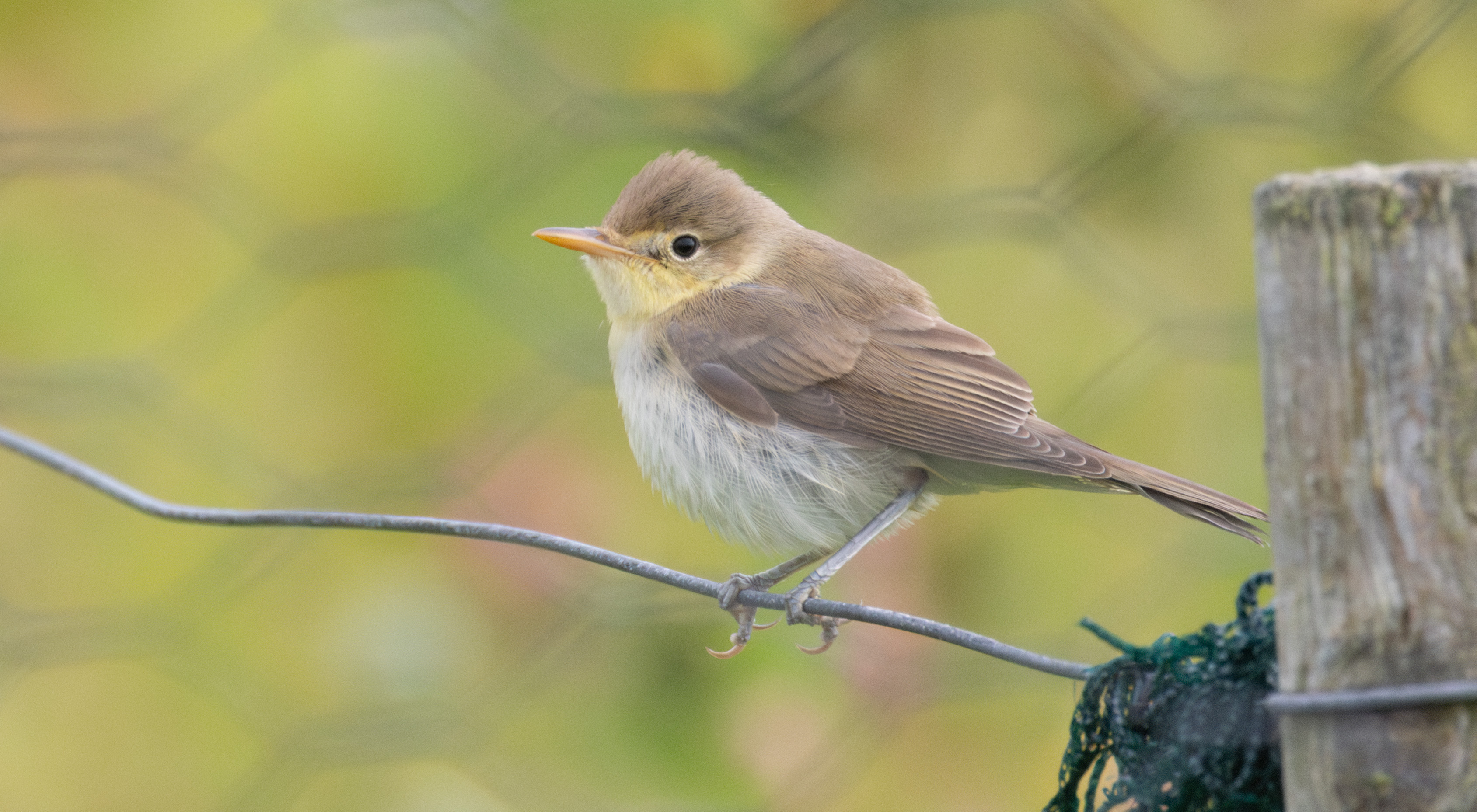
The third Melodious Warbler of the year makes 2026 the second highest annual total ever, after five birds in 2021 (Alex Penn)
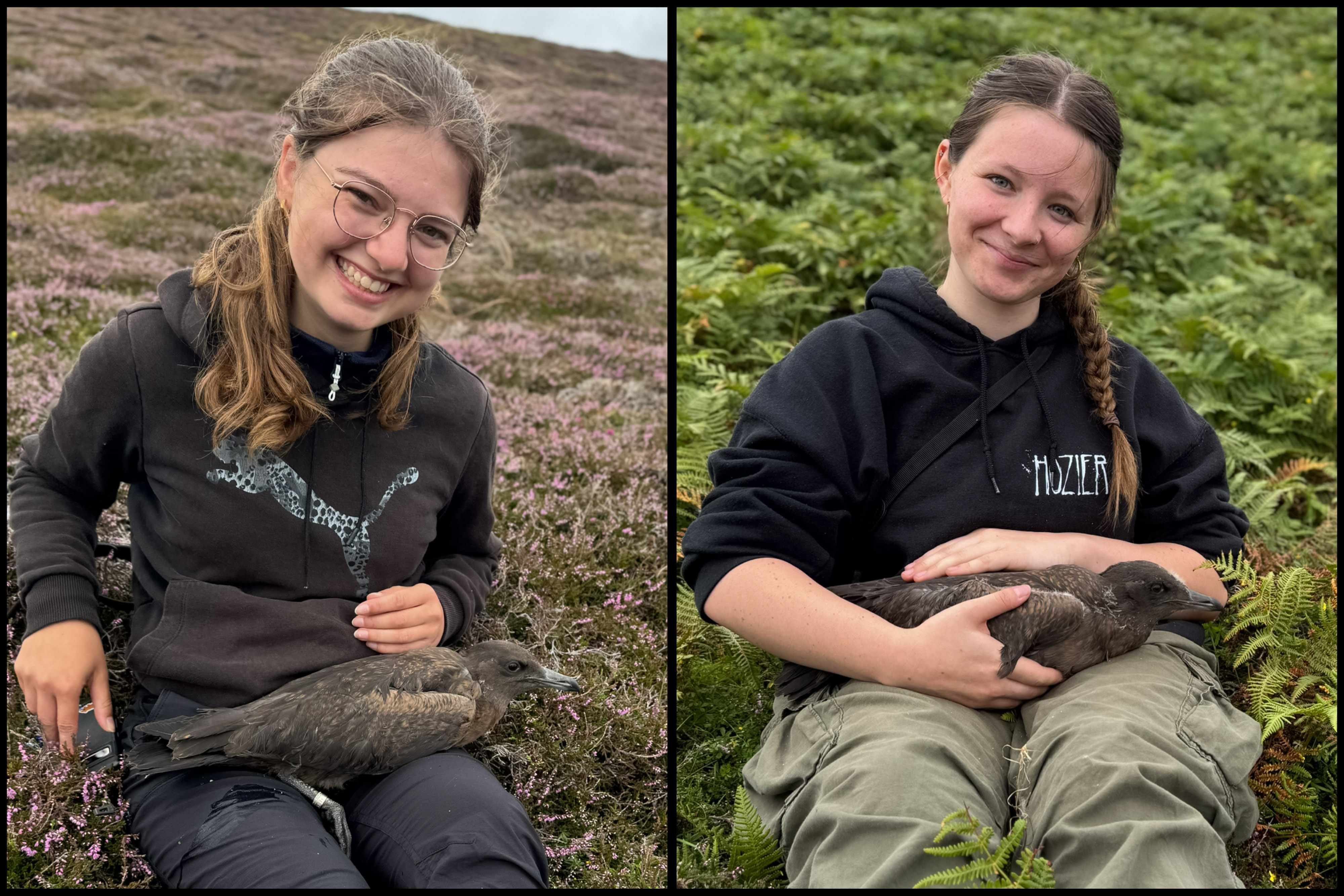
Two other arrivals to the isle this week – our volunteers from the new WMBC partnership, Ida and Megan – getting straight into some Bonxie ringing (Alex Penn)
HIGHLIGHTS
WESTERN SUBALPINE WARBLER: male still at the Obs throughout
Quail: successful breeding was confirmed with a pint-sized juvenile flushed at Schoolton on 4th
Leach’s Petrel: one seen around the Stormie net on night of 3rd
Melodious Warbler: one initially at Schoolton on 8th, before moving to Burkle where it was still present on 9th
Barred Warbler: one around the Midway area from 4th onwards
Sightings of note (high counts): 90 Greylag Goose, 1 Shoveler, 1 Woodpigeon, 64 Oystercatcher, 10 Lapwing, 8 Golden Plover, 3 Whimbrel, 34 Curlew, 1 Black-tailed Godwit, 126 Turnstone, 4 Knot, 4 Ruff, 11 Sanderling, 19 Dunlin, 7 Purple Sandpiper, 8 Green Sandpiper, 28 Redshank, 1 Greenshank, 7 Black-headed Gull, 761 Common Gull, 15 Lesser Black-backed Gull, 43 Arctic Tern, 6 Guillemot, 1 Razorbill, 2 Red-throated Diver, 205 Storm Petrel, 1 Cormorant, 5 Grey Heron, 1 Hen Harrier, 2 Short-eared Owl, 1 Kestrel, 4 Carrion Crow, 3 Sand Martin, 9 Swallow, 4 Willow Warbler, 5 Chiffchaff, 1 Sedge Warbler, 2 Reed Warbler, 1 Blackcap, 1 Garden Warbler, 1 Lesser Whitethroat, 1 Blackbird, 1 Robin, 1 Black Redstart, 2 Grey Wagtail, 1 Brambling, 2 Redpoll, 1 Siskin
Other wildlife: 10 Painted Lady, 1 Silver Y, 1 Hummingbird Hawkmoth (9th), 3 Shetland Bee, 1 Harbour Porpoise, 10+ Orca (seen from plane 10 miles north of isle on 3rd)
Year list: 174
______________________________________________________________________
22nd to 30th July 2026
A busy week dominated by the island wedding of Lachlan and Mhairi, with a joyful few days of celebration surrounding the ceremony on 25th. Work for the Ornithology team meanwhile has been centred around Bonxie chick ringing, Puffin colour ringing and nocturnal Storm Petrel sessions, with the latter resulting in some busy nights of catching. It appears that our Bonxies are having a relatively poor year, with a high level of chick cannibalism at a late stage noted by the team as they cover the breeding areas during chick ringing, though this will be confirmed by counts of fledglings in the coming days. Checks of the tern colonies at South Light and Buness have also shown productivity to be poor this year, with just a single chick fledged across both sites, though the reasons for this failure are unclear. Puffin colour ringing has been productive, with 39 birds now fitted with their unique Darvic rings as part of the revamped adult survival monitoring. Breaks in the breeze have allowed Storm Petrel ringing to be carried out on two evenings, with 231 and 266 birds caught respectively, as well as single Leach’s Petrels ringed on each night.
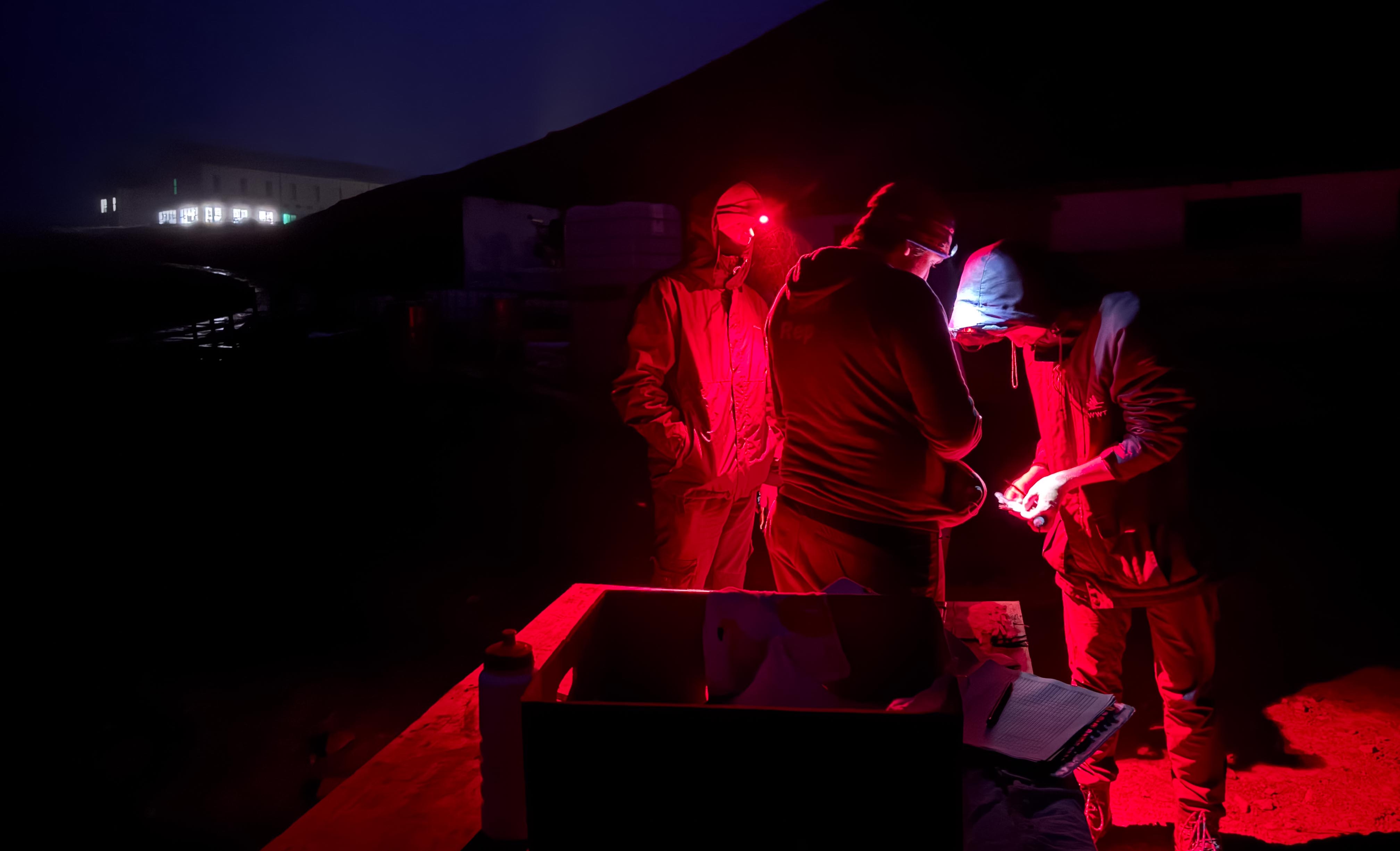
The team busy at the ringing table with Storm Petrels (Alex Penn)
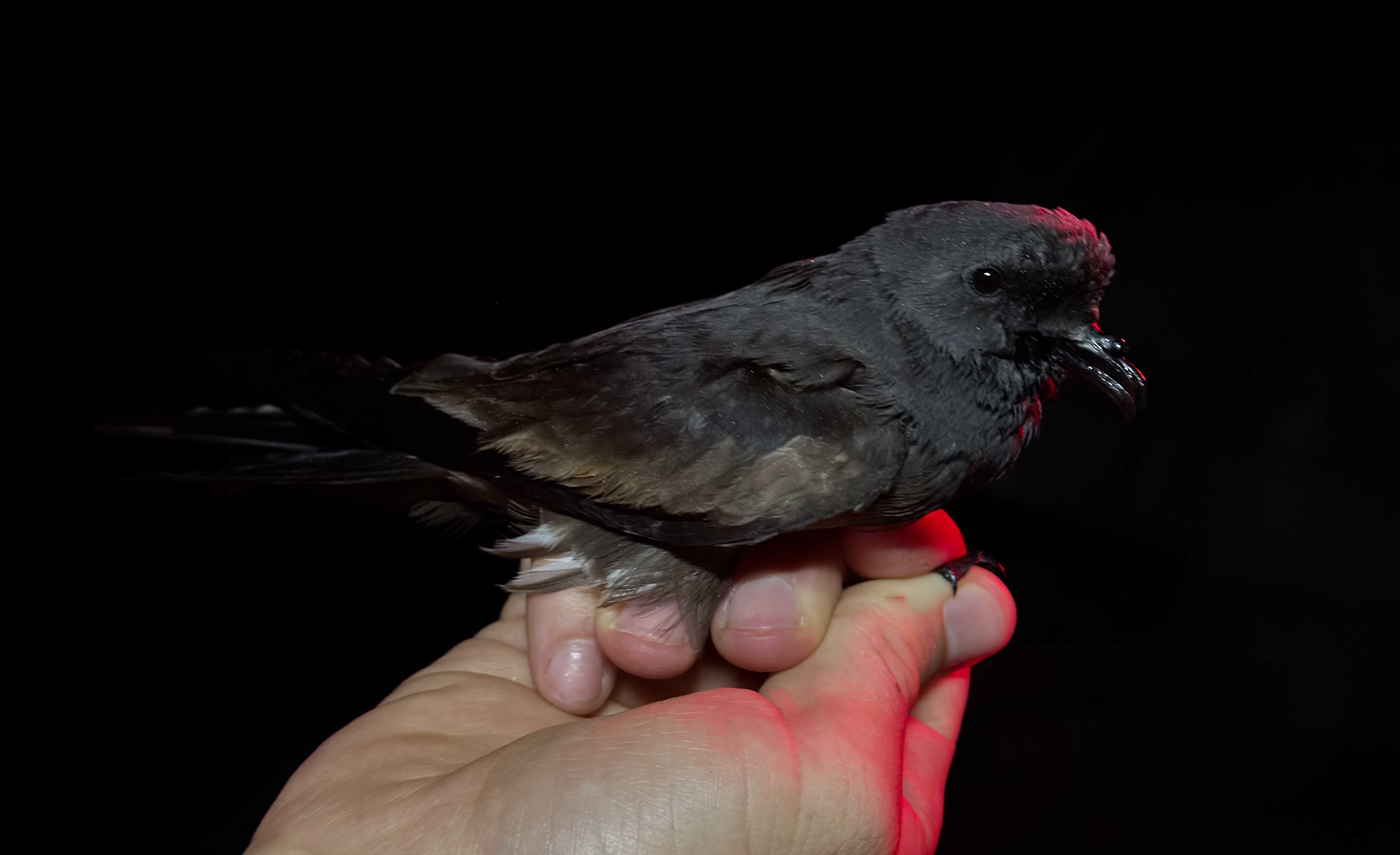
One of the two Leach’s Petrel ringed in recent nights (Alex Penn)
There has unsurprisingly been little change on the migrants front, though the first signs of some autumn passerine movement were evident this week with a juvenile Willow Warbler present on 27th, and three juvenile Sedge Warbler on 28th. Greylag Goose passage continues, with birds wandering south from Shetland through the week, including the bizarre sight of a flock of 114 birds on the beach at Easter Lother on 22nd. Numbers of waders remain low but some light passage has been noted, as well as the confirmation of a second pair of successfully breeding Dunlin, with a pair seen with two just-fledged young at Suka Mire on 28th.
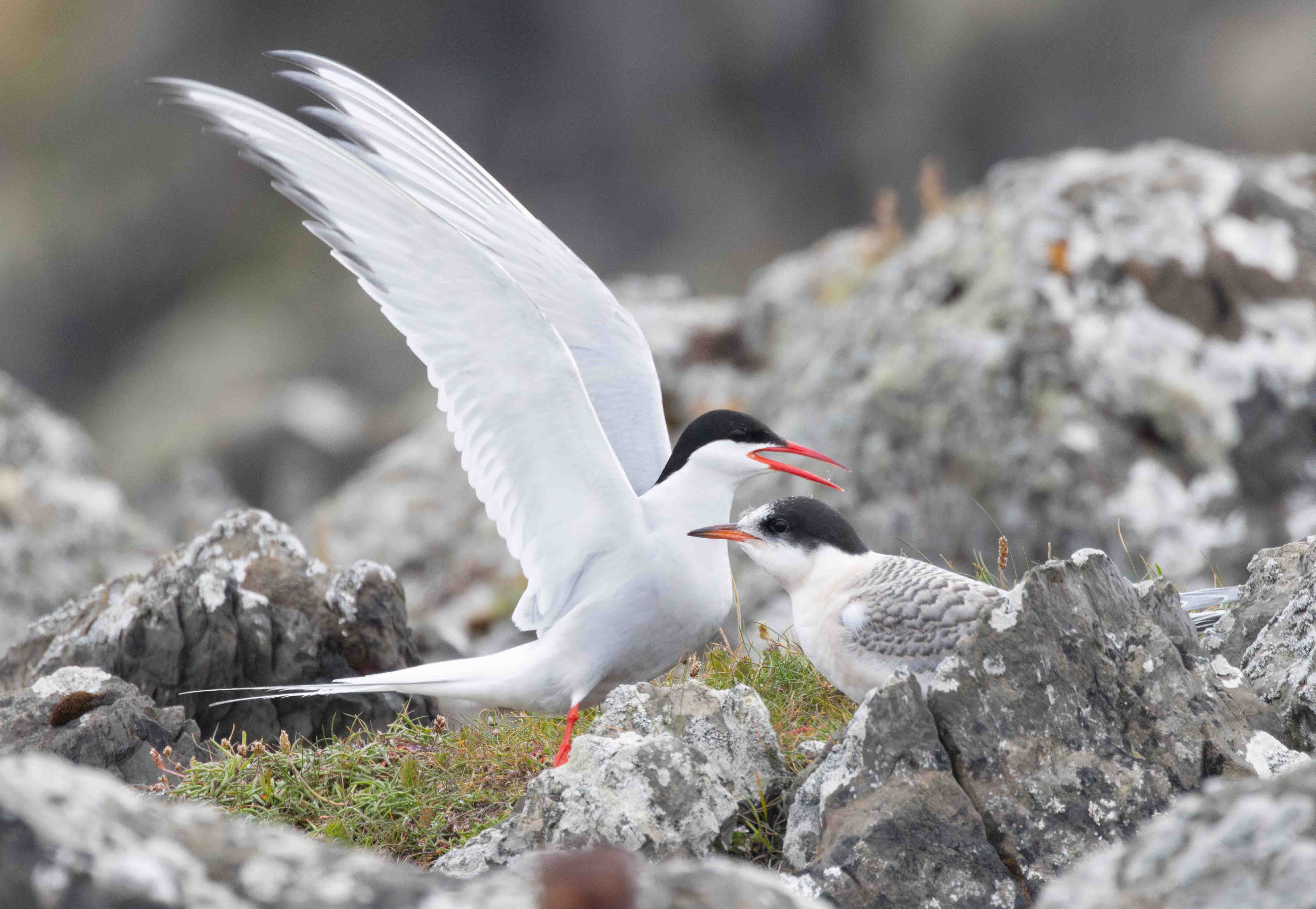
The sole tern chick to have fledged this year (Alex Penn)
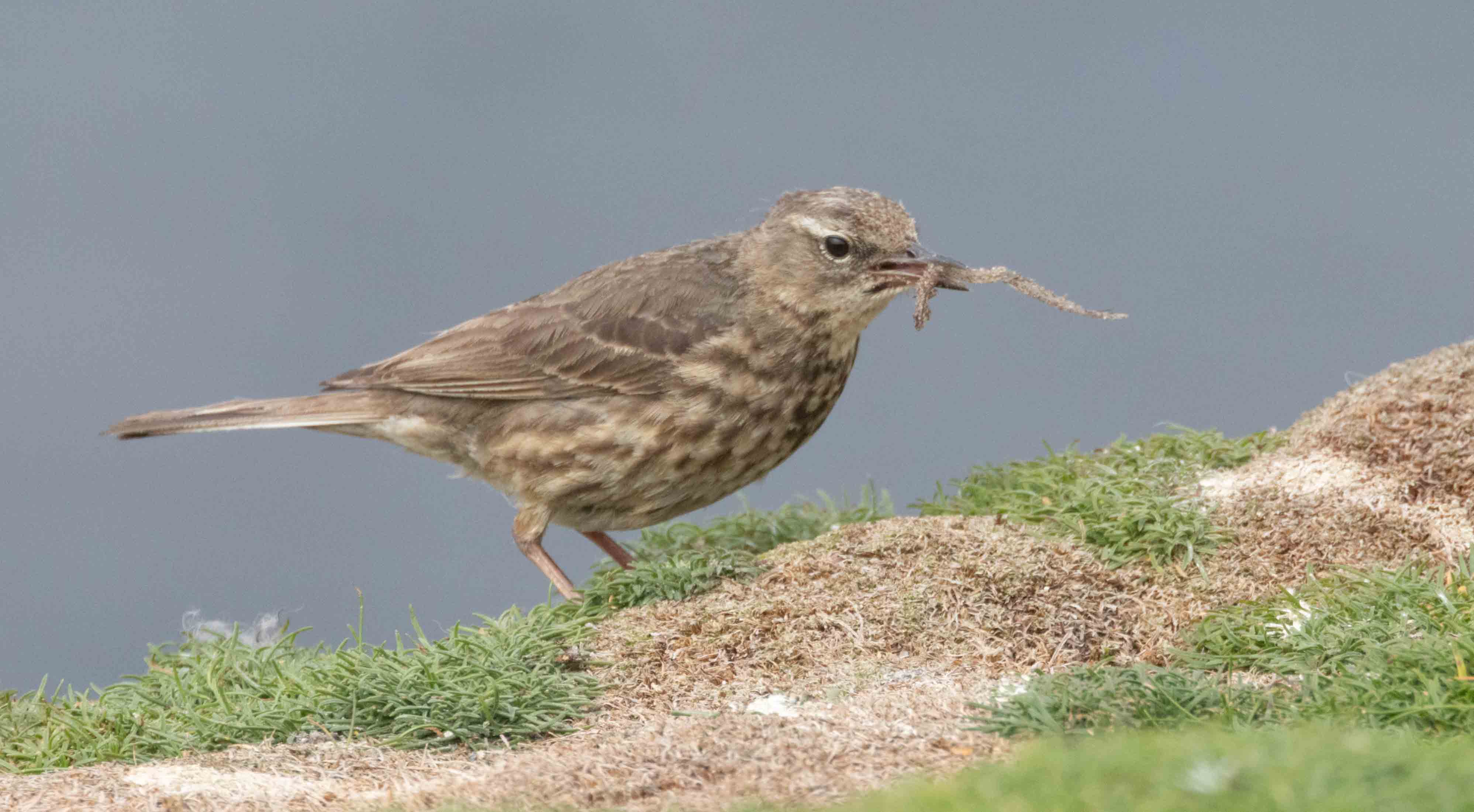
Rock Pipit will happily clean up any dropped fish from around the Puffin burrows to supplement their usual insect prey (Alex Penn)
HIGHLIGHTS
WESTERN SUBALPINE WARBLER: male still at the Obs on 28th
Leach’s Petrel: singles trapped on nights of 22nd and 29th
Sightings of note (high counts): 120 Greylag Goose, 3 Collared Dove, 2 Lapwing, 2 Whimbrel, 11 Turnstone, 1 Knot, 1 Sanderling, 7 Dunlin, 3 Purple Sandpiper, 22 Redshank, 19 Black-headed Gull, 35 Common Gull, 266 Storm Petrel, 1 Grey Heron, 2 Carrion Crow, 3 hybrid Crow, 2 Sand Martin, 3 Swallow, 1 Willow Warbler, 5 Chiffchaff, 3 Sedge Warbler, 1 Black Redstart, 2 Grey Wagtail, 1 Brambling
Other wildlife: 1 Painted Lady, 1 Hummingbird Hawkmoth (29th)
Year list: 173
______________________________________________________________________
17th to 21st July 2026
A typically quiet few days as seabird jobs slowly begin to wind down and migration is all but at a standstill. The final cruise ship of the year brought visitors to the isle on 18th, and the first Storm Petrel ringing session was carried out on the evening of 19th. Despite being a short session thanks to some damp fog hampering catching, it is always a pleasure to get re-acquainted with these fabulous little seabirds. Puffin colour-ringing continues, and the first Bonxie chicks of the year had their colour rings fitted, a job that will take up much of the team’s time over the next week or two.
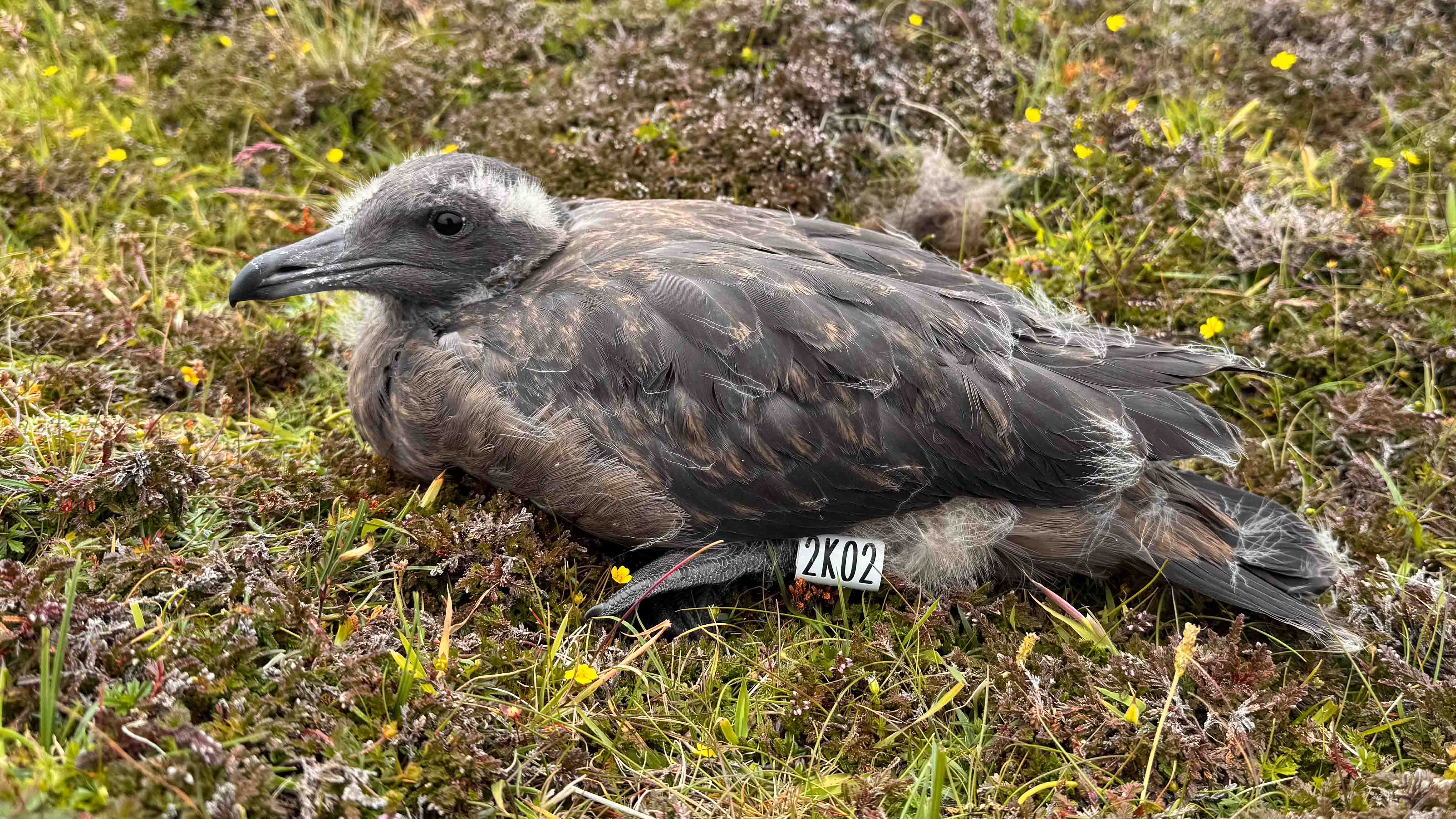
This brood of Bonxies were the first nest to have been found hatched this year, with the two chicks now almost fledged (Alex Penn)
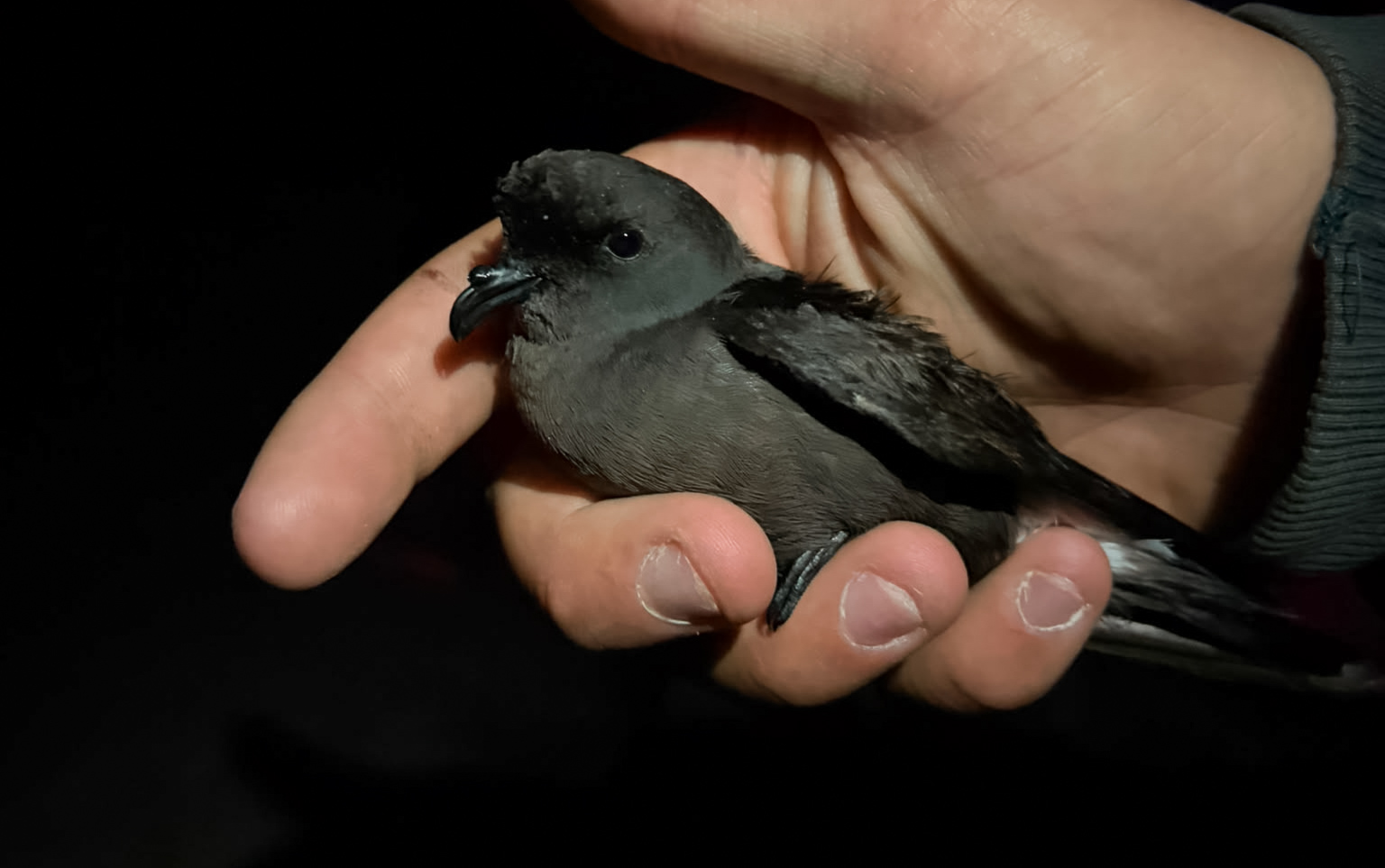
A modest catch of 22 Storm Petrel to kick off the season (Maebh Howell)
HIGHLIGHTS
Quail: singles on 19th and 20th
Sightings of note (high counts): 5 Greylag Goose, 2 Teal, 2 Collared Dove, 86 Oystercatcher, 17 Lapwing, 2 Golden Plover, 1 Whimbrel, 16 Curlew, 1 Black-tailed Godwit, 25 Turnstone, 1 Sanderling, 5 Dunlin, 23 Purple Sandpiper, 28 Redshank, 4 Black-headed Gull, 26 Common Gull, 4 Lesser Black-backed Gull, 22 Storm Petrel, 1 Cormorant, 2 Grey Heron, 2 Carrion Crow, 3 Sand Martin, 2 Swallow, 7 Chiffchaff, 1 Blackcap, 1 Blackbird, 1 Robin, 3 Grey Wagtail, 1 Brambling
Other wildlife: 1 Red Admiral, 3 Painted Lady, 1 Shetland Bee
Year list: 171
______________________________________________________________________
3rd to 16th July 2026
A busy period of work for the Obs team, dominated by seabird monitoring as a prolonged spell of settled weather allowed for productive days. The full-day feedwatches for Guillemot and Puffin were carried out, with results for the latter looking considerably more favourable, as well as the Puffin food sampling on Tor o’ da Ward Hill (where the team had an added bonus in the form of a Long-tailed Skua lingering offshore with two Arctic Skua). Further efforts to retrieve GLS tags from our breeding Guillemots were largely unsuccessful, with just one tag retrieved and only one further tagged individual seen – a reflection of the low percentage of birds breeding this year. The time out in the boat allowed for a good amount of seabird ringing along the way however, with Shags in particular having a successful year and a good number of chicks now fitted with Darvic rings. Repeat visits to Greenholm for Puffin productivity monitoring have also revealed that that these birds are having a reasonably successful season – good news after their significant winter wreck.
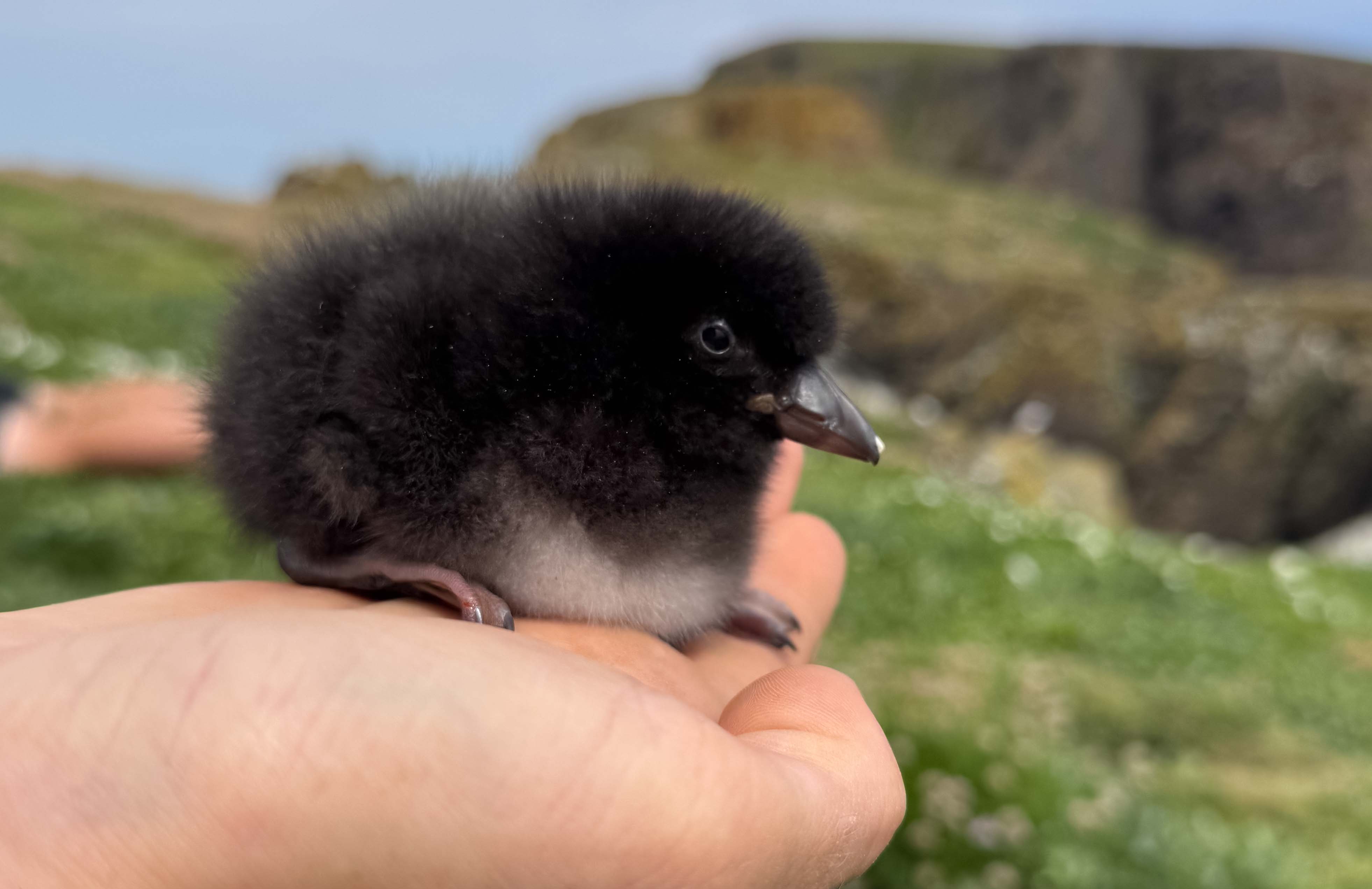
A newly-hatched Puffin during checks of the productivity plot (Alex Penn)
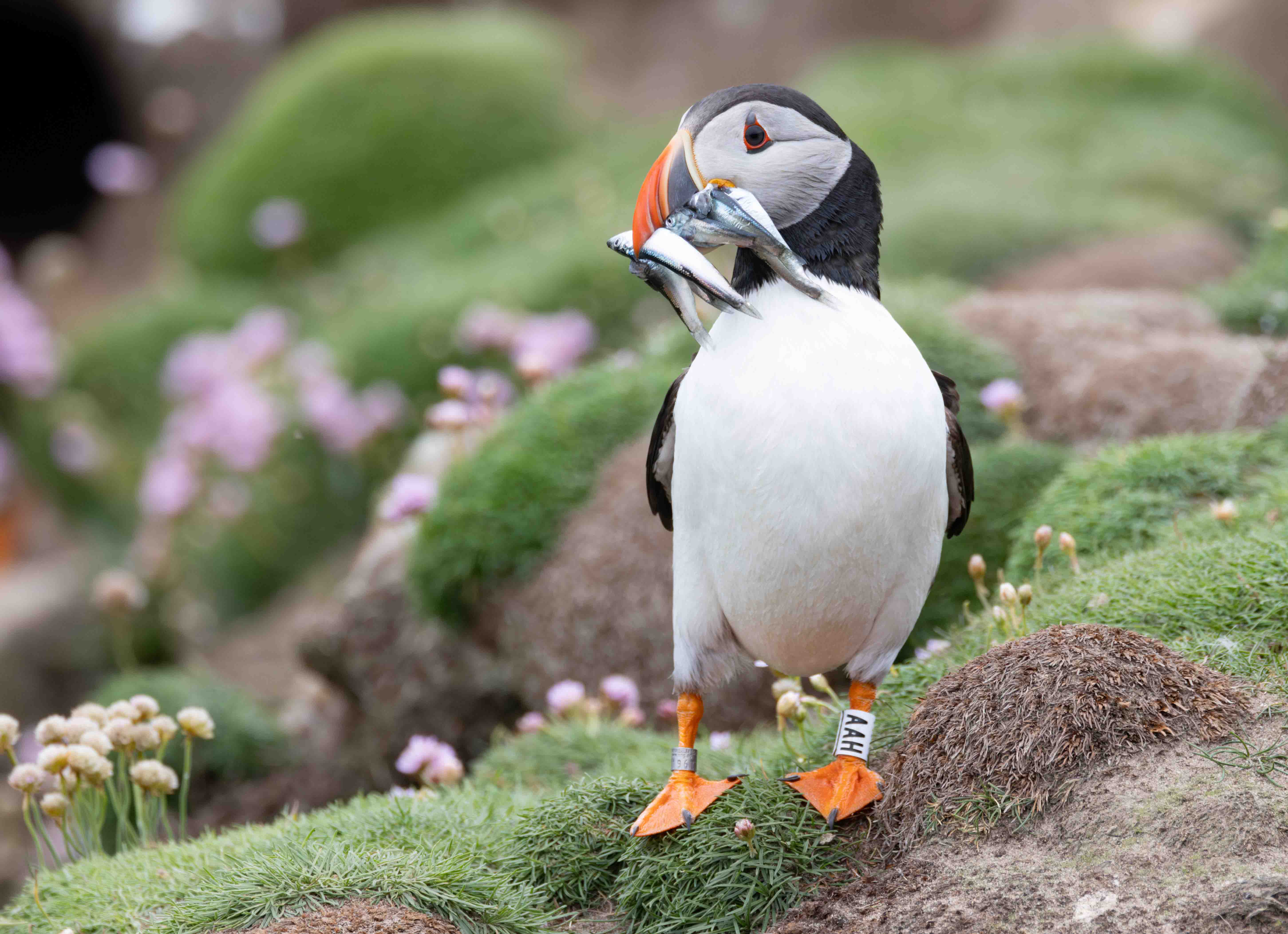
Several breeding adult Puffin at Buness have now been fitted with colour rings, re-establishing an adult survival study (Alex Penn)
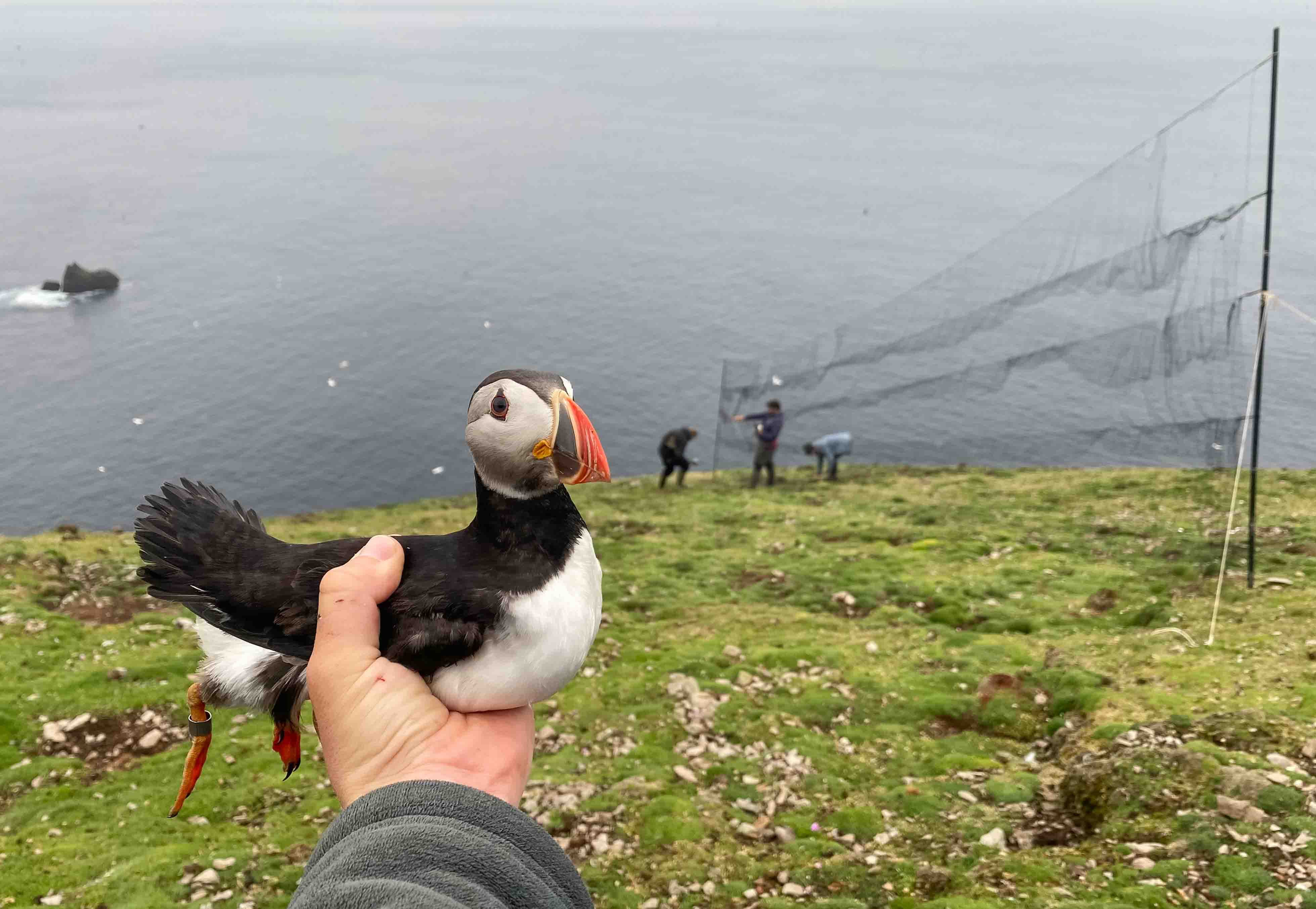
In a busy period for Puffin work, the annual food sampling was also carried out, with birds coming in with good-sized feeds this year (Alex Penn)
Away from the seabird work there has been little time for much birding, though checks of the crofts and beaches in spare moments have generally revealed little change, as expected in this settled part of the summer. A brief Rosefinch at Shirva on 13th was the only new scarcity seen, with two Sandwich Tern through South Harbour on 12th rarer in an isle context, and a Black Redstart at the Obs on 16th an unusual July record. There has been some evidence of return wader movement, with moulting adult birds noted passing through on their journeys southwards already. Flocks of Redshank, Curlew and Lapwing in particular are gradually building, and scarcer species dropping in have included both Bar-tailed and Black-tailed Godwit, Greenshank and Common Sandpiper.
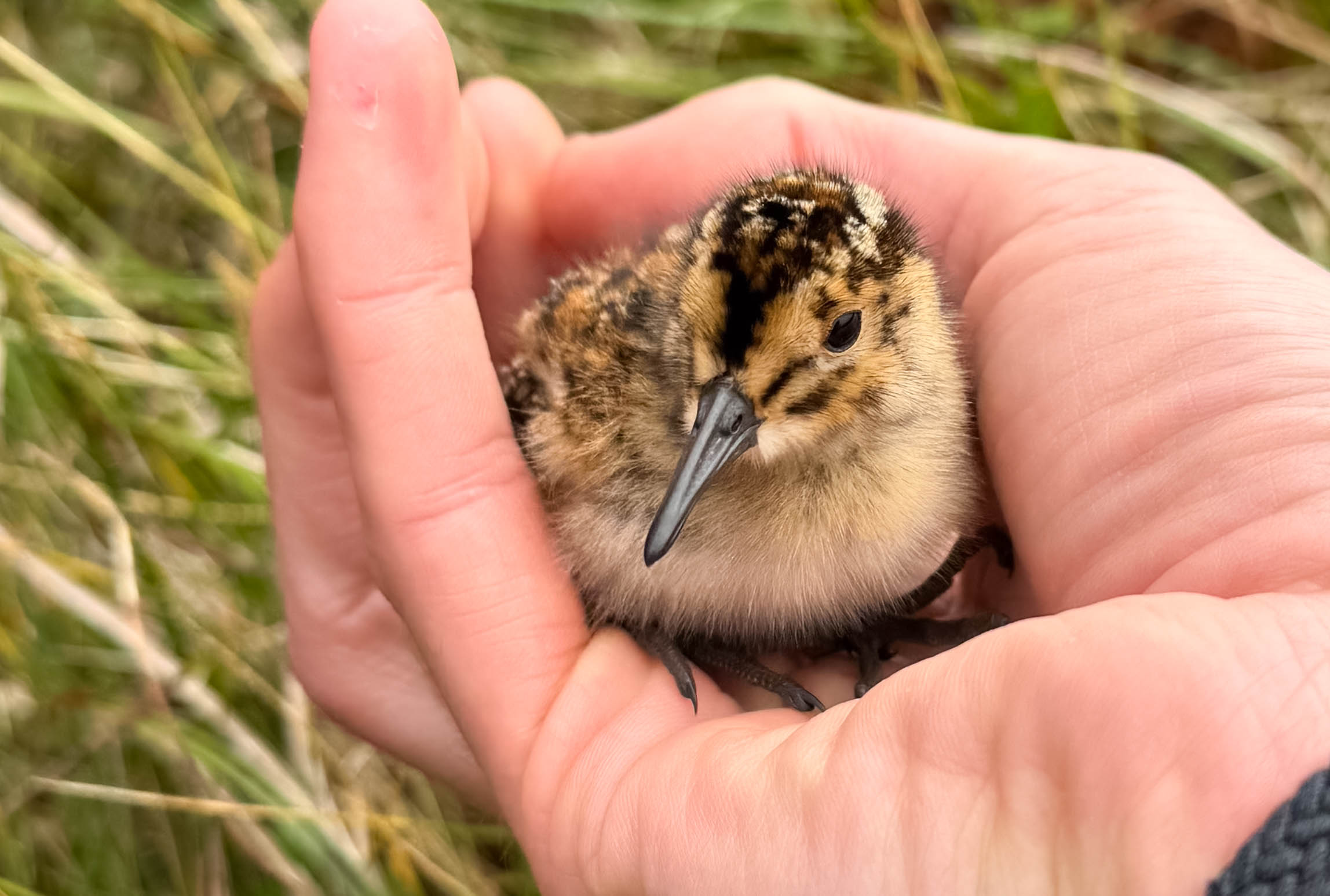
Dunlin have bred on the isle for the third year in succession, with this chick ringed on 8th (Alex Penn)
HIGHLIGHTS
WESTERN SUBALPINE WARBLER: male lingering at the Obs throughout
Quail: up to three present
Long-tailed Skua: adult seen over the sea from Tor o’ da Ward Hill on 15th
Red-backed Shrike: female still to 4th
Melodious Warbler: one reappeared at Burkle on 6th
Common Rosefinch: one at Shirva on 13th
Serin: one still to 6th
Sightings of note (high counts): 14 Greylag Goose, 2 Tufted Duck, 2 Red-breasted Merganser, 11 Swift, 2 Collared Dove, 1 Moorhen, 90 Oystercatcher, 19 Lapwing, 4 Golden Plover, 5 Whimbrel, 17 Curlew, 1 Bar-tailed Godwit, 2 Black-tailed Godwit, 7 Turnstone, 2 Sanderling, 7 Dunlin, 6 Purple Sandpiper, 1 Common Sandpiper, 23 Redshank, 1 Greenshank, 24 Black-headed Gull, 8 Lesser Black-backed Gull, 2 Sandwich Tern, 3 Red-throated Diver, 8 Storm Petrel, 2 Manx Shearwater, 2 Grey Heron, 1 Kestrel, 1 Peregrine, 1 Carrion Crow, 2 Sand Martin, 3 Swallow, 1 House Martin, 9 Chiffchaff, 1 Sedge Warbler, 1 Blackcap, 1 Blackbird, 1 Fieldfare, 1 Song Thrush, 1 Spotted Flycatcher, 1 Robin, 1 Black Redstart, 4 Grey Wagtail, 1 Brambling, 1 Siskin
Other wildlife: 1 Red Admiral, 9 Painted Lady, 2 Silver Y, 1 Hummingbird Hawkmoth, 4 Magpie Moth, 5 Shetland Bee, 1 Minke Whale, 3 Harbour Porpoise
Year list: 171
______________________________________________________________________
Rebuild project funders
